Medicaid board hears proposal on assisted living waiver
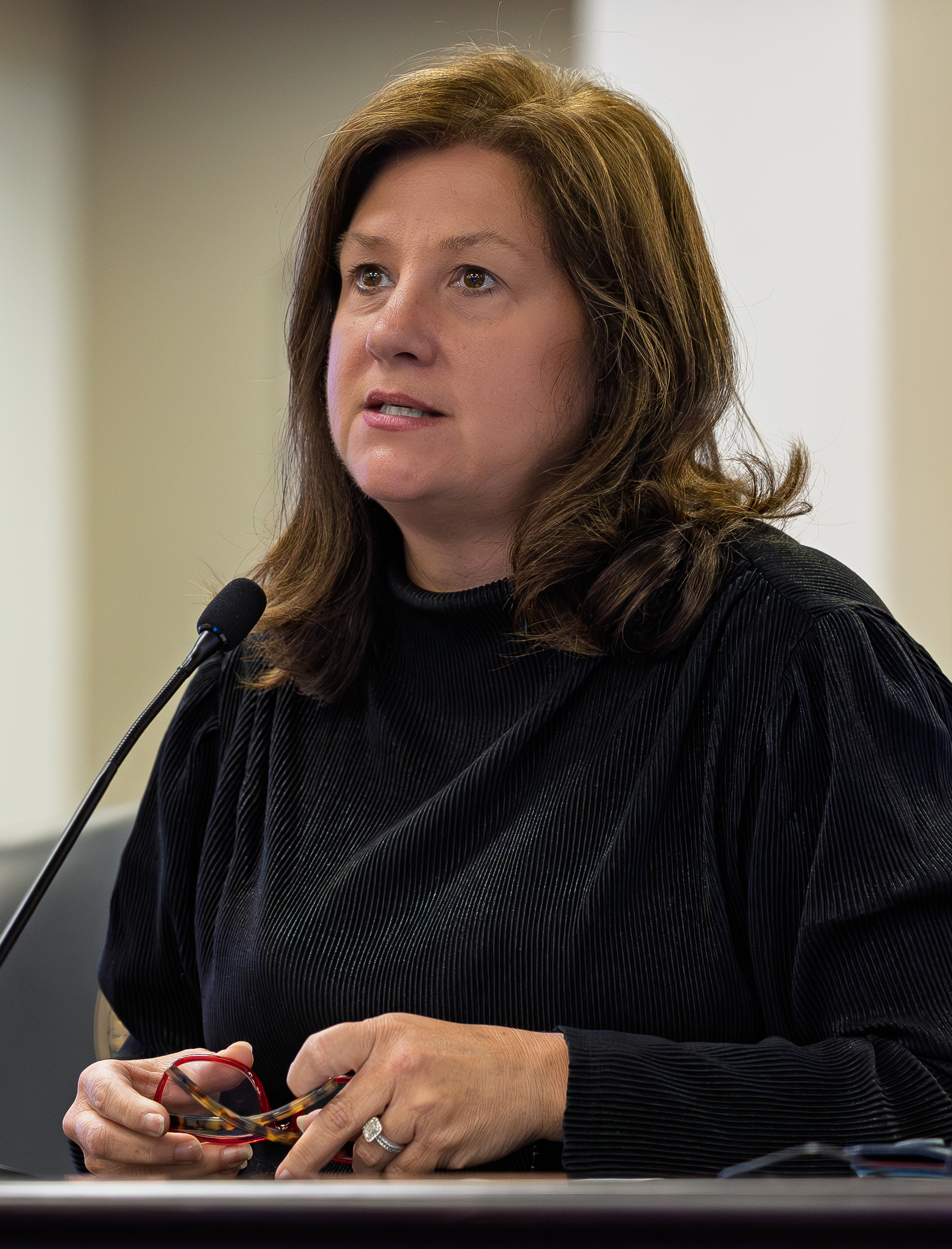
Rep. Deanna Gordon, R-Richmond, testifies Tuesday during a Medicaid Oversight and Advisory Board meeting. A high-resolution photo can be found here.
FRANKFORT — The state Medicaid Oversight and Advisory Board heard about a proposal Tuesday that would extend coverage to help Kentucky families offset costs of care at assisted living facilities.
Rep. Deanna Gordon, R-Richmond, said she is working on legislation related to that issue in advance of the next legislative session, which begins in January.
“This bill draft would extend Medicaid coverage to assisted living services. For reference, Kentucky is only one of three states that do not offer Medicaid coverage for assisted living services. Right now, Medicaid will only cover the costs of living in a skilled nursing facility,” she said.
Gordon said unless a patient has the funds to pay for these services out-of-pocket or a loved one can care for them full-time, a nursing home is often the only option. She also pointed to family members who leave their jobs to care for their loved ones full-time.
“This legislation seeks to close a huge gap in our state’s long-term care system by ensuring Medicaid patients have access to assisted living services,” she said.
This week marks National Assisted Living Week, and Gordon said that with an aging population and increasing economic pressures on families, Kentucky must offer more affordable alternatives to a nursing home placement. Assisted living facilities help residents with daily living tasks, personal care, medication management and many more while preserving the patients’ independence.
“Assisted living is a cost-effective, long-term care model that provides care for patients who do not require full, medicalized, institutional, structured care such as a nursing home,” she said.
Currently, the average monthly cost of a private room in a skilled nursing facility is between $12,000 and $14,000. By comparison, assisted living services cost an average of around $3,400 per month, Gordon said.
“By allowing Medicaid to cover assisted living, Kentucky could provide the appropriate level of long-term care for patients while easing the strain on the state budget and potentially save hundreds of millions of dollars annually in Medicaid spending,” she said.
Sen. Karen Berg, D-Louisville, said the topic of assisted living facilities is interesting and attention on the issue is “extraordinarily needed.”
“Right now, we don’t have any waivers for assisted living, but we are apparently willing as a state to pay family members to be caregivers for people that otherwise really should be in the assisted living facility. Is that correct and would this have any impact on that,” she asked Gordon.
Gordon said she doesn’t know if the state needs to pay family members to be caregivers, but at the same time, it would allow the services to be provided in homes or the most appropriate environment. She said details will continue to be considered before the legislative session begins.
Berg said it’s possible that federal dollars could be used instead. She said she knows of people who would do well in assisted living and are being cared for with state dollars by family members who should otherwise be at work.
Board Co-Chair Rep. Ken Fleming, R-Louisville, said a waiver for patient-directed payments exists now.
“We do have that in there, and you have to qualify in order to be in a caregiver if you’re associated or if you’re a relative or family member of that particular person who needs it. There is something like that, but this could be included in that or surround that to a certain degree,” he said.
Rep. Mary Lou Marzian, D-Louisville, asked about in-home care for those who do not have caregivers.
“If someone wanted to stay at their home – a lot of people do – and there are no caregivers, could they just call nursing care to come once a day or a nursing assistant or anything like that,” she asked. “Maybe come and maybe make a meal, and they’re getting a shower, medications, and that kind of thing.”
Gordon said there are different levels of waivers, and her legislation is open-ended now.
“I think the goal is just to allow patients to age in place and to get the most appropriate care without necessarily having to go into a skilled facility if they’re not at that point,” she said.
Fleming said that Gordon should be mindful of the possible fiscal impact of the legislation, and Gordon said savings aren’t always considered.
“We are looking at ways to get some of those metrics, because that’s the impact that we’re wanting to have,” she said.