Lawmakers receive housing trust fund update
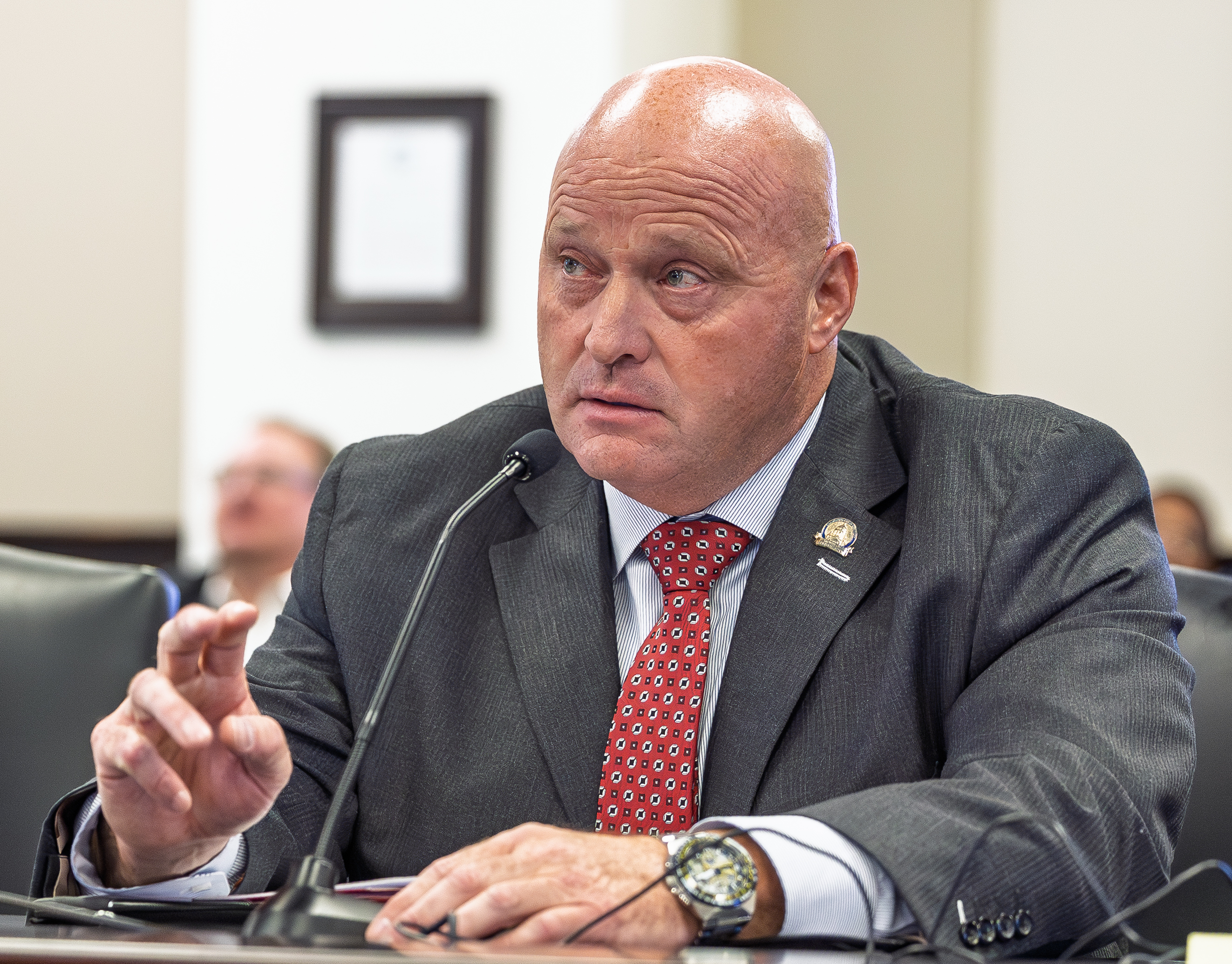
Rep. Steve Bratcher, R-Elizabethtown, speaks during Monday’s meeting of the Kentucky Housing Task Force 2025. A high-resolution photo can be found here.
FRANKFORT — Legislators on the Kentucky Housing Task Force 2025 on Monday received an update from advocates of modernizing the Affordable Housing Trust Fund. Rep. Steve Bratcher, R-Elizabethtown, said home ownership is one of the fastest ways to wealth and stability for Kentuckians and Americans. He testified with Adrienne Bush, executive director of the Frankfort-based Homeless and Housing Coalition of Kentucky and Scott McReynolds, executive director of the Hazard-based Housing Development Alliance. “Affordable housing is very challenging in our area as well as statewide. So, we’re here today to talk about House Bill 588 – which was filed last session – which helps with the Affordable Housing Trust Fund put some more money in that area so we can allow people to buy homes,” Bratcher said. Bush said the fund was established by the General Assembly in 1992. It supports housing for Kentuckians who are living below 60% of the area median income. For one person, that amounts to about $35,000, she said. For a family of four, it’s around $50,000. Bush said the fund is flexible and covers single family home construction, emergency repairs to preserve existing homes and rental development for duplexes and apartments. The Kentucky Housing Corp. awards funds through annual competitive grant applications to nonprofit developers based on local community needs, she said. In 2007, the General Assembly adopted a permanent funding source through real estate transfers. The trust fund receives money through a $6 transaction fee per deed transfer and $6 per mortgage recording fee. Bush said there is no recurring appropriation from the biennial budget, and over the last three years, the fees have only generated $3-4 million annually. “And what we’ve seen as the housing market inventory has tightened, receipts have steadily declined, from a high of $5.8 million,” Bush said. McReynolds said the Housing Development Alliance serves residents of Perry, Knott, Leslie and Breathitt counties, and the demand for its services is high.
“The future is even scarier for us. Even if we could wave a magic wand and plug the housing supply gap today, we’d have to continue to build 360 houses a year until 2029 in order to meet the expected supply gap,” he said.
McReynolds said the trust fund has proven to be a critical piece of funding for many reasons. He said the funding is flexible, not burdened by federal regulations and it can provide the local match that’s required for federal projects.
“The trust fund is a Kentucky program controlled by Kentuckians for Kentucky,” he said.
Bratcher said everyone agrees there’s a housing shortage, and he said the trust fund can play an important role to improve the situation.
“This is one option of many that we could use to try to fix this housing shortage and to get people that are hard-working Kentuckians into affordable housing,” he said.
Rep. Joshua Watkins, D-Louisville, said he’s a realtor and has worked in housing development for approximately 15 years. He asked if states where indexing or one-time adjustments have been enacted received complaints from industry stakeholders or others regarding affordability.
Bush said she was not aware of complaints, but said she’s not in the other states.
“I will say with Ohio, they are both capturing the fees the way we are in Kentucky, but they’re also appropriating money through their general fund. It is like a combination of both,” she said.
House Majority Whip Jason Nemes, R-Middletown, asked about who decides where the funds go. He said Oldham and Shelby counties haven’t received any funding.
Bush said there may be some counties where there isn’t a Habitat for Humanity or someone with the capacity or interest in developing in that county.
“As someone who runs a statewide organization, I want to see these resources deployed statewide as well. I think Kentucky Housing Corp. in receiving these applications has to make tough decisions around how they send a limited pool of money,” she said.
Nemes said he wants to make sure the money will be distributed to all places.
Sen. Jimmy Higdon, R-Lebanon, asked about smaller homes.
“Do you all see yourself adapting to small homes and stretching those dollars further,” he asked.
McReynolds said his organization is starting a project dubbed, “the not so tiny home” that would produce one-bedroom houses that are approximately 600 square feet for people who are flood survivors and have very limited income.
Lawmakers can’t act on legislation until the 2026 Regular Session begins in January or if the governor calls a special session.
The next task force meeting is scheduled for Oct. 20 at 1 p.m.