Legislative proposal seeks to better align college credits for transfer students
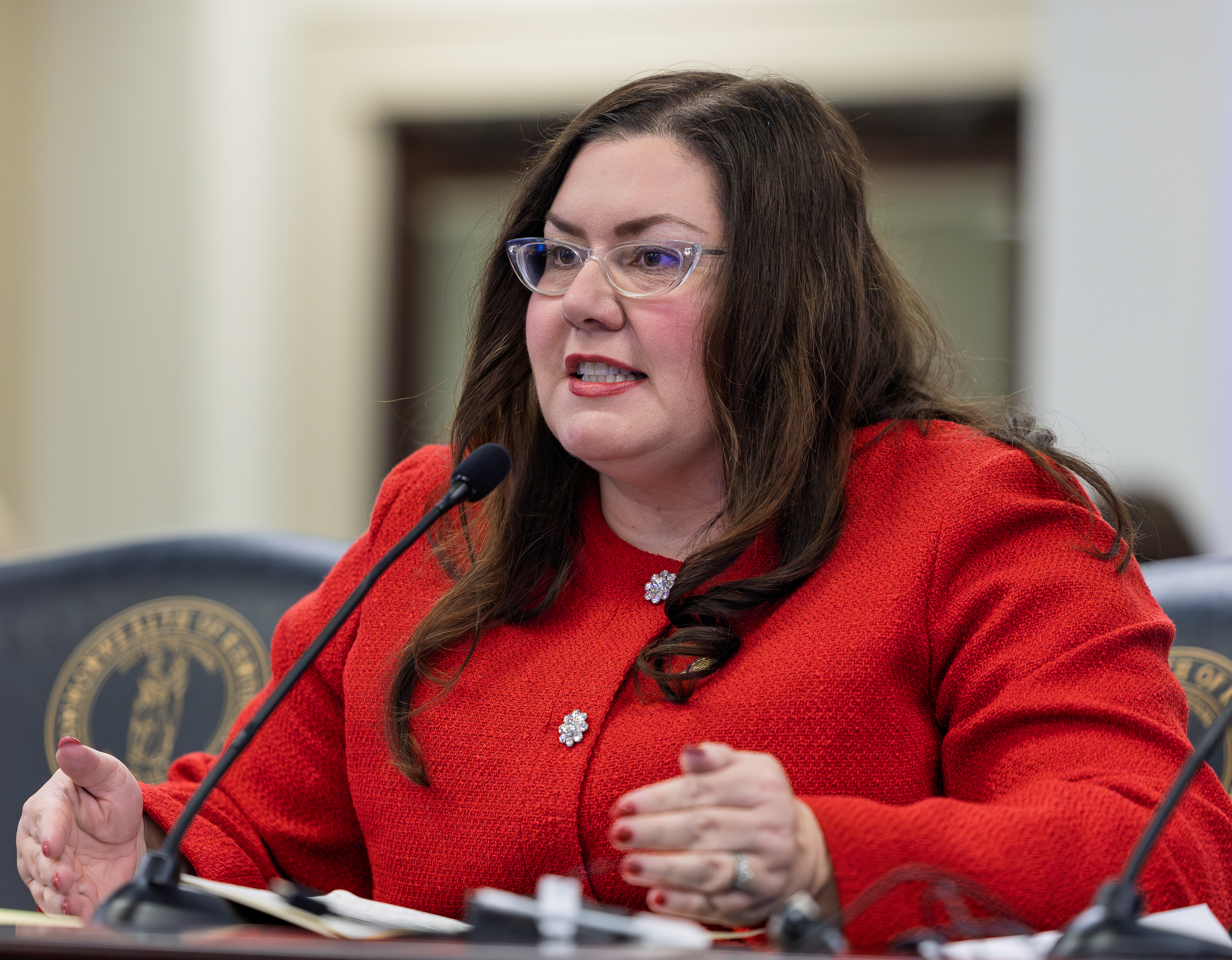
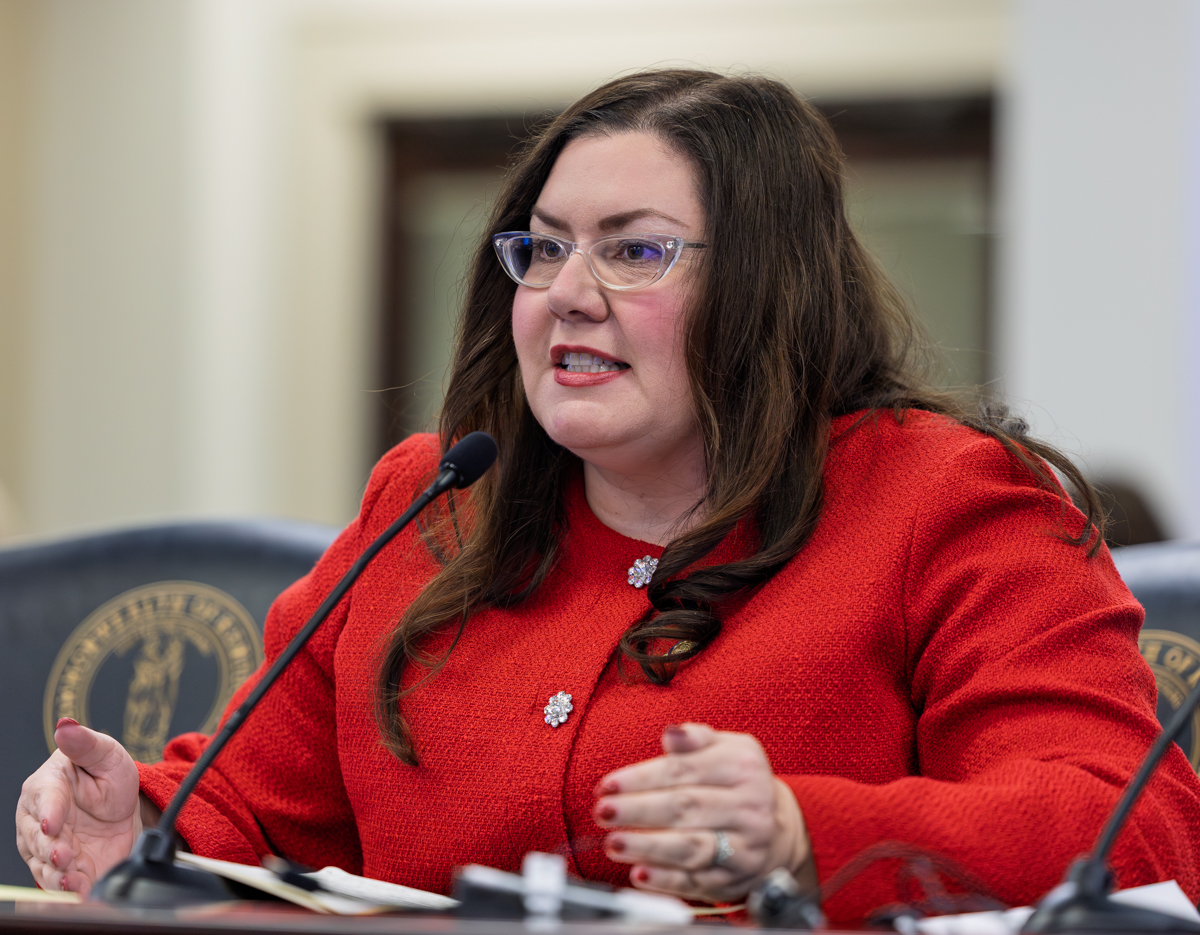
Rep. Vanessa Grossl, R-Georgetown, speaks Tuesday during a meeting of the Interim Joint Committee on Education. A high-res version can be found here.
FRANKFORT — The Interim Joint Committee on Education heard testimony Tuesday about a proposal that could make it easier for college students to transfer course credits between Kentucky’s public universities.
Rep. Vanessa Grossl, R-Georgetown, said the legislation would help prevent students from amassing 150 credit hours for a 120-hour degree. It would also allow students to be out in the workforce to fill job vacancies and build their futures more quickly, she said.
Grossl said she wants to work with universities on the proposed legislation. Addressing the issue through state statute would allow the legislature to signal its support for the concept and request progress reports from postsecondary institutions, she said.
“We want this to be something that’s codified so that we stay on track regardless of administration changes,” she said.
Travis Powell, executive vice president and general counsel for the Kentucky Council on Postsecondary Education, also spoke in favor of the proposal – called postsecondary credit alignment.
Powell said officials would identify transfer pathways based on student demand, workforce demand and learning commonalities. If an area is highly unique, it probably wouldn’t be included in a pathway because it would be too difficult to be aligned.
“Participation in each transfer pathway would be at the discretion of the institution. You would have each institution at the table to collaborate and develop the actual pathways to see if they would be in alignment,” he said.
Grossl and Powell said this would be “another tool in the toolbox.”
“It’s a great tool for students who start college already knowing that they want to transfer, and it’s going to help our high school counselors better be able to advise students as they are getting ready to leave high school, already taking dual credit and AP courses,” Grossl said.
Powell noted that two other states have enacted postsecondary credit alignment legislation. He said the changes make the transfer process more transparent and easier for students to navigate.
Rep. James Tipton, R-Taylorsville, said the legislation has been a “work in progress.” He expressed concern about schools that might accept credit, but only as an elective instead of toward a major.
“One of the big issues that I have heard is, especially in our students taking dual credit in high school, we’re investing dollars in this dual-credit scholarship, and if a student takes a dual credit course in high school, we want to make sure they’re in a course that is on a pathway that’s going to lead to a credential or a degree,” he said.
Senate Majority Whip Mike Wilson, R-Bowling Green, said he was disappointed when some of his college courses did not transfer.
“I have to say as a person that went to a community college and took those courses that I thought were going to satisfy those requirements at the higher institution, it did not,” he said.