A Benton, Kentucky, cattle farmer dies by suicide. Investigators discover tens of thousands of cattle that never existed. Twenty miles away, federal agents raid a gated riverside mansion where a crypto investor allegedly tortured a man for Bitcoin passwords — and a 13-year-old girl who only spoke German was reportedly found nearby. A private investigator says the money trail connecting it all runs into the billions and may lead back to one of Mexico’s most violent cartels. Two podcast episodes have drawn over 400,000 views, and Kentuckians keep saying the same thing in the comments: “I live here and I’ve never heard any of this.”
Here’s what we know, what’s alleged, and why it matters across the Commonwealth.
The Story That Started With Dead Cows
On April 18, 2023, Brian McClain of Benton, Kentucky, took his own life. He was 52. That same morning, a forensic auditor and federal officials had converged on his farm in Marshall County. The gig, as they say, was up.
McClain had operated three interconnected cattle businesses — McClain Farms Inc. in Benton, 7M Cattle Feeders in Hereford, Texas, and McClain Feed Yard in Friona, Texas. On paper, he managed somewhere between 80,000 and 100,000 head of cattle. He had promised investors returns of 30 percent. Money was flowing. Banks were lending. Everyone was getting paid.
There was just one problem. When Rabo AgriFinance conducted an audit in early April 2023, they found only about 10,575 cattle across all locations. Nearly 80,000 head had simply never existed — “ghost cattle,” as the industry would come to call them. The ones that were there? According to Jon Griggs, the private investigator who would later go public with his findings, many were emaciated, unable to stand, and left to die.
Two other individuals — a commodity broker and an investor — also reportedly died by suicide in connection with the unraveling scheme.
All three of McClain’s companies filed Chapter 7 bankruptcy in the U.S. Bankruptcy Court for the Northern District of Texas. More than 100 creditors from 14 states — farmers, livestock companies, financial institutions — were owed money. The USDA’s Agricultural Marketing Service issued a notice urging unpaid sellers to file claims immediately.
The press called McClain “the Bernie Madoff of cows.”
That should have been the whole story. A con man, a collapse, a bankruptcy. Tragic, but contained.
Except that’s not where it ended.
Enter Jon Griggs
Jon Griggs is a former law enforcement officer — reserve police, max-security corrections, gang task force in St. Louis — who now runs a private armed security company out of western Kentucky called Overwatch Security Group. When the McClain operation blew up, the U.S. Trustee’s office contracted a Texas-based security firm that, in turn, brought in Griggs and his partner Jeremy to secure the farm and protect a forensic auditor working the scene.
Their job was straightforward: keep people off the property, protect assets headed for auction, and report anything unusual.
What they found, according to Griggs, was anything but straightforward.
The farm didn’t look like a farm. No combines, no mass feeding infrastructure, nothing to support 100,000 cattle. Griggs, who grew up on a farm and whose grandfathers were both farmers, says the operation looked like “people feeding a few horses and a few cows personally for themselves.”
In McClain’s office, Griggs says he found AR-15 magazines, stacked ammunition, and two cheap handguns — odd for a man who supposedly shot himself with a Sig Sauer P226. He also found a massive quantity of xylazine, a veterinary sedative that has become a key ingredient in the street drug “tranq,” which is mixed with fentanyl and heroin. He says it took an entire box truck to haul it all away.
Then his partner found a box. It was disguised in a sump pump container, stashed in a barn, and filled with hundreds of fake cattle feeding agreements — the paper trail behind the ghost cattle. Pay sheets. Loan documents. Check after fabricated check.
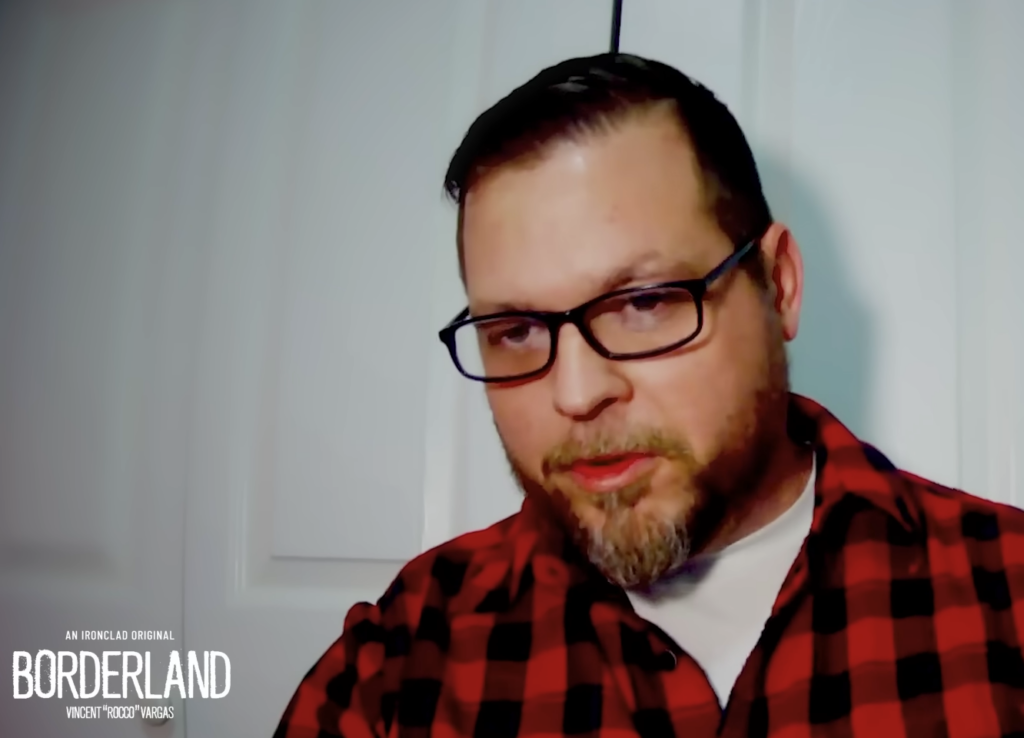
“Mlan killed himself. They didn’t have time to destroy any of that evidence,” Griggs said on a podcast. “Jeremy runs across it, and here we are.”
The Podcast That Blew It Open
Griggs took his findings to Borderland, a podcast on the IRONCLAD network hosted by Vincent “Rocco” Vargas, a former Border Patrol agent. The first episode aired in April 2025. A follow-up episode dropped in late January 2026. Together, they’ve racked up over 400,000 views.
The comment sections read like a roll call of stunned Kentuckians:
“Man, I live in Kentucky and have heard nothing at all of this until I found it here yesterday. Deep corruption.”
“Born & raised in KY, my father is a cattle farmer still to this day. The absurdity on this whole ‘Cattle Deal’ is beyond belief.”
“I’m from Guadalajara, living in Kentucky — this is freaky, scary, and shocking to learn.”
What Griggs alleges in these episodes goes far beyond the $100–175 million in documented bankruptcy liabilities. And it’s important to be clear about what’s verified and what isn’t.
What the Court Records Actually Show
Before we get into the bigger claims, here’s what is established in federal filings and credible reporting:
In a sweeping complaint filed in March 2025, court-appointed bankruptcy trustee Kent Ries alleged that four banks — Rabo AgriFinance, HTLF Bank, Mechanics Bank, and Community Financial Services Bank — knowingly or negligently enabled McClain’s scheme for years. The complaint describes fraudulent bank transfers, check-kiting on a massive scale, and what Ries called “blithely ignoring numerous red flags.”
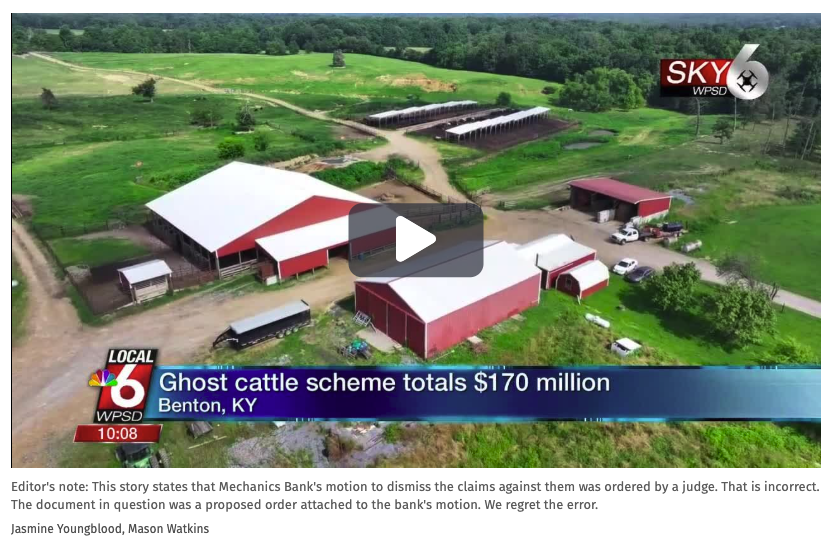
The trustee’s filing states that intercompany transactions “totaled in the tens of millions per month and $2 billion in 5 years.” That’s the transaction volume fueling the check-kiting scheme — not pure profit, but the sheer scale of money being shuffled to keep the fraud alive.
Rabo AgriFinance has its own history. In 2018, the bank was fined $370 million for laundering cartel money through its branch in Calexico, California, on the Mexican border. That branch had become one of Rabo’s highest-performing locations in the country — because it was processing drug money as rural farm cash. One American CEO narrowly avoided prison. The scheme ran from roughly 2008 to 2016.
Both CFSB and Rabo have issued statements denying wrongdoing in the McClain case. CFSB said it “has no involvement in this matter” and has “cooperated fully with all relevant authorities.” Rabo called the claims baseless and said it would let the legal process play out.
What Griggs Alleges — And What Isn’t Verified
This is where the story gets bigger, wilder, and harder to confirm. The following claims come from Griggs’s two podcast appearances. They have not been independently verified by law enforcement, entered into court filings (beyond the existing bankruptcy), or corroborated by any other named source at the time of this writing.
The Money
Griggs says his team has obtained and analyzed roughly 2,000 individual pay sheets from the operation and has accounted for $4.5 billion in payouts. With additional interbank transfers documented in the adversary proceeding in Northern Texas, he puts the potential total at up to $10 billion.
He says one individual located about 15 miles from the farm received $232 million. That person’s legitimate business? Portable sheds. Another individual who worked with the shed company allegedly owns 277 properties in Florida.
For context, the court-documented figure is $2 billion in transaction volume over five years and $175 million in liabilities. Griggs’s numbers are dramatically larger. He maintains the pay sheets back them up.
The Shell Companies
Griggs says he, his partner, and his girlfriend — described as a national advocate against child trafficking — traveled to central and south Florida to investigate businesses that appeared on the payout lists. He claims roughly 167 companies that received money from the operation had no physical location: empty lots, non-existent storefronts, addresses that led nowhere.
He describes them as shell companies designed purely for laundering. This is consistent, in principle, with what the bankruptcy trustee noted in court filings — that associated entities like MAP Enterprises and Wildforest Cattle Co. “appear to be entities with no actual physical business locations or ongoing business operations.”
The Cartel Connection
Griggs believes the operation is tied to the Cártel Jalisco Nueva Generación (CJNG), one of the most violent and fastest-growing drug cartels in the world. His reasoning starts with Rabo AgriFinance’s documented 2018 fine for laundering CJNG money and extends through what he describes as patterns of narco-banking — the same institution, similar methods, escalating scale.
He also points to the arrest of Roberto Alderete in the Paducah area around the time the fraud started in 2018, and Luis Alderete, described in court records as a CJNG lieutenant, who was arrested for trying to acquire assault rifles and a grenade launcher through an informant in Paducah, claiming it was “wartime” in Mexico.
These arrests are real and documented. Whether they connect directly to the McClain operation is Griggs’s assertion, not an established fact.
The Smithland Mansion and Trafficking Allegations
In the January 2026 episode, Griggs describes a disturbing chain of events in Livingston County, adjacent to the area where the McClain fraud was centered.
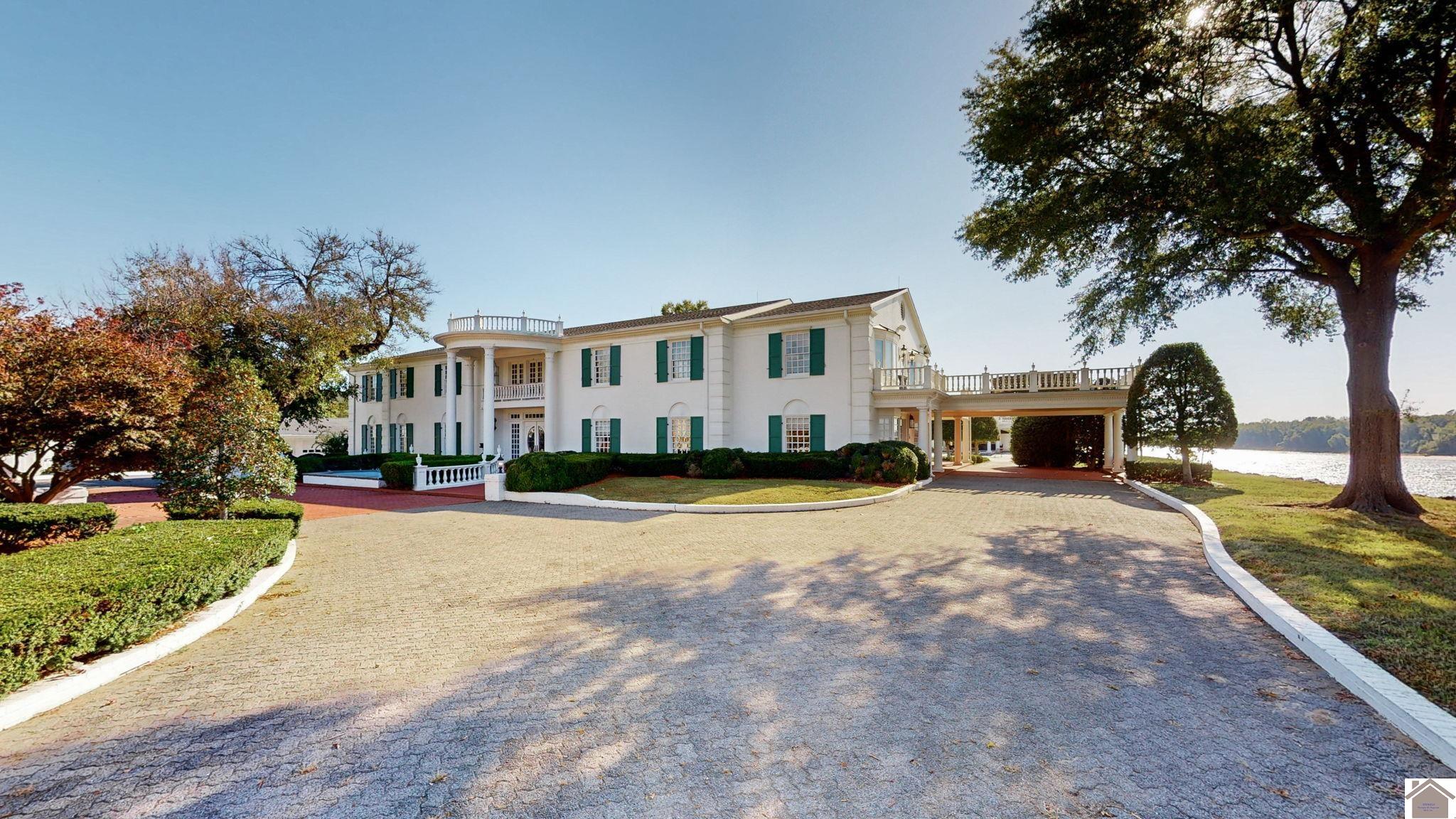
The verified part: In June 2025, ATF agents, the NYPD, and Kentucky State Police raided the “Smith Mansion” in Smithland — a gated, six-bedroom, 10-bathroom riverfront estate overlooking the Ohio River, complete with a tennis court and swimming pool. The property was purchased in January 2025 for $1 million through a Wyoming-registered LLC called “Mr. Smith LLC” and is owned by John Woeltz, a Paducah-native crypto investor. The Herald Ledger reported that neighbors saw black SUVs, armored vehicles, and a helicopter overhead, and that authorities were also spotted at a second Woeltz-owned property on Birdsville Road, seven miles away. During the raid, authorities confiscated an “Apocalypse Hellfire” — a six-wheel off-road vehicle worth roughly $200,000 to $250,000.
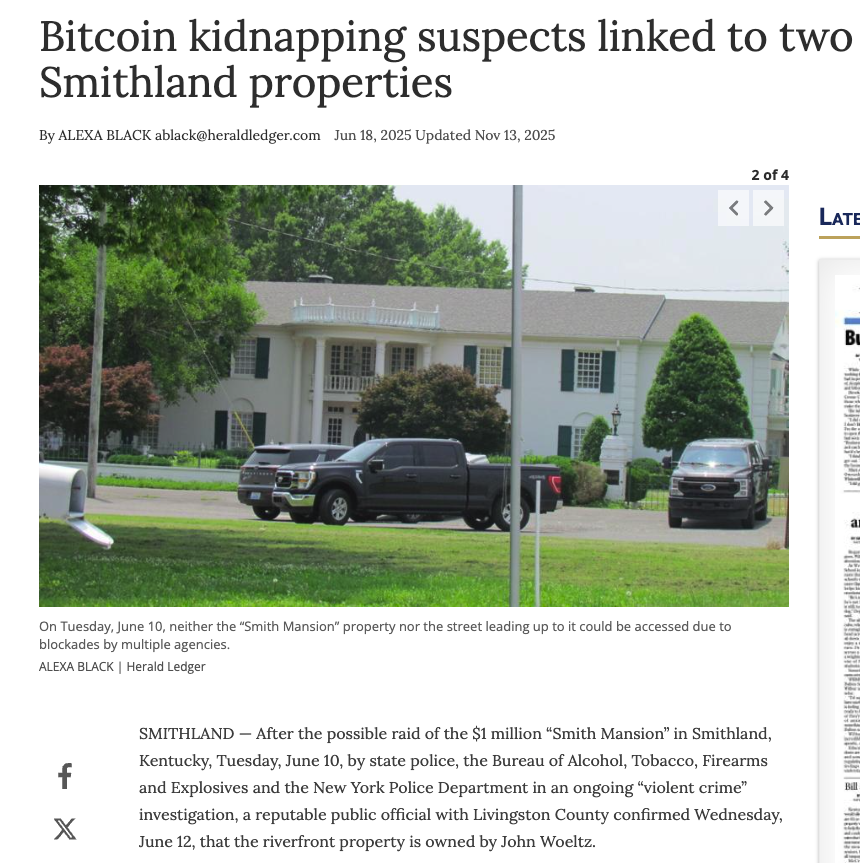
Woeltz and an associate, William Duplessie, had been charged in Manhattan with kidnapping and torturing an Italian man for 17 days to extract a Bitcoin password worth roughly $28 million. CBS News confirmed a prior 911 call from a German-speaking victim’s mother at a Paducah Holiday Inn, reporting her son was being held at the property. At least 18 guns were found during the Kentucky search.
The unverified part: Griggs says a Kentucky Department for Community Based Services worker contacted him after the raid and told him a 13-year-old girl who spoke only German was found in a ditch near the property. He says this was never publicly reported, that family services “was not acting right” about the case, and that a neighbor and a local reporter corroborated the account. He connects this to a broader concern about human trafficking in the region.
No law enforcement agency has publicly confirmed this claim. The Livingston County Sheriff’s Office has declined to comment, citing an open investigation.
Political Ties and Law Enforcement
Griggs says he has identified state representatives and local police officers from Marshall County on the payout sheets. He describes attending a major Republican campaign event in Fancy Farm, Kentucky, where he says he personally witnessed and photographed a former Kentucky attorney general greeting and embracing the individual who allegedly received $232 million.
He claims the same individual has donated to campaigns on both sides of the aisle — including the current Democratic governor.
“I know why this isn’t investigated,” Griggs said on the podcast. “Because it’s at the top of the state.”
He says two years of calls to the Kentucky Attorney General’s office have gone to voicemail with a full mailbox. He describes being shot at, his girlfriend being shot at, and a pretextual traffic stop he believes was retaliation for his investigation.
None of these allegations have been independently verified.
Why This Matters Here
It’s easy to read all of this and think: that’s western Kentucky — Paducah, Marshall County, Livingston County. What does it have to do with me in Lexington, Richmond, or Hazard?
A few things.
The cartel presence in Kentucky is not hypothetical. A Courier Journal investigation using hundreds of court records documented CJNG cells operating in Louisville, Lexington, and Paducah. A CJNG member named Ciro Macias Martinez worked as a horse groomer at Calumet Farm — home to eight Kentucky Derby winners — while overseeing the flow of $30 million in drugs into the state. He was imprisoned in 2018 for meth trafficking and money laundering. The DEA’s Louisville Division has participated in major CJNG crackdowns, including “Project Python,” which resulted in over 600 arrests nationally. As recently as September 2025, DEA agents conducted a sweep across Kentucky, Tennessee, and West Virginia, arresting 51 individuals with ties to Mexico’s Sinaloa Cartel.
One commenter on the podcast — who said they work in a Kentucky hotel — put it bluntly: “According to the training videos, the KY Derby and the Super Bowl are two of the biggest trafficking events.”
The banking questions affect everyone. The banks named in this case don’t just operate in Marshall County. Community Financial Services Bank, Rabo AgriFinance, HTLF, and Mechanics Bank serve customers across the region. If the trustee’s allegations hold — that these institutions processed hundreds of millions in suspicious transactions without adequate oversight — it raises questions about the systems that every rural farmer, small business owner, and borrower depends on. A cattle farmer in Madison County or a hay producer in Estill County operates under the same regulatory framework that allegedly failed here.
The information vacuum is the story. This case involves a documented $175 million bankruptcy, $2 billion in transaction volume, a $370 million cartel-money-laundering fine against the primary lender, three suicides, and a private investigator claiming it goes much deeper. And yet, as commenter after commenter notes, most Kentuckians have never heard of it. The first WPSD deep dive didn’t run until June 2025 — more than two years after McClain’s death. It took a podcast hosted by an ex-Border Patrol agent out of California to bring it to a mass audience.
Whether Griggs’s larger allegations are ultimately substantiated or not, the gap between what’s documented and what’s been publicly discussed is itself a failure.
What We Don’t Know
It’s worth being direct about the limits of this story.
Jon Griggs is a private security operator with a law enforcement background. He is not a federal agent, a prosecutor, or a forensic accountant. He has not been deposed, and his claims have not been subject to cross-examination. His financial figures far exceed anything in official court filings. His allegations about political corruption, police complicity, and human trafficking are serious — and unconfirmed by any official source or independent investigation at the time of publication.
The Smithland/Woeltz case is geographically close to the McClain fraud, but no law enforcement agency has publicly drawn a connection between the two.
Rabo AgriFinance’s 2018 cartel fine is documented fact. Whether that history extends to the McClain lending relationship is a question the bankruptcy trustee is pursuing — not one that has been answered.
The court system will ultimately determine what the banks knew and when. That process is ongoing.
What Happens Next
The bankruptcy case remains active in the Northern District of Texas, where Trustee Kent Ries continues to pursue recovery from the four named banks. A separate investor lawsuit targets Rabo AgriFinance, Mechanics Bank, and CFSB. The USDA and the trustee are working through competing interpretations of the Dealer Trust Act to determine how $119 million in claims should be resolved.
Griggs says he’s filing paperwork to take an uncontested constable position in the area — a constitutionally elected law enforcement role — to give himself some official capacity to continue investigating. He’s asked the IRONCLAD audience for help: anyone with skills in open-source intelligence, financial fraud investigation, or cybersecurity. He says his team is still working out of pocket, buying drones, and working through the 2,000 payout records in their spare time.
The podcast has promised more episodes. Federal agencies — the DEA, ATF, and FBI — have not publicly commented on any broader investigation tied to these allegations.
The bankruptcy court filings are publicly available through PACER. The two Borderland episodes are on YouTube. Anyone with relevant information can contact the FBI’s Louisville Field Office or reach Griggs through Overwatch Security Group.
The question for Kentucky isn’t whether every claim in a podcast is true. It’s whether anyone with subpoena power is asking the same questions — and why, nearly three years later, most of us are only hearing about this now.
Related Sources & Further Reading:
- Herald Ledger: “Bitcoin Kidnapping Suspects Linked to Two Smithland Properties” (includes photos of the mansion raid)
- WPSD Local 6: “Two Years Later, Banks Grapple With Impact of Massive Ghost Cattle Scheme”
- Fox News: “Banks Sued Over $100 Million ‘Ghost Cattle’ Ponzi Scheme Fraud Case”
- Drovers: “Kentucky Cattle Scheme With 78,000 Ghost Cattle Unravels”
- CBS News: “NYC Crypto Kidnapping Suspect Linked to Similar Case in Kentucky”
- Courier Journal: “A Ruthless Mexican Drug Lord’s Empire Is Devastating Families With Its Grip on Small-Town USA”
- DEA: “Operation Nets More Than 500 Arrests Targeting CJNG”
- Borderland Episode 1: “Kentucky’s MASSIVE CJNG Money Laundering Operation?”
- Borderland Episode 2: “UNCOVERING CJNG in Kentucky”
Have information related to this story? Tips can be submitted to the FBI Louisville Field Office or through Overwatch Security Group.