Senate committee endorses first responder safety barrier bill
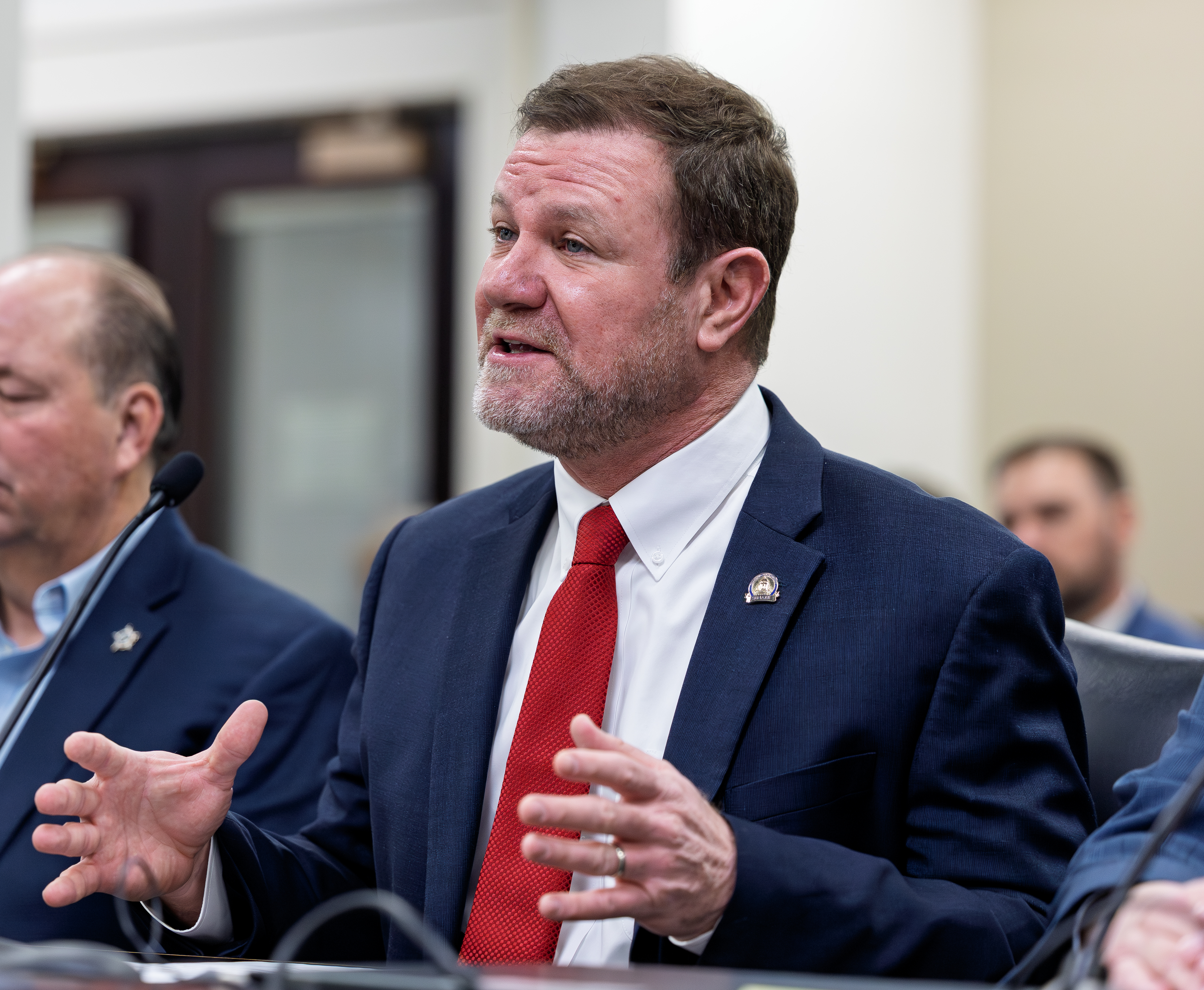
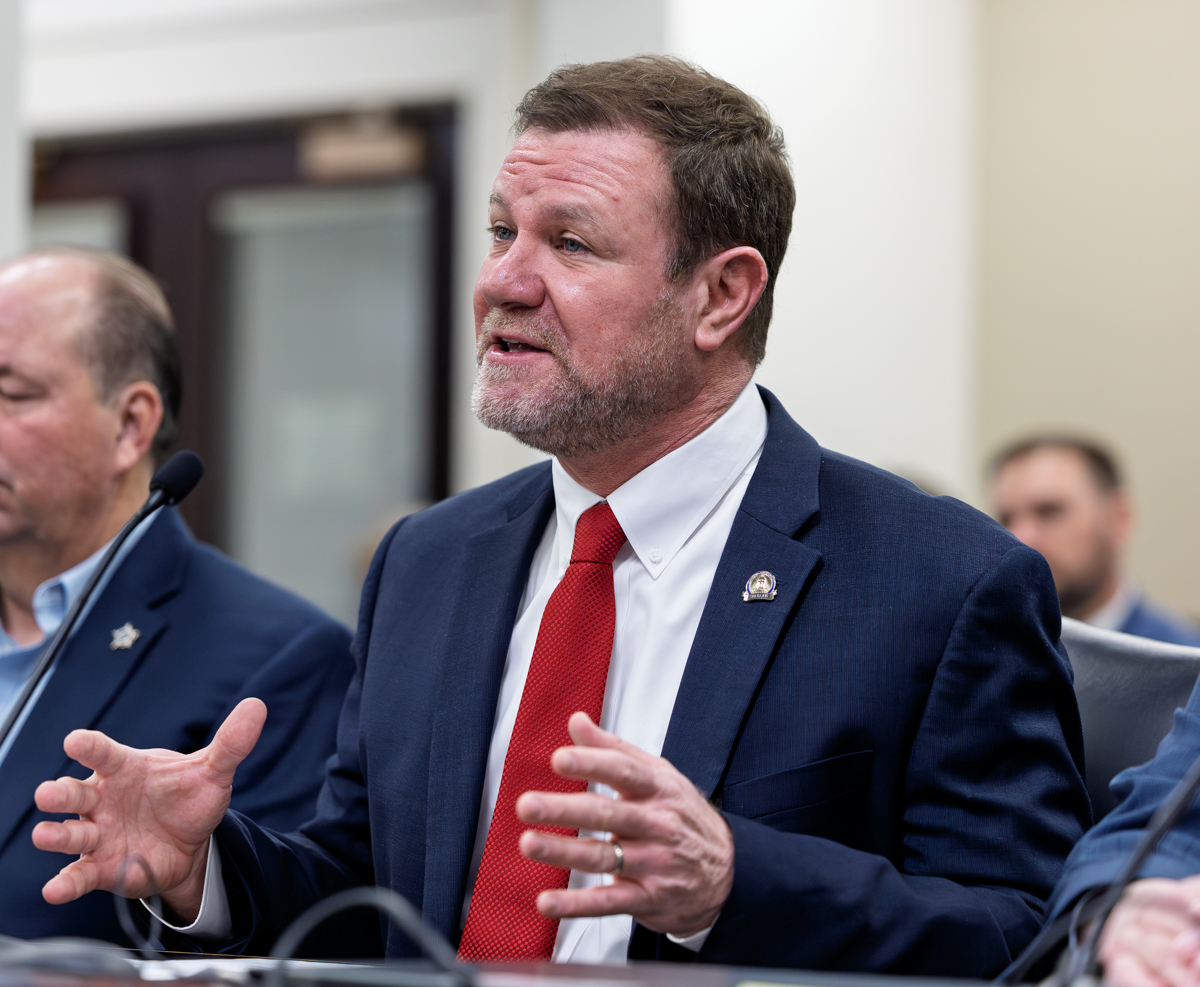
Sen. Matt Nunn, R-Sadieville, testifies Thursday on Senate Bill 104 to the Senate Veterans, Military Affairs and Public Protection Committee. A high-res version can be found here.
FRANKFORT — A bill to ensure a “safety barrier” for first responders while they work advanced Thursday from the Veterans, Military Affairs and Public Protection Committee.
Bill sponsor Sen. Matt Nunn, R-Sadieville, said the legislation is often called the “Halo Act,” and it would create a 25-foot safety barrier around first responders when they’re performing their official duties.
Under the measure – Senate Bill 104 – a first offense would be a class B misdemeanor, a second or third offense would be a class A misdemeanor, and each subsequent offense would constitute a class D felony charge.
“What this bill does is ensure that the men and women who protect and serve our commonwealth every day can do so without any interference, any impediments. That way they can go home safely every day, and the people they’re protecting and serving get the best, most efficient treatment,” he said.
Nunn said the bill calls for a verbal warning if someone is impeding, harassing or intimidating a first responder. If the offender ignores that warning, they can be charged.
Committee Chair Matthew Deneen, R-Elizabethtown, said the bill would provide a safety net for all responders, mentioning how first responders are sometimes impeded by distraught family members while they’re working.
“That’s critical to making sure that our first responders, whether it is law enforcement, fire, rescue, that those individuals have the space to do their job and that they can return home safely to their families,” he said.
Sen. Jimmy Higdon, R-Lebanon, also supported the bill, but cited concerns over the felony provision, which he called a “pretty tough standard.”
Nunn said he understands the levity of the felony charge, but he noted that it only takes effect on the fourth offense and that warnings are given before each charge. He said an offender will have been warned and charged many times before the felony provision kicks in.
“At that point, I feel like it is an appropriate escalation,” he said.
Sen. Karen Berg, D-Louisville, described the bill as “thoughtful”, but voted against the measure. She said she’s not aware of incidents happening very frequently and questions why penalties would need to escalate.
Berg said state law already forbids people from intentionally obstructing or disrupting an emergency responder from performing his or her official duties.
“I’m just curious, do you know how many people have been cited under this in the last couple of years in this state,” she asked.
Nunn said he didn’t have statistics on how many people have been cited under current statute, but he further explained the intention of the bill.
“We have a serious problem here. I hear this often from first responders, and what this bill does is it creates a clear standard. The statute you described has some room for interpretation. This creates a very clear standard in my opinion, and that’s necessary to ensure those first responders can perform their duties,” he said.
Sen. Gary Clemons, D-Louisville, also raised some issues over the bill. He said he understands the 25-foot rule for EMTs and firefighters, but he expressed concern about police and immigration officers violating the free speech rights of people who may be recording the incident. He voted against the measure.
Sen. Craig Richardson, R-Hopkinsville, voted in favor of the SB 104 and said it’s necessary.
“I think this bill creates well-defined standards to protect people that want to be there, that want to be close by, that are concerned and have a vested interest in what’s happening, but also protects those that are trying to serve and do their job,” he said.
Sen. Gary Boswell, R-Owensboro, said he shares Higdon’s concern regarding felony offenses.
“However, I would say in this particular case, I think your bill is very lenient,” Boswell said. “You’re given so many opportunities for people not to do this. I don’t think we’re talking about a lot of young kids here. I think we’re probably talking about people who possibly might be a little bit older, and they should know better.”
SB 104 now heads to the full Senate.