LEXINGTON, Ky. — The Lexington-Fayette Urban County Council postponed action on a proposed ground lease for a large-scale solar project on the city-owned Haley Pike Landfill for a second consecutive week Tuesday, with several council members pressing the developer for a richer community benefits agreement and insisting that an elected official have a seat at any future negotiation table.
Vice Mayor Dan Wu moved to delay the item until the February 24 work session after a lengthy and pointed discussion about whether the city is getting enough out of a deal that would allow Social Impact Solar LLC, a platform entity of Lexington-based Edelen Strategic Ventures, to develop roughly 357 acres of the closed landfill into a solar photovoltaic facility. Council Member Emma Curtis seconded the motion, which passed without dissent. Because no council meeting is scheduled this Thursday, the one-week delay does not change the project’s legislative timeline — it can still receive first reading at the next regular council meeting.
The debate centered on the community benefits agreement, or CBA. Richard Dugas, of the Environmental Quality and Public Works Commission, told the council that revised lease terms raised the CBA from $125 per megawatt of direct-current capacity to $250, but with a significant caveat: if the Kentucky Division of Waste Management determines that construction triggers an extension of the landfill’s 30-year post-closure environmental monitoring, the CBA could revert to the $125 minimum to cover those additional costs.
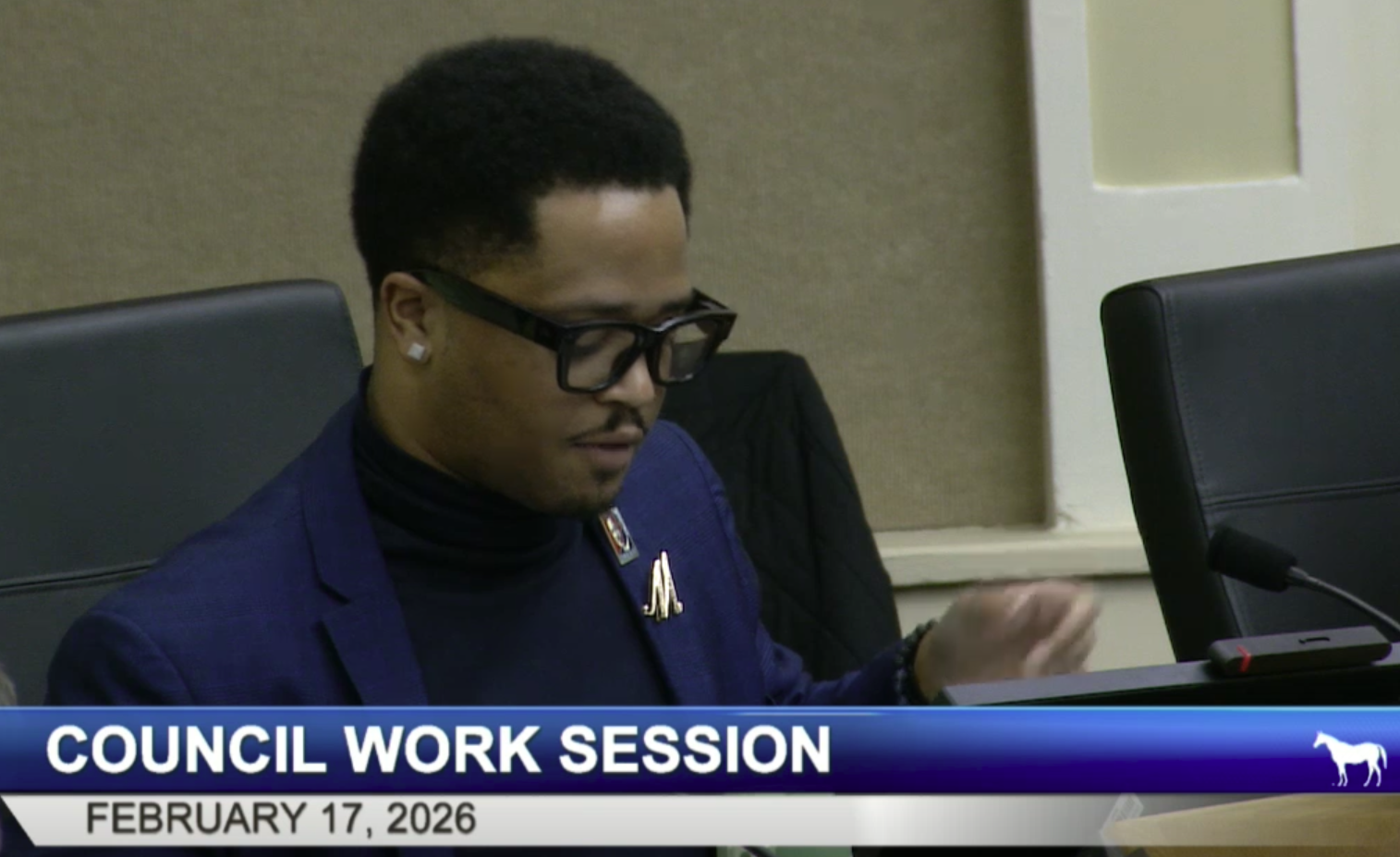
Council Member Tyler Morton argued the figure remains too small. He noted that the council’s own solar zoning text amendment, or ZOTA, recommends $750 per megawatt — a figure that some solar working group participants have called modest — and said the only way for constituents to receive a tangible, direct benefit from the project is through the CBA. Morton framed the issue in stark terms, saying the council would be allowing a private entity to develop public property at minimal cost with only a very small community benefit attached, and that moving forward without a stronger agreement would be putting politics over people.
Edelen Renewables CEO Chris Edelen countered that the project’s economics are fundamentally different from typical farmland solar development. Building on a brownfield site is dramatically more expensive, he said, which is why only a handful of landfill-to-solar projects exist nationally. He urged the council to view the project’s value in totality — an estimated $85 million or more in private capital investment, local union construction jobs, and a future payment-in-lieu-of-taxes, or PILOT, agreement that he said would net the city 20 to 30 percent more revenue than standard taxation. When Wu asked directly whether Edelen would be open to moving closer to the $750 figure recommended in the ZOTA, Edelen said yes and indicated he would treat the current CBA level as a floor rather than a ceiling.
Installation methods also drew scrutiny. Wu pressed for explicit lease language covering how solar panels will be anchored on the roughly two-thirds of the site that is non-capped agricultural land, not just the environmentally sensitive capped cells. Edelen said the company intends to use a weighted ballast system across the entire site with no driven pylons, though he said final engineering would depend on studies conducted after the lease is executed. Wu asked Edelen to commit in writing to leaving the soil as it was found; Edelen said he was open to language minimizing surface impact but cautioned against a blanket prohibition, citing the possibility of access roads.
Curtis raised the question of precedent. She noted that although the Haley Pike site is not prime farmland, it is agriculturally zoned, and the project would count toward any future cap on industrial-scale solar development on agricultural land. She also asked whether Edelen’s team had engaged with the council’s solar ZOTA working group. Edelen said it had not, arguing the project is a one-off that sets no precedent because no other developer is likely to propose a similar investment on a landfill.
Multiple council members — Morton, Council Member Amy Beasley, and Council Member Shayla Lynch — called for a council representative, preferably from the ZOTA working group, to participate in any future CBA negotiations. Lynch noted that council members served on the negotiation team for the new city hall and said the same should apply here. Council Member Dave Sevigny framed the stakes broadly, reminding colleagues that the lease could bind the city for up to 28 years.
Dugas outlined several other revisions made since the previous week’s session. The decommissioning bond timeline was shortened from 12 months to six months to match the draft ZOTA language, and the bond amount was pegged to an industry-standard rate of 45 cents per watt rather than a fixed dollar figure. Assignment provisions were tightened to give the city the ability to review the creditworthiness of any new entity that might acquire the lease. Language on renewable energy credits was clarified to guarantee the city a right of first refusal at market rate, with credits expected to be rebid roughly every seven years.
In other business, the council approved the remaining new business items without dissent, including a $1.96 million purchase of a custom heavy-duty rescue truck for the fire department, a $990,202 federal grant acceptance for the East Hickman Pump Station expansion, a $23,994 reallocation of Emergency Solutions Grant funds for Arbor Youth Services’ rapid rehousing program, and authorization to apply for a $110,000 state household hazardous waste collection grant.
Council Member Jennifer Reynolds, chairing the Social Services and Public Safety Committee earlier that day, moved to place two carbon monoxide detection ordinances on the February 26 council meeting docket. The ordinances, which passed committee in January, would require CO detectors in existing commercial buildings and in single- and two-family dwellings, closing a gap in regulations that currently cover only post-2011 construction. The motion passed without dissent.
Council members also approved $22,572 in capital project grants: $13,072 for the WiseGuys Urban Uplift Foundation’s community boxing program, $8,000 for the Levee Collective’s space improvements, and $1,500 for archival storage at the Lexington History Museum.
During council reports, Council Member Joseph Hale asked for a moment of silence for civil rights leader Jesse Jackson, whose death was announced earlier that day. Council Member James Brown referred a tourism improvement district proposal from Visit Lex to the Budget, Finance, and Economic Development Committee. Wu wished the community a happy Lunar New Year.
The council’s next work session is February 24, when the Haley Pike solar lease is expected to return.