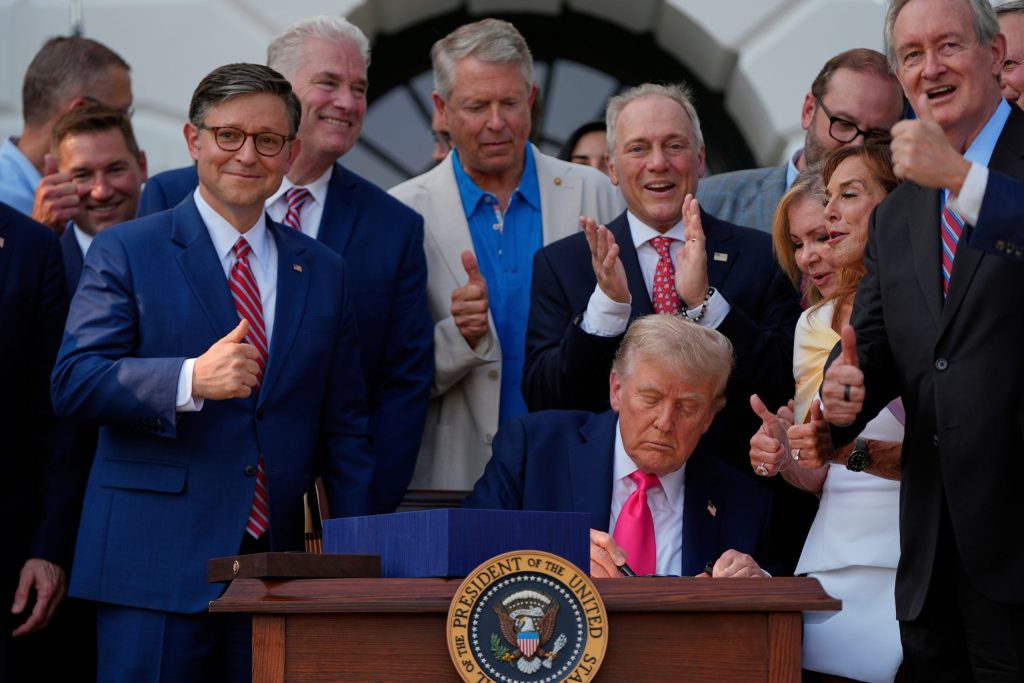
Already two years overdue, the latest extension of the 2018 farm bill expired on September 30, 2025. While the One Big Beautiful Bill Act (OBBBA), signed into law in July, contained much of the policy usually included in the farm bill, it did not cover all of the programs that farmers and rural communities rely on.
“Anything that was not included in the Republican budget bill is likely to end,” said Michael Happ, program associate for climate and rural communities at the Institute for Agriculture and Trade Policy.
The farm bill is a package of food and agriculture policies that is reauthorized once every five years. Programs like the Supplemental Nutrition Assistance Program (SNAP), crop insurance, and commodity protections are funded through the farm bill.
The OBBBA covered about 80% of the provisions usually provided by the farm bill. Notably, it extended commodity support programs through 2031 and expanded crop insurance benefits for beginning farmers and ranchers.
But the law cut $120 billion from SNAP over the next 10 years. One in seven rural households rely on SNAP to put food on the table, according to the Food Research and Action Center.
The budget bill left out other key rural programs like the Rural Microentrepreneur Assistance Program, Rural Cooperative Development grants, and the Rural Energy for America Program. It also excluded the Conservation Reserve Program and the Local Agricultural Market Program.
Happ said that losing these programs puts farmers in a tough position as they adapt to the changes tariffs have made to their businesses, which increased input prices for fertilizer and equipment like combines and tractors. Some farmers have lost their export markets because of the tariffs, making domestic markets an essential part of their businesses.
“These programs are supposed to help farmers connect to those local markets and local purchasers,” Happ said. “Now is not the time to be cutting those and letting them shut off for however long.”
The farm bill expiration came hand-in-hand with a government shutdown that could exacerbate the blow.
Many government workers are currently furloughed, including at the Department of Agriculture (USDA), which administers farm and food policy. SNAP benefits are currently paid out through the end of October, but if the shutdown extends past then, benefits could be delayed.
The dual timing of an expired farm bill and a government shutdown highlights just how divided Congress has become. The shutdown occurred because lawmakers could not agree on a spending bill for the 2026 fiscal year; the most contested issue was over tax credits provided through the Affordable Care Act. The farm bill saw similar disagreement between lawmakers, especially over how to fund SNAP.
Up until recently, the farm bill was one of the last examples of truly bipartisan legislation that saw politicians from both sides of the aisle work together. A spokesperson for Senator John Boozman (R-Arkansas), chairman of the Senate Agriculture Committee, said he “continues to work with members of the committee to deliver strong wins for agriculture as well as a farm bill.”
But the latest disagreements over how to fund nutrition programs significantly slowed farm bill negotiations.
“[Republicans] raided the nutrition title to pay for some crop insurance and reference prices that should have been done in a farm bill,” said Representative Angie Craig (D-Minnesota) in a Civil Eats interview from mid-September. “I’m at the table. I’m negotiating. But the truth is that none of this is going to be fast enough to offset the tariffs that the Trump administration has put forward.”
As of October 13, no extension has been made to the 2018 farm bill, which means the agriculture programs that weren’t covered by the OBBBA will likely slip through the cracks in the coming months.
“We might be living in a post-farm bill world right now where we just pass farm policy through budget bills, and leave out a lot of really important programs,” Happ said.
The post Partisan Road Blocks on the Way to Reauthorizing the Expired Farm Bill appeared first on The Daily Yonder.