By Melissa Patrick
Kentucky Health News
Five cases of pertussis, commonly known as whooping cough, have been reported in four Fayette County schools since early October, according to the Lexington-Fayette County Health Department.
WKYT-TV reports that a message was sent to parents about the cases at the following schools: Paul Laurence Dunbar High School, Lafayette High School, Lansdowne Elementary School and Lexington Christian Academy.
Students who contract the illness are required to take antibiotics for five days before returning to school, WKYT-TV reports.
What is whooping cough?
Whooping cough is a highly contagious respiratory illness spread by coughing and sneezing. Infected people can spread the disease from the start of symptoms and at least two weeks after coughing begins.
Early symptoms of whooping cough look like a common cold, including a runny nose, sneezing, mild cough and low-grade fever. After one to two weeks, long coughing spells develop, which often occur in explosive bursts, sometimes ending with a high-pitched whoop and vomiting. This can go on for up to 10 weeks or more, according to the Centers for Disease Control and Prevention.
Babies younger than one year old are at the greatest risk of getting whooping cough and having severe complications from it. Young infants may not initially present with classic symptoms and may not even have a cough. Instead, they may just struggle to breathe or stop breathing.
It’s also important to know that some people have mild symptoms and don’t know they have whooping cough, but they can still spread the bacteria to others. Many babies are infected by older siblings, parents or caregivers who may not know they have it.
People with pre-existing health conditions that may be worsened by whooping cough are also at high risk for developing a severe infection.
Vaccination recommendations
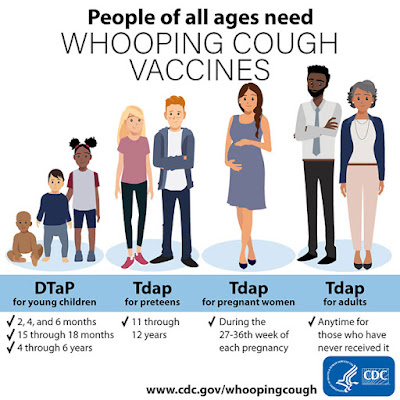
The pertussis immunization is combined with the tetanus and diphtheria vaccines (DTaP and Tdap) and is required for Kentucky school children.
The best way to avoid getting whooping cough is by getting vaccinated. Health officials encourage everyone to remain up to date with their pertussis vaccines. This includes:
- All pregnant women should be immunized during every pregnancy to protect their babies.
- Infants should be immunized when they are 2 months, 4 months, 6 months and 12 to 15 months old.
- Children should be immunized before starting kindergarten.
- Teens should be immunized when 11 to 12 years old.
- Teens and adults should be immunized at least every 10 years or sooner if an injury occurs, or to protect a newborn.