Commission discusses juvenile services fund
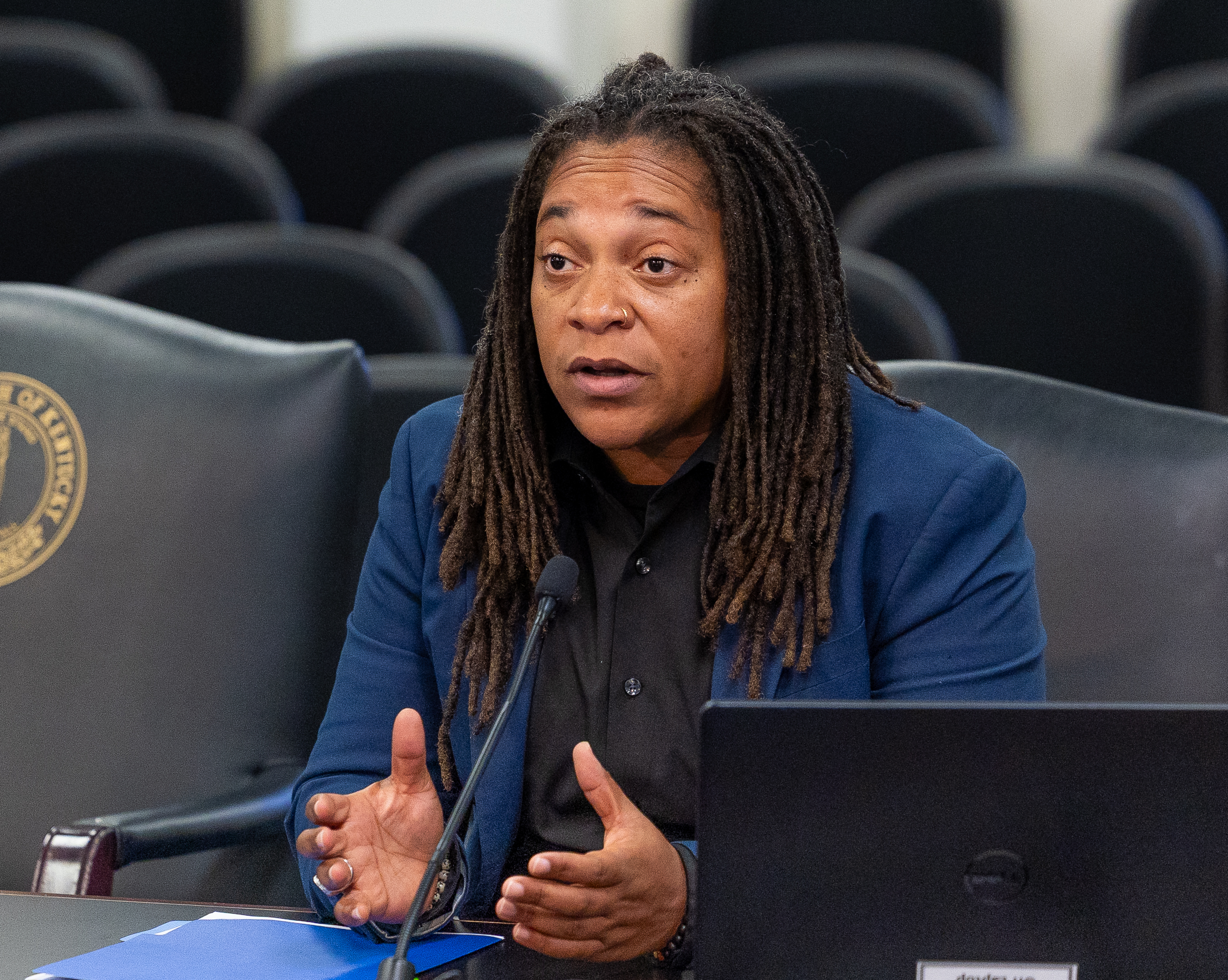
Sen. Keturah J. Herron, D-Louisville, told her fellow members on the Commission on Race and Access to Opportunity on Wednesday she plans to file legislation next year that would create a trust fund for juvenile justice-related services. A high-res version can be found here.
FRANKFORT — In its final meeting of 2025, the Commission on Race and Access to Opportunity heard testimony Wednesday on legislation that would create a trust fund for juvenile justice-related services.
Commission member Sen. Keturah J. Herron, D-Louisville, said she plans to file Bill Request 1218 next year, which is similar to legislation she filed when she served in the Kentucky House of Representatives.
Herron said she noticed during her term in the House that funding for facilities was typically at the forefront of the juvenile justice conversation.
“What I realized was that we are looking to put a lot of money into facilities, but we were not putting money on the backside, or I guess upstream, for prevention, intervention and reentry,” she said.
Under BR 1218, Herron originally proposed a $9.6 million allocation to a Juvenile Services Fund within the Department of Juvenile Justice. Larry Forester, a citizen member of the commission, suggested Herron round the $9.6 million allocation to $10 million, which she agreed to.
The funding would come from state appropriations, gifts, grants and federal funds, according to the bill draft.
Herron said the fund would create a consistent source of money at the state level for delinquency prevention and early intervention services, wraparound services, and alternative detention and reentry programs.
Herron told the committee she is already aware of organizations across the state that are providing some of these services that could use more support.
“I think if we as a state, if we’re putting all this money into facilities, it is our job as well to help on the backside of that,” she added.
Herron said she hopes the proposed legislation can be part of the solution when it comes to improving the lives of Kentucky’s youth and addressing juvenile justice issues.
“It’s not going to be the sole answer for the issues that we have, but I do think that it is one piece in part of the solutions we can do,” she said.
Commission co-chair Sen. Amanda Mays Bledsoe, R-Lexington, asked Herron if a national nonprofit would be able to donate to the fund and then Kentucky organizations could apply for grants from that fund.
Herron said yes. She also added she would also like to see the state get creative with the request for proposal (RFP) process by looking at a particular issue for a particular county and issuing a specific RFP for that issue and location.
One example Herron gave was suicide prevention services for youth in Northern Kentucky.
“It’s a very innovative way to address all of these different issues through this,” she said.
Citizen Member Kimberly Baird asked Herron to clarify who might qualify to receive a grant from the trust fund and who would oversee the distribution of the funds.
Herron said she thinks the Juvenile Justice Oversight Council would be useful to help inform the department on how to distribute the funds to any type of local government entity, law enforcement entity, nonprofit groups or school districts.
Mays Bledsoe thanked Herron for her work on the legislation.
“It’s really interesting and definitely innovative and creative,” Mays Bledsoe said. “It’s a tough problem, and you’ve seen it throughout the commonwealth.”
The Kentucky General Assembly cannot take action on new legislation until the 2026 legislative session begins on Jan. 6.
A copy of Herron’s proposed legislation can be found here.