Disaster task force approves 2026 policy recommendations
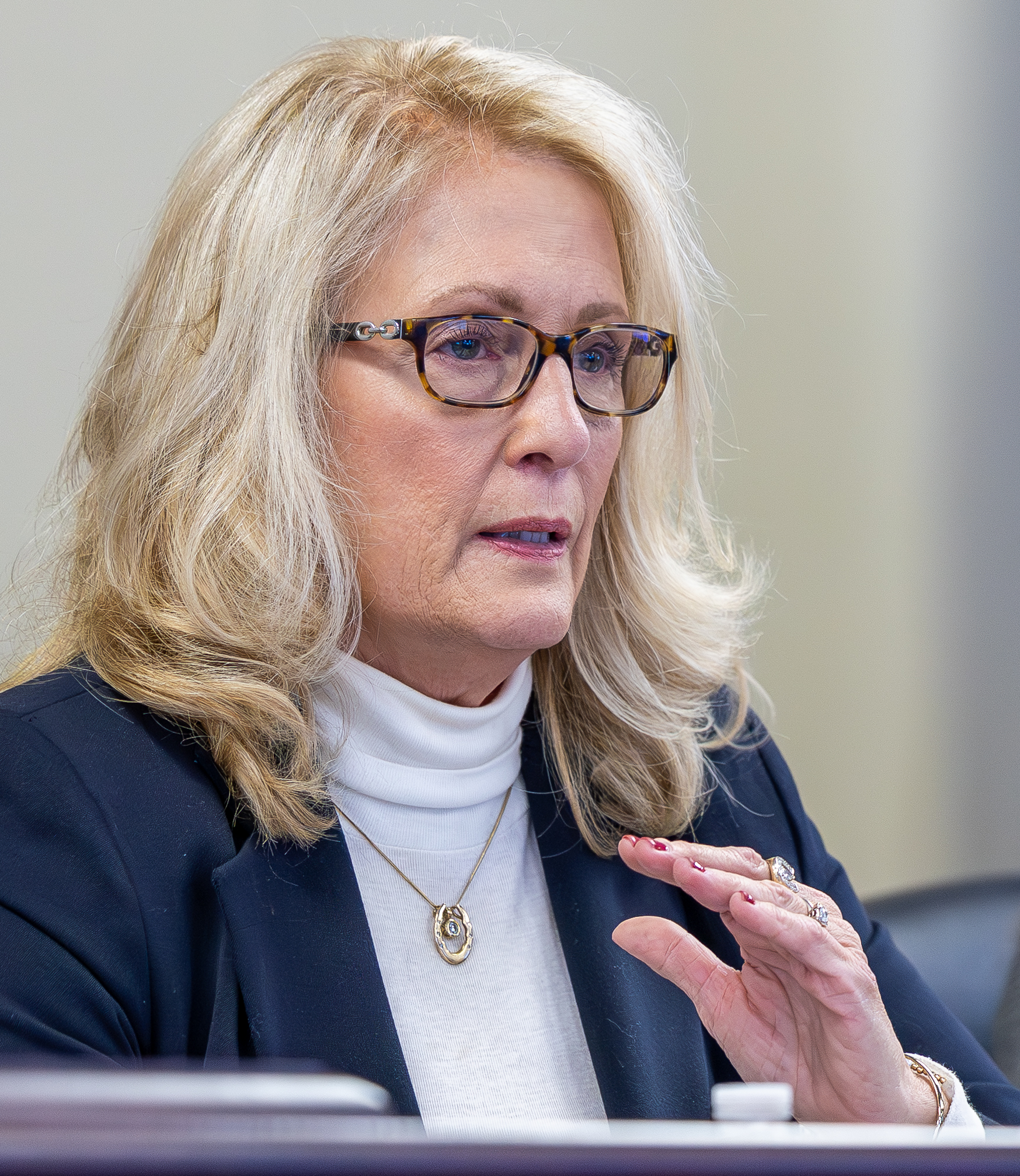
Sen. Robin L. Webb, R-Grayson, shared her thoughts on what she learned as co-chair of the Disaster Prevention and Resiliency Task Force on Friday while giving an overview on the group’s 2026 legislative recommendations. A high-res version can be found here.
FRANKFORT — A legislative task force approved a list of policy recommendations on Friday after spending the 2025 interim studying ways to make Kentucky more resilient from natural disasters.
Sen. Robin L. Webb, R-Grayson, shared her thoughts on what she learned as co-chair of the Disaster Prevention and Resiliency Task Force while giving an overview on the group’s 2026 legislative recommendations.
Webb said the first recommendation is for Kentucky to establish a state resiliency office.
“It would be a coordinating body for preparedness, resilience and mitigation efforts,” she said.
Webb said the resiliency office would collect data and track how disaster recovery and resiliency efforts are expended and what resources are available. Additionally, the office would also focus on urban planning, structures, transportation projects and mitigation efforts.
“Just agencies talking to one another and sharing maps and sharing data and talking to one another on a regular basis – that’s what I envision for the state resilience office,” Webb added.
The second recommendation from the task force is to continue to meet and study disaster prevention and resiliency in 2026.
“Whether it’s a task force like we’re doing now or oversight committee or a regular committee, whatever that form is, the general assembly needs to be involved,” Webb said.
This year, the task force learned about ways Kentucky can improve building code policy, water level monitoring systems and other disaster preparedness efforts. Webb said the task force is recommending the general assembly “make the expenditures necessary” to address those concerns.
Providing displaced Kentuckians shelter following a natural disaster is also something that needs to be improved, Webb said. A community-based approach, rather than utilizing Kentucky State Parks lodging facilities, will be recommended.
Growing urban search and rescue and swift water rescue teams, investing in disaster mitigation efforts and increasing public education and awareness are also recommendations of the task force, Webb said.
Co-chair Rep. Chris Freeland, R-Benton, said local, long-term recovery groups is another effort the task force is going to recommend supporting.
Freeland believes only 13 Kentucky counties have a long-term recovery group, with Mayfield – the site of the deadly 2021 tornado – being one of them.
“We need every county to do that, all 120, to have long-term recovery groups because they can’t accept any donations or do the things that they need until they have that,” Freeland said, adding that expanding access to case management for survivors, streamlining benefit verification and reducing duplication of services are also priorities.
Freeland said the task force has “barely scratched the surface” on what more can be done to improve disaster prevention and resiliency in Kentucky. He hopes the task force can continue next year and that the general assembly will consider some of the task force’s recommendations.
“Since 2020, billions of dollars in damage has been done, and if we can invest a little bit of money and a lot of effort, I think we can do a lot of things to help Kentucky and to help the people here,” Freeland said.
Rep. Mitch Whitaker, R-Fleming-Neon, said he believes the resiliency office recommendation is “critically important.”
“I know that most of us here, if not all of us, would consider ourselves fiscal conservatives and creating a new division of government always makes people feel a little uneasy,” Whitaker said. But when you’re looking at the cost of rebuilding time after time, the cost of preparation and resiliency will save our commonwealth so much money in the long run.”
The task force unanimously adopted its list of recommendations. Friday was the last day the task force was scheduled to meet in 2025.
The Kentucky General Assembly cannot take action on legislation until the 2026 legislative session begins on Jan. 6.