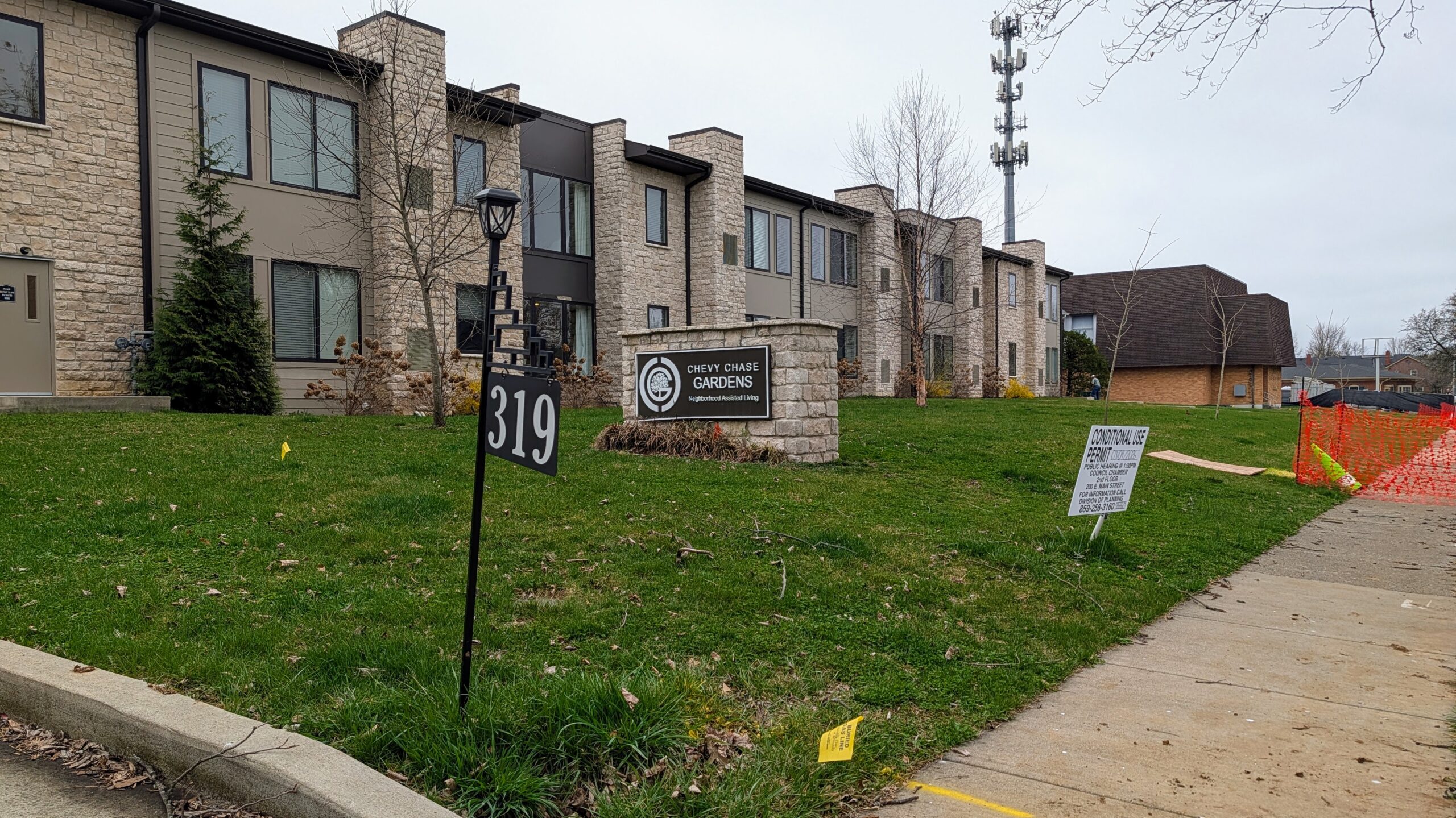
LEXINGTON, Ky. — A secretive advocacy group calling itself “Concerned Citizens of Chevy Chase” has been running an online campaign urging residents to oppose a proposed mental health facility in the Chevy Chase neighborhood — characterizing it as a “drug rehab clinic” despite official planning documents and the facility’s own executives describing it as a residential mental health and eating disorder treatment program. A scheduled vote on the project was postponed Monday after the applicant requested more time.
The group operates through a polished website, chevychasecitizens.com, featuring a countdown clock to what had been Monday’s Board of Adjustment hearing, a pre-drafted message form and the tagline “Chevy Chase Deserves Better.” A short advertisement on the site reads: “A drug rehab clinic next to three schools and two churches? That’s not safe.” The site’s disclaimer states it was “paid for by Concerned Citizens of Chevy Chase” and is “not affiliated with any political party, candidate, or organization.”
But searches of the Kentucky Secretary of State’s business registry and the Kentucky Registry of Election Finance turn up no record of any entity by that name. The site’s domain registration is shielded behind an anonymous WHOIS proxy. Attempts to reach the group’s administrators through both the website’s contact form and contact information listed in ICANN’s WHOIS registry received no response.
The project at the center of the dispute is conditional use permit application PLN-BOA-26-00006, filed January 28 by Behavioral Health Real Estate Associates, LLC on behalf of Roaring Brook, a Lexington-based behavioral health company, and ZLD Partners. The facility would occupy an existing 23,216 square-foot, two-story building at 319 Duke Road that has housed personal and residential care uses since the 1950s and is licensed for up to 60 beds.
Victor Rivera, CEO of Roaring Brook, pushed back firmly against the drug rehabilitation characterization in comments to the Lexington Herald-Leader. “It is not a drug rehabilitation center, not a homeless shelter,” Rivera said. “It is a voluntary, medically supervised program for commercially insured and private-pay adults who are choosing to get help for conditions like depression, anxiety, trauma, and eating disorders.” Rivera told the Herald-Leader the company held two open house meetings last week for concerned neighbors, adding: “When people see the facility and understand who we actually serve, the conversation changes.”
Application materials submitted to the Board of Adjustment describe the facility as a personal care program focused on helping patients with daily living skills including personal hygiene, social skills, meal preparation and professional development, with optional behavioral health services also available. Patients would require a physician referral or state guardianship order to be admitted, all stays would be voluntary, and no walk-in services would be offered. Patients are screened to ensure they are psychiatrically stable and do not pose a safety risk.
Though Roaring Brook does operate substance abuse treatment programs at a separate Lexington location, the company says this facility would serve a different population entirely.
LFUCG Planning staff reviewed the application and recommended approval, finding the proposed use consistent with the site’s decades-long history of similar conditional uses and concluding it “should not have an adverse impact on the subject or surrounding properties.”
Still, the proximity of the site to Christ the King School, Morton Middle School, Cassidy Elementary, the Cathedral of Christ the King, and Apostles Anglican Church has driven significant community opposition. The “Concerned Citizens” website spread widely through neighborhood social media groups and parenting chats in recent weeks, and a separate viral Facebook post warned of “a facility specializing in the treatment of substance abuse disorders and treatment of adults suffering from severe mental illness.”
LFUCG’s zoning ordinance defines a “rehabilitation home” broadly enough to cover drug and alcohol recovery, psychiatric disorders, and eating disorders alike — meaning a permit granted without binding conditions specifying the patient population could theoretically permit addiction treatment regardless of what the applicant describes. That question is expected to be central when the case returns before the Board.
At Monday’s hearing the Board voted to grant a postponement requested by the applicant. 5th District Councilmember Liz Sheehan, whose district includes Chevy Chase, confirmed the delay in an email to constituents, saying the case has been rescheduled to April 13 at 1:30 p.m. at the Government Center, 200 E. Main Street. Sheehan said she would continue to share updates through her district newsletter.
The applicant did not publicly state a reason for the delay.