Committee advances bill on regulating cannabis beverages
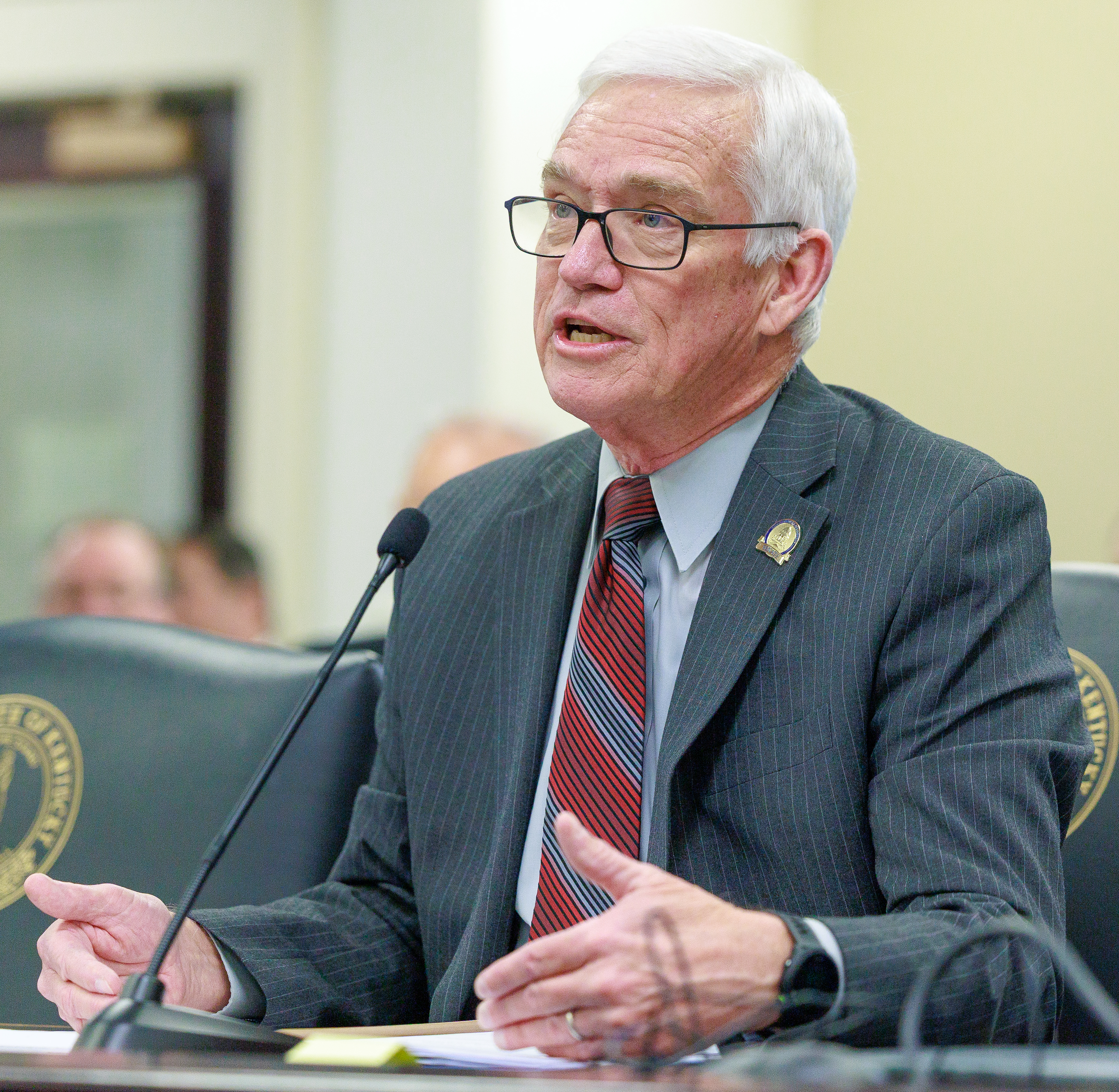
Sen. Stephen Meredith, R-Leitchfield, speaks on Senate Bill 223 during Tuesday’s meeting of the Senate Licensing and Occupations Committee. A high-resolution photo is available here.
FRANKFORT — Legislation that would expand the sale of cannabis-infused beverages in certain establishments advanced Tuesday out of the Senate Licensing and Occupations Committee.
Current law allows cannabis-infused beverages to be sold in Kentucky if they contain no more than five milligrams of intoxicating cannabinoids per 12-ounce serving. But state law prohibits such beverages from being sold individually for on-site consumption in establishments such as bars, restaurants and event venues.
Senate Bill 223 seeks to implement an additional permit that would allow establishments already holding alcohol licenses to sell individual cannabis-infused drinks to consumers 21 and older.
“This bill establishes a clear regulatory framework for cannabis-infused beverages in Kentucky under the Department of Alcoholic Beverage Control, which I think is where it should be,” said the bill’s sponsor, Sen. Stephen Meredith, R-Leitchfield.
Jim Higdon, co-founder of Cornbread Hemp in Louisville, said the legislation would build on the legal foundation created last year when the general assembly adopted an initial measure to regulate cannabis beverages in Kentucky.
Higdon said the legislation would place cannabis-infused beverages under rules similar to alcohol regulations.
“As we regulate alcohol, those same rules need to apply as a safety and responsibility measure that was missed last year,” Higdon said. “We think it’s very important to get it on the record now.”
Meredith said the legislation would also create an open-container offense for cannabis-infused beverages in vehicles, aligning the law with existing alcohol rules.
“Senate Bill 223 simply regulates THC beverages like alcohol,” Meredith said.
Sen. Amanda Mays Bledsoe, R-Lexington, asked about federal oversight of THC beverages.
Meredith said federal regulation of hemp-derived products is still developing.
“I am aware that the whole hemp industry is being reviewed by the federal government and there is discussion about legislation that could be passed,” Meredith said. “But I don’t know of anything that’s tangible at this point in time.”
Gene Cole, president of the Kentucky Ethics League and executive director of the Kentucky League on Alcohol, Gambling and Substance Use Disorders, testified against the bill. He argued that first responders are already dealing with impaired drivers and expressed concern about introducing another intoxicating beverage.
Jack Mazurak, a representative for the Kentucky Distillers’ Association, urged lawmakers to proceed cautiously.
Mazurak said the distilled spirits industry can compete with hemp-based beverages but warned the bill could significantly expand access to intoxicating THC drinks without a fully developed federal regulatory framework.
Sen. Karen Berg, D-Louisville, asked whether there is federal regulation on highly caffeinated beverages and suggested that the cardiac effects of those drinks could be comparable to or greater than those of the standard dosing in THC beverages.
Mazurak said he did not have an answer but would be willing to look into the issue.
Sen. Jimmy Higdon, R-Lebanon, spoke in favor of the bill, highlighting differences between synthetic THC and hemp-derived THC, adding that “synthetic THC is the devil itself.”
Higdon also asked whether there had been any issues resulting from the legislation passed last year allowing the sale of boxed THC beverages in liquor stores.
Mazurak responded that he was not aware of any health or public safety issues tied to the law.
“I have not, but I think we agree on this — the FDA, TTB and other agencies that regulate the alcohol industry need to be aligned on regulations for hemp at the federal level,” Mazurak said.
Higdon agreed that federal regulation is needed but emphasized the committee’s role in addressing the issue at the state level.
“Today we’re talking about Kentucky and its regulation, and right now we’re the only ones with authority over this product,” Higdon said.
The bill passed the committee 9-2 and now heads to the full Senate for consideration.