Committee advances bill on school-based Medicaid program
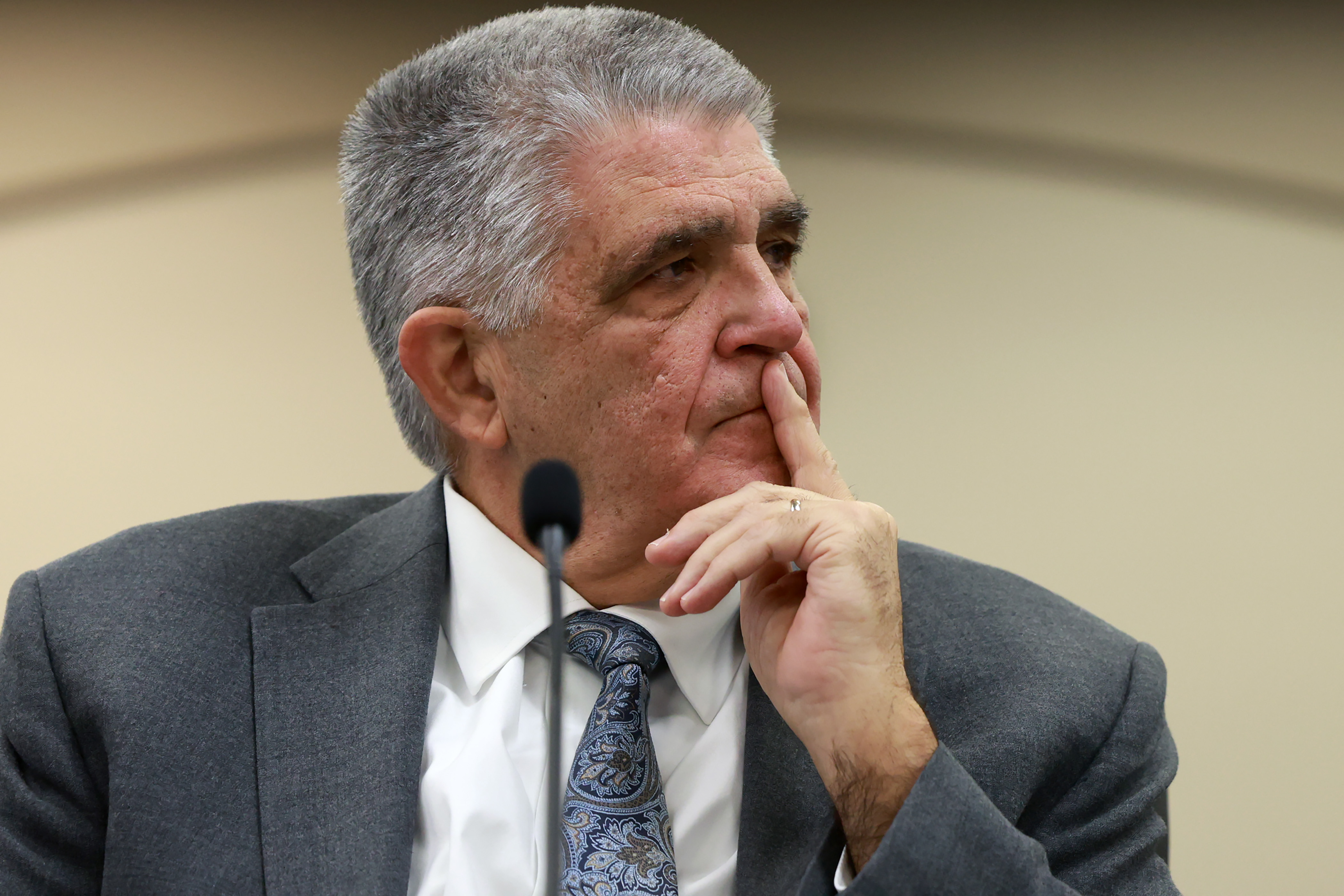
Rep. Steve Riley, R-Glasgow, speaks on House Bill 583 during Thursday’s meeting of the House Health Services Committee. A high-res version is available here.
FRANKFORT — Legislation that would allow Kentucky schools to seek Medicaid reimbursement for certain health services provided by school nurses passed the House Health Services Committee on Thursday.
House Bill 583 aims to help school districts recover Medicaid funding for medically necessary services that are provided to Medicaid-enrolled students with parental consent.
The bill’s sponsor, Rep. Steve Riley, R-Glasgow, said the measure would allow school staff to focus on their primary roles instead of taking on responsibilities outside their training.
“I worked in the education program for a large number of years, and in my final years I worked as an assistant principal and a principal and never had the great opportunity of having a school nurse,” Riley said. “As an assistant principal, I felt like I had a billion different jobs — the judge, the jury, investigator, counselor — but one of those jobs I felt like I had was a school nurse.”
Emily Beauregard, executive director of Kentucky Voices for Health, testified in support of the legislation, stating Medicaid currently covers about half of Kentucky’s students.
“The only state cost would be from training school staff to bill appropriately,” she said. “We are strengthening a system that already exists to improve the health of our students.”
Eva Stone, a nurse practitioner who said she has worked in school nursing for 25 years, told lawmakers many students rely on school-based care because they lack regular access to health services.
“It doesn’t matter what district you’re in — we have children who don’t have regular access to health care,” Stone said. “Kids who aren’t healthy aren’t going to learn.”
Stone said many families struggle to take children to medical appointments during work hours.
“I’ve always had a job where I could leave if I needed to and take my kid to the doctor, but many of our families aren’t in that situation,” she said.
Rep. Kimberly Poore Moser, R-Taylor Mill, also spoke in favor of the proposal.
“This keeps parents at work, it keeps kids in school and kids are getting the care when they need it,” Moser said. “I see this as a real plus.”
Rep. Emily Callaway, R-Louisville, raised some concerns about the legislation. She said while she supports increasing access to health care, she questioned whether schools are the appropriate setting for expanded services.
“When I think of expanding health care, I don’t think of that happening in a school nurse’s office,” Callaway said. “I want these children to be under the regular care of a pediatrician on a regular basis.”
Callaway also expressed concern that Medicaid billing could result in students with Medicaid receiving more attention than those with private insurance and questioned whether school nurses were being asked to take on responsibilities outside their intended role.
Stone responded that school nurses already work to connect students with regular health providers but often face long wait times.
“When I started working at Jefferson County Public Schools, we had about 100,000 students and about 20,000 kids who weren’t current on their vaccines,” Stone said. “Ninety-two percent of those children were living in poverty and didn’t have a place to go.”
Stone said nurses often provide temporary care while working to connect students with a “medical home,” but wait times for appointments can stretch three to six months.
“We’re providing some stopgap measures that are essential but are not necessarily absorbing the role of primary care providers,” she said.
The bill passed committee 13-2 and now heads to the full House for consideration.