Senate committee advances bill to transform Kentucky State University
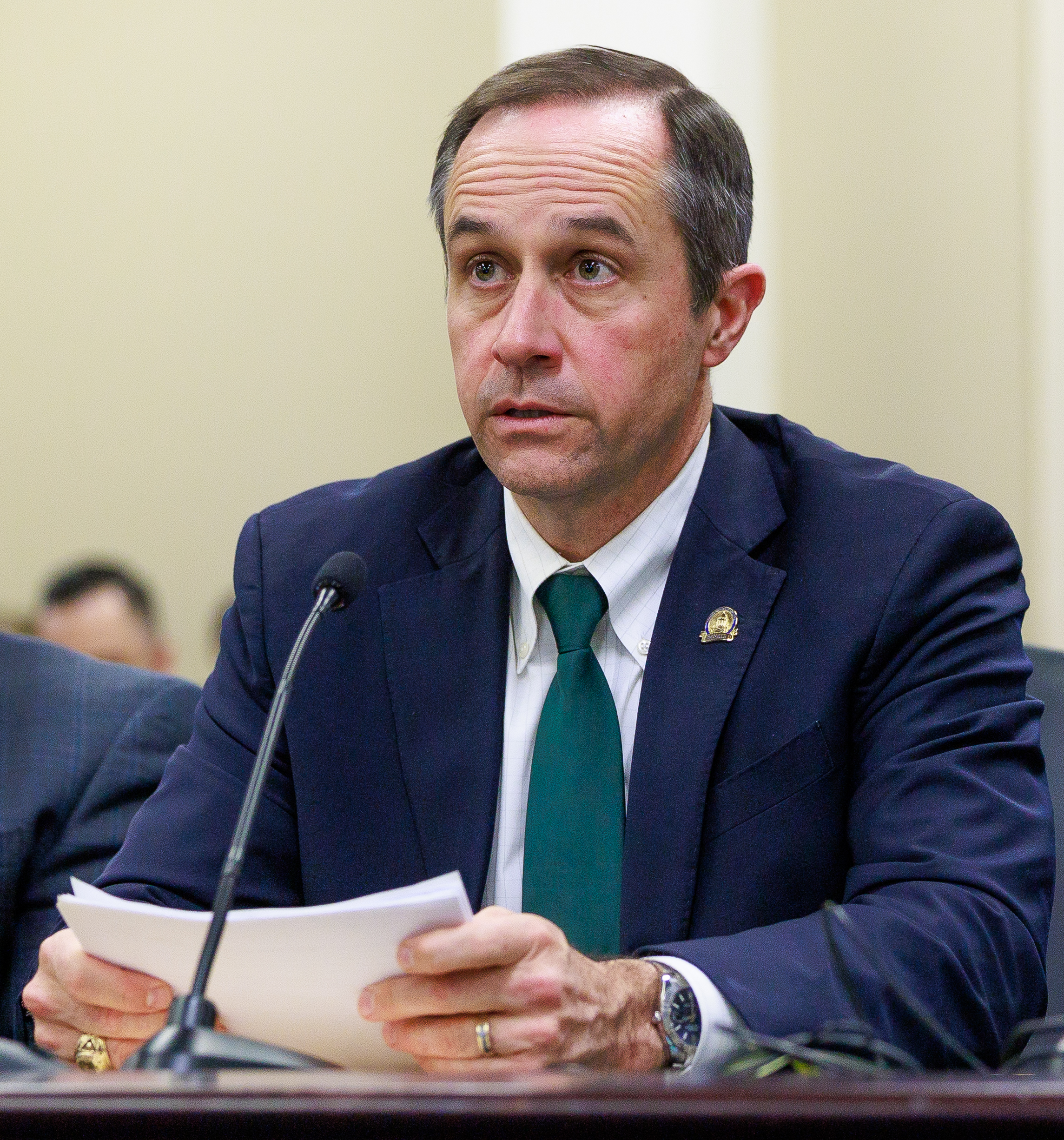
Committee Chair Sen. Christian McDaniel, R-Ryland Heights, testifies Wednesday on Senate Bill 185 during a special-called meeting of the Senate Appropriations and Revenue Committee. A high-resolution photo can be found here.
FRANKFORT — In 1886, state legislators authorized the creation of what would become Kentucky State University in the state’s capital city. On Wednesday, legislators advanced a bill crafted to transform it into a polytechnic institution.
During a special-called meeting of the Senate Appropriations and Revenue Committee, Committee Chair Sen. Christian McDaniel, R-Ryland Heights, testified that over the past decade, the university had caused frustration, and crime on campus led some to thoughts of its closure.
However, over the course of the past few months, when legislators returned to Frankfort, several of them met with KSU President Koffi C. Akakpo, and listened to him talk about his vision for the school and its past, great days.
“We became convinced that now was not the time to explore closure of Kentucky State, but rather to be a partner in the redefinition of this institution and what it can mean for the commonwealth,” McDaniel said.
McDaniel testified that Senate Bill 185 calls for KSU to transition to a new mission and become a polytechnic university over the next five years, offering polytechnic, STEM and education degree-related classes in person. There will be no cuts made in the biennium to the KSU budget, he said.
Under SB 185, exigency is declared, any employment provisions are suspended and employment status will be determined by the university president. The minimum GPA for admission will be raised to a 2.5 with a score of 18 on the ACT, McDaniel said.
McDaniel said that under another provision, no student with more than $1,000 in debt shall be enrolled beyond 30 days of the date that the amount is due.
In addition, all fraternities and sororities must reapply for their charters, any in-state person owing KSU money shall have a tax return intercepted by the state Department of Revenue, and any liberal arts degrees will be largely moved to an expanded online offering except for education. The Kentucky Council on Postsecondary Education will continue to provide oversight of operations.
McDaniel said the legislation presented Wednesday wouldn’t have been possible without Aaron Thompson, president of the Kentucky Council on Postsecondary Education and his staff, and Akakpo and his staff.
“This work is a recognition of the importance of a vibrant HBCU in the commonwealth,” McDaniel said. “It is a recognition that high standards will lead to great outcomes, and it is a vote of confidence in Dr. Akakpo’s leadership of the university and our belief that with our partnership, the university can return to the glory for which it is known.”
Thompson also thanked those who worked on the legislation.
“It’s important to have a vibrant HBCU in this state that’s public. It’s important for us to have a vibrant 1890s land grant institution. That’s the base of this conversation,” he said.
Looking ahead, Thompson said the changes won’t be just about KSU’s finances, but how leaders can be proactive beyond being an HBCU and land grant institution. He said the school should become an important driver to help the state boost economic development with a highly educated workforce that KSU can provide.
To be successful, Akakpo said continued support from the legislature will be needed, and he can guarantee that good things will stem from the university.
“I’m here speechless. I want to first thank the leadership of the Senate, the leadership of the House, several of you, Chairman McDaniel, for us to get to this point,” he said. “I know the discussion in the very beginning was very heated, but we have found a way to move forward.”
Senate President Pro Tempore David P. Givens, R-Greensburg, said the legislation presents great challenges, and he encouraged alumni to be champions for the university by supporting it financially and otherwise.
“This is a new start, a revisioning for Kentucky State University in my opinion. The schedule is aggressive, and that’s been cited by some of the questions on the panel,” he said. “And I’m going to reflect on the fact that I think the aggressive schedule is necessitated by the alternative. The alternative that we had some frank conversations about was closure.”
Senate Democratic Floor Leader Gerald A. Neal, D-Louisville, said the proposed changes are complicated, and he had a very short time to review the bill on Wednesday.
He asked McDaniel to consider some changes related to expenditure limits, flexibility on retaining faculty and increased discretion concerning student debt. However, he ultimately voted for the measure in committee.
“I think this a huge opportunity here, and I’m looking at this and I think we’ve got the right leader in place here. We’ve got the right support in terms of CPE and we have now to have the right policies that give the ability to get to the objectives I think we all embrace,” he said.