LEXINGTON, Ky. — Mayor Linda Gorton unveiled a $546 million General Fund budget Tuesday that she says holds the line on taxes and spending while pumping $5.1 million into a top-to-bottom overhaul of the city’s storm-response operations — an acknowledgment that last winter’s ice debacles demanded more than a new snow plan.
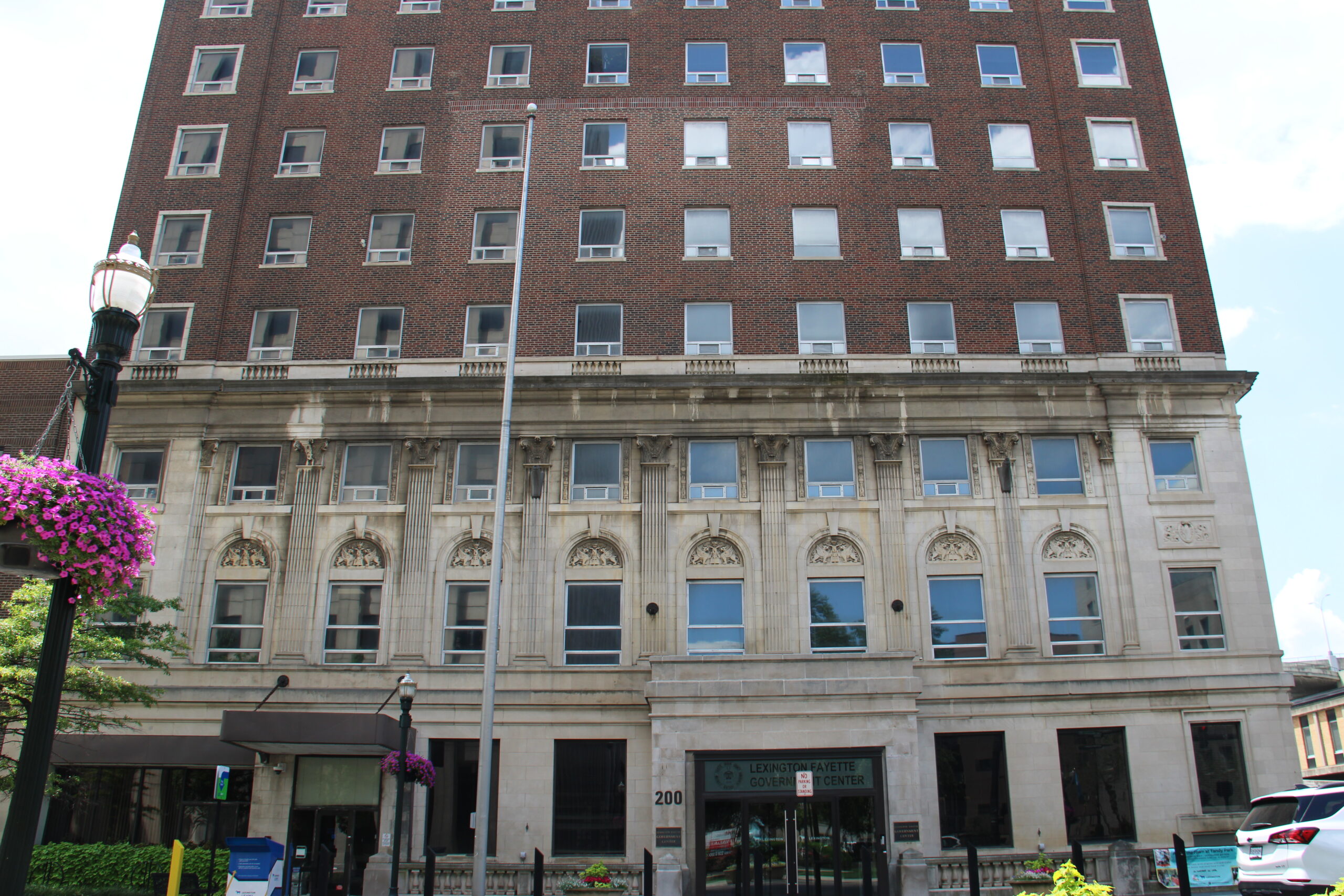
The proposal, presented to the Lexington-Fayette Urban County Council during a work session at 200 East Main Street, is the largest spending plan in the city’s history while carrying what Gorton called its most restrained borrowing in five years. The full budget, including dedicated fee funds for services like garbage collection and sewer operations, totals $847 million.
“This year, our budget is challenging,” Gorton told councilmembers. “The same is true for the budgets of many households, our state, and our nation.” Despite roughly 4 percent revenue growth, she said, expenses have climbed in tandem — utility costs alone are expected to rise more than $2 million this year. Her response was a plan she described as “balanced, right-sized” with no tax increases.
Winter Weather: The Defining Issue
The storm-response piece carries the most political weight. Gorton fired her public works commissioner in March after Lexington recorded more than 150 crashes during a single winter storm and faced a public backlash over impassable roads. A formal after-action review later identified six operational failures, including an inability to distinguish between snow and ice conditions, staffing shortages, equipment breakdowns, and the absence of a clear chain of command.
The review gathered input from more than 100 drivers, supervisors and senior leaders. The mayor has since vowed to appoint a workgroup of council members and key staff to implement its recommendations.
The budget’s $5.1 million winter weather allocation would fund contracts with a mix of local and regional contractors capable of deploying heavy equipment for ice-breaking, along with purchases of additional salt, Beet Heet, new trucks, salt spreaders, and overtime pay. Gorton said the funding is “just the beginning,” with a redesigned winter weather plan, improved communications and oversight, and expanded driver training also in the works.
Public Safety: Technology, Training, and Declining Crime
Public safety consumes the single largest slice of the proposed budget — 54.6 percent of the General Fund, covering police, fire, corrections, E-911, and emergency management.
The most notable public safety investment is a $2.6 million technology contract for the Police Department that would provide unlimited cloud storage for digital evidence, including materials submitted by the public; expand access to Fusus, the real-time intelligence platform used in the city’s command center; and give officers access to a new Taser model with improved accuracy and extended range.
Gorton cited significant drops in crime as evidence that existing technology investments are paying off: violent crime fell 10.8 percent between 2024 and 2025, with homicides down 13 percent and robberies down 26 percent. Motor vehicle thefts dropped 15.7 percent. “Last year, Lexington recorded its fewest total homicides in a decade,” she said.
The mayor also disclosed that the city has identified a site for a long-sought Police Training Center on the University of Kentucky’s Coldstream Research Campus, with the proposal heading to the Industrial Authority Board this week before coming to the Council for approval.
For fire, the budget maintains a minimum $1.5 million annual replacement cycle for heavy equipment and adds $700,000 for emergency medical gear. A fire training center is in the design phase.
Opioids, Homelessness, and Housing
Gorton said overdose deaths dropped 25 percent between 2024 and 2025 — to 96 deaths last year — but called that figure unacceptable. Later this month, she plans to bring the Council a spending plan for opioid abatement funds, drawn from legal settlements with manufacturers, distributors, and retailers. Of an estimated $30 million expected through 2038, approximately $9 million is currently on hand.
The proposed plan would direct $2 million toward grants for nonprofit substance-use-disorder organizations, $2.2 million for supportive housing and treatment for people experiencing homelessness, and $3 million into an interest-bearing account to sustain programming in future years.
The winter shelter budget would increase $200,000 to $2.2 million. An additional $400,000 is earmarked for Housing Stability Services, which provides legal counsel to residents facing eviction.
Parks, Infrastructure, and Government Reorganization
The capital budget totals $78 million. Parks spending includes $1.2 million for basic maintenance at Raven Run, Lakeside, Douglass, Masterson Station, and other parks, plus $7.5 million in the second year of dedicated Park Fund projects. Highlights include a $1.1 million investment in the Dirt Bowl basketball courts, replacement of sports courts at nine parks, a new Addison Park playground, and trail improvements at Kelley’s Landing.
On infrastructure, the city plans to spend $13 million on paving plus $1 million on ADA-compliant ramps, and will rebuild a section of North Limestone — including bike lanes and sidewalks — between Withers Avenue and New Circle Road. Funding is also included for design and right-of-way work on the Scott Street connector, which would link Oliver Lewis Way to South Limestone near the UK campus.
Gorton also proposed restructuring city government by moving the Division of Building Inspection and the Division of Engineering into the Department of Planning and Preservation, consolidating development-related permitting under one roof. A new Development Liaison position would be created to shepherd projects through the approval process.
By the Numbers
The proposal creates only three new positions — the fewest since 2021 — and carries a $10 million bond package, the city’s smallest since the same year. Personnel expenses are projected to increase 1.4 percent; recurring expenses overall by 4.8 percent, compared to 5.4 percent the prior year. Non-sworn employees would receive a 2 percent cost-of-living increase.
What Comes Next
The Council must adopt a final budget by June 15. A public comment hearing is scheduled for Thursday, May 14, 2026, at 6 p.m. Residents can also submit input through a survey at engage.lexingtonky.gov/fy27budget through April 17. Council members will convene in small groups — a process known as “links” — to examine specific budget sections and formalize recommendations before a final vote.
The Lexington-Fayette Urban County Council meets at 200 E. Main St., Lexington, KY 40507. Council work sessions and meetings are open to the public. For information, contact the Office of Urban County Council at [email protected] or (859) 425-2255.