🌎 Resumen en español · traducción automática
En los últimos 30 meses, empresas de inversión han comprado silenciosamente 509 viviendas de bajo costo en Lexington por 96.7 millones de dólares a través de 36 operaciones de compra masiva, sin que ningún medio de comunicación local reportara estas transacciones. El caso más reciente ocurrió el 27 de febrero de 2025, cuando BE4 Ventures LLC, una empresa registrada apenas ocho semanas antes, adquirió 42 townhomes en varios vecindarios por 5.8 millones de dólares, incluyendo toda la calle Point Court que había estado en manos de la familia Oldfield desde 1997. Estos datos revelan un cambio significativo en la propiedad de viviendas de entrada para compradores primerizos en Lexington mientras la comunidad permanece ajena a esta transformación del mercado inmobiliario.
Traducción y resumen generados por IA a partir del artículo en inglés. Puede contener errores; consulte el texto original.
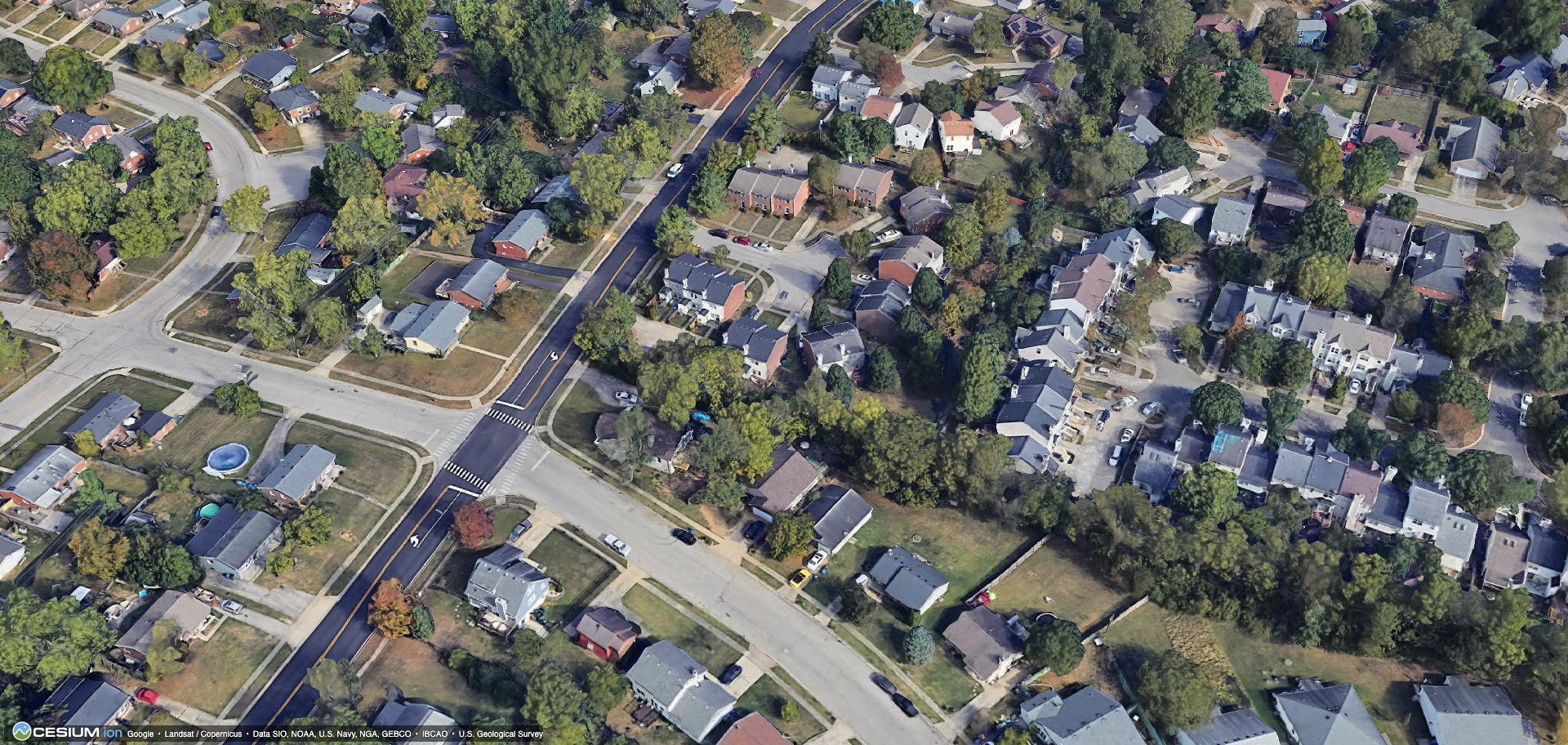
Point Court is a one-block cul-de-sac of brick townhomes off Appian Way in south Lexington, the kind of street where a first-time buyer used to start. On February 27, 2025, the whole street changed hands before lunch.
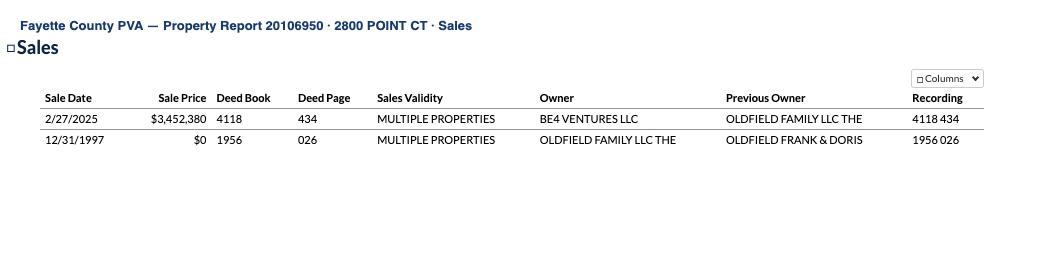
That day, BE4 Ventures LLC closed on 42 townhomes at once — Point Court, Arbor Drive, Millcreek Court, Reva Ridge Way, Appian Way — in three bundled deeds totaling just under $5.8 million, about $138,000 a door. The seller on Point Court was The Oldfield Family LLC, which had held the homes since 1997; before that the deeds trace to Frank and Doris Oldfield themselves. A Lexington family rented these townhomes for almost three decades.
Their successor barely existed when it bought the street. BE4 Ventures was registered with the Kentucky Secretary of State on January 3, 2025 — eight weeks before the deal — by Bradley Goodrich, a Nicholasville real-estate investor, and Eric Zaluski, a Lexington marketing entrepreneur. Its address of record is Suite 170-316 at 1890 Star Shoot Parkway: a mailbox at a pack-and-ship storefront in Hamburg.
Nobody reported the sale. No outlet reported any of it: not the 46 townhomes at Glen at Lochdale that went for $12.4 million in October 2024, not the 84 Citation-area townhomes assembled by a downtown LLC across four deals, not the 46 Leestown-corridor properties that traded for $11 million this April. The Lexington Times counted 36 bulk deals of five or more homes in the last 30 months — 509 homes, $96.7 million — and found that not one of them generated a news story, a council discussion, or a line in a city housing report.
This is what the ownership of Lexington’s starter housing looks like while nobody is watching.
One in eight, and climbing
The Times pulled every monthly sales list published by the Fayette County Property Valuation Administrator from January 2024 through this week — 18,969 recorded transfers — and classified every buyer. (Full methodology at the end; the short version is that we count only buyers whose names mark them as companies, so our numbers are a floor, not a ceiling.)
On the open market — arm’s-length sales of existing homes, the transactions ordinary buyers compete in — corporate entities bought 804 of 6,733 Lexington homes in 30 months: 11.9 percent, or about one in eight, $239 million in all. The share is rising: 9.7 percent of 2024’s open-market sales, 13.0 percent of 2025’s, 14.1 percent so far in 2026. In November 2025 it touched 22.7 percent — better than one in five homes sold that month went to an entity rather than a person.
The National Association of Realtors, which counts investors more broadly (including people who buy rentals in their own names), put Lexington’s investor share at 18 percent of 2024 sales — above the national average — in remarks a NAR economist gave LEX18 last year. Our entity-only count and NAR’s broader one bracket the truth: somewhere between one in eight and one in five Lexington homes now sells to an investor.
But the citywide average is the least interesting number in the data. The pattern is in the price tiers:
| Price tier | Share bought by entities |
|---|---|
| Under $150,000 | 41.9% |
| $150,000–200,000 | 25.6% |
| $200,000–250,000 | 14.5% |
| $250,000–300,000 | 11.2% |
| $300,000–400,000 | 9.4% |
| Over $400,000 | 5.9% |
The median entity purchase was $252,750. The median purchase by a person was $325,000. Companies are not buying the houses Lexington’s move-up buyers want. They are buying the houses Lexington’s first-time buyers need — and at the cheapest end of the market they are buying two of every five.
The bottom of the market has a new owner
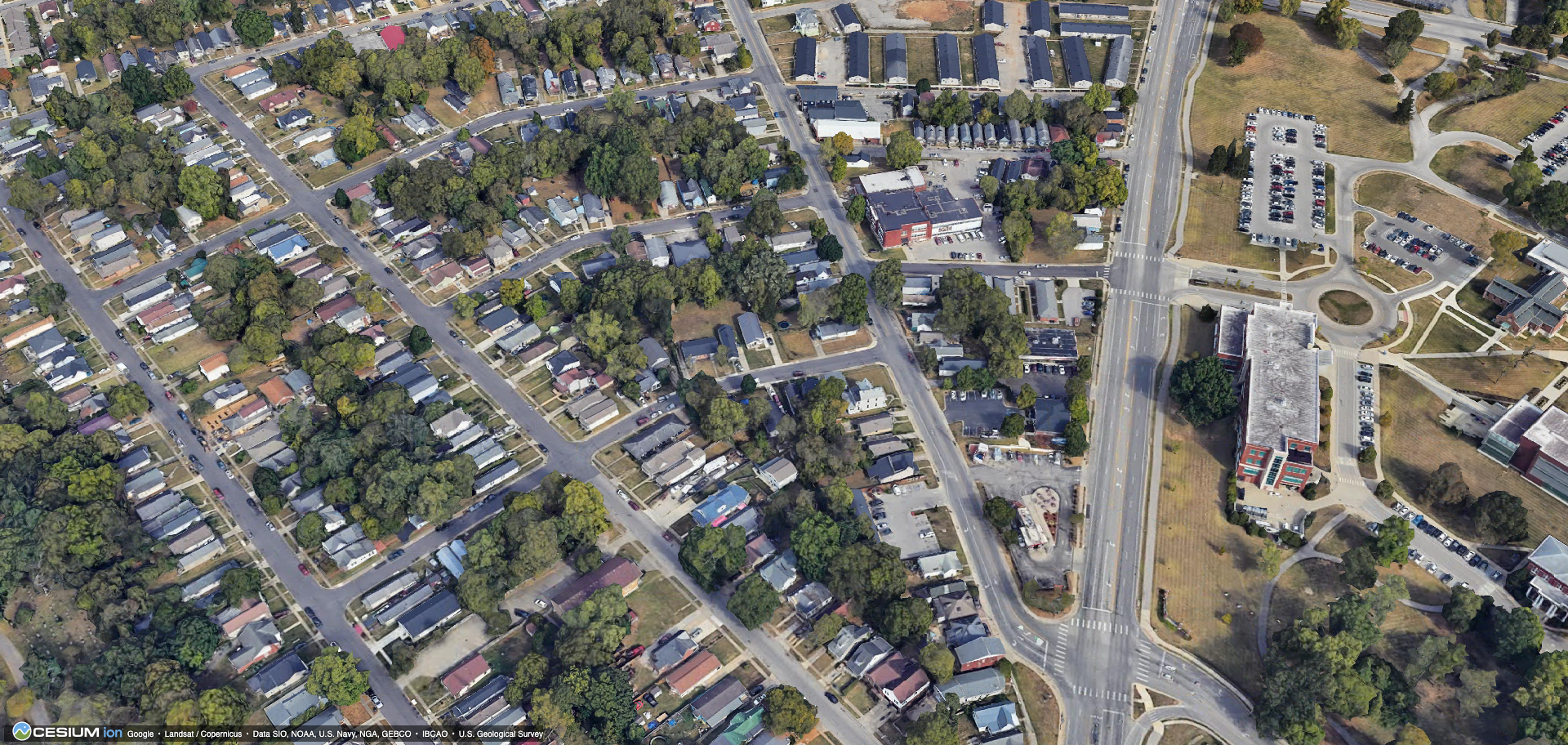
Map the purchases and the gradient turns geographic. In the PVA’s University neighborhood — the student blocks around UK — 70 percent of open-market sales went to entities, the student-rental machine running as designed. But the next names on the list are not student neighborhoods. They are the cheapest owner-occupied streets in the city: Forrest Hill and Douglas Heights, where entities took 41 percent of sales at a median price of $105,000. The low-priced blocks the PVA files under “Downtown”: 39 percent at a median of $115,000. Woodhill: 33 percent. Radcliffe, off North Limestone: 32 percent. Highlawn: 26 percent. The Meadows: 21 percent.
One house tells the story of what changes hands when those percentages tick up. A frame single-family on Oak Street in the West End was bought by the same family in 1973 for $4,500 and stayed in the family for two generations. In 2007 Lexington Habitat for Humanity acquired it, rehabbed it, and in 2009 sold it for $83,000 to a Habitat homeowner, who owned it for sixteen years. In February 2025 she sold to ASL Property Holdings LLC for $150,000. Ten weeks later, ASL flipped it — $165,000 — to SFR Owner I LLC.
SFR Owner I LLC’s address of record on the tax roll is 345 Heritage Avenue, Unit 130, Portsmouth, New Hampshire. Unit 100 at that address is a United States Post Office; the “suite” is a PO box. Two more LLCs buying Lexington houses — TH Property Owner I LLC and LMRK Owner I LLC — list the same box, 700 miles from the properties they own. Behind all three, Kentucky Secretary of State filings point to one operator: each is a Delaware LLC registered from 780 Third Avenue in Manhattan, and LMRK’s filing names the parent outright — American Secure Living Inc., which does business as Truehold, the national “sale-leaseback” company whose pitch to homeowners is sell us your house and stay on as our tenant. Truehold advertises Lexington as an active market; its Kentucky registrations are dated September 2024 through November 2025, which is to say the national operators are not coming. They’re here, and they arrived without a single local headline. A house that Habitat volunteers rebuilt so a Lexington family could own it is now inventory in a Manhattan-managed rental portfolio that signs its mail through a New England post office box.
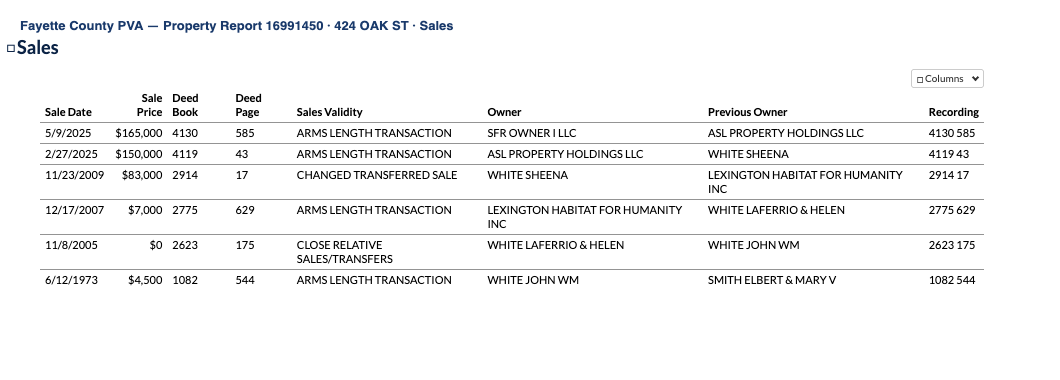
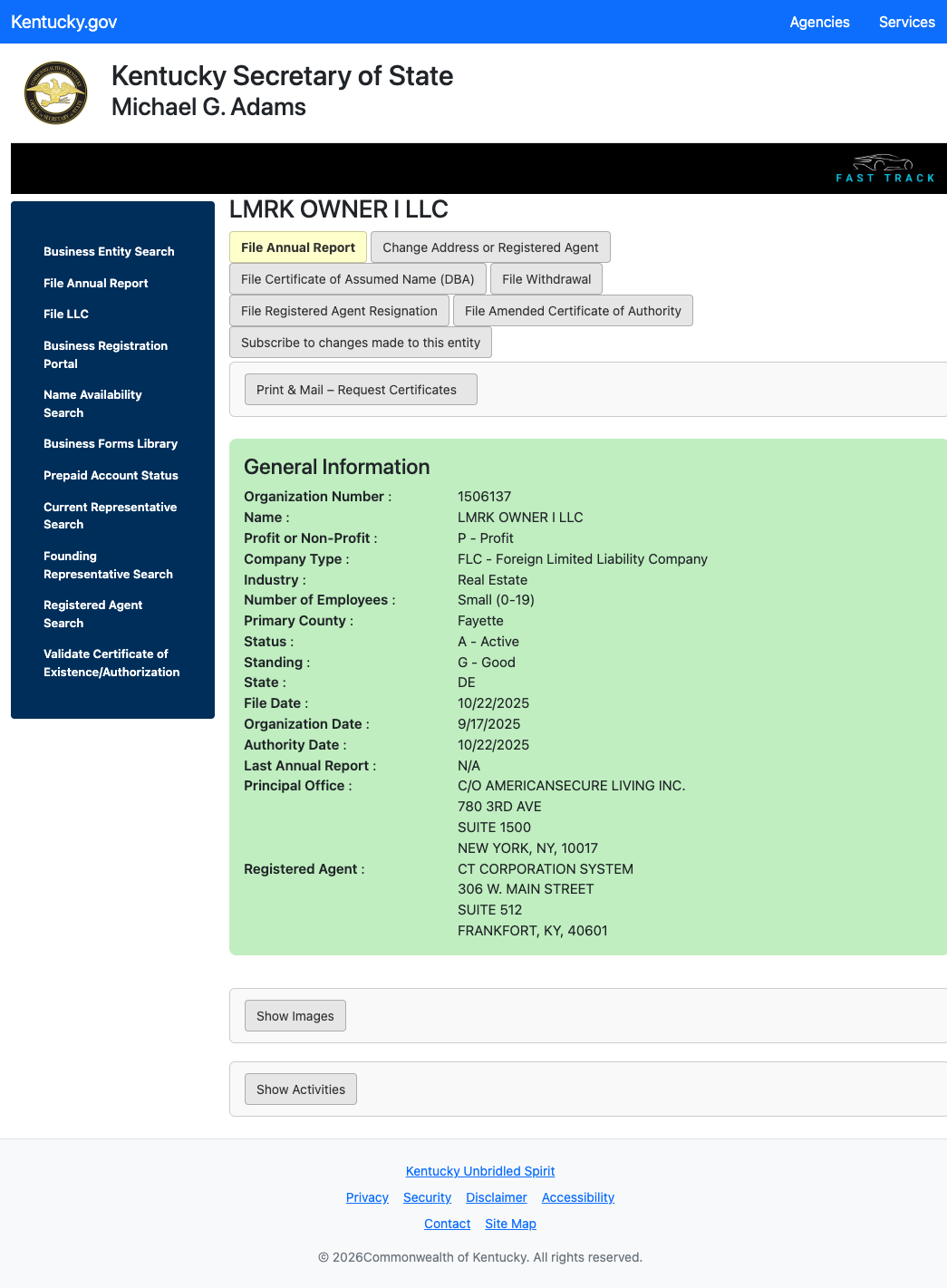
That is the quiet part of the buyout: it is not only that companies are buying the cheap houses. It is that the cheap houses are passing out of the part of the market where a person could ever buy them back.
Ball Homes, landlord
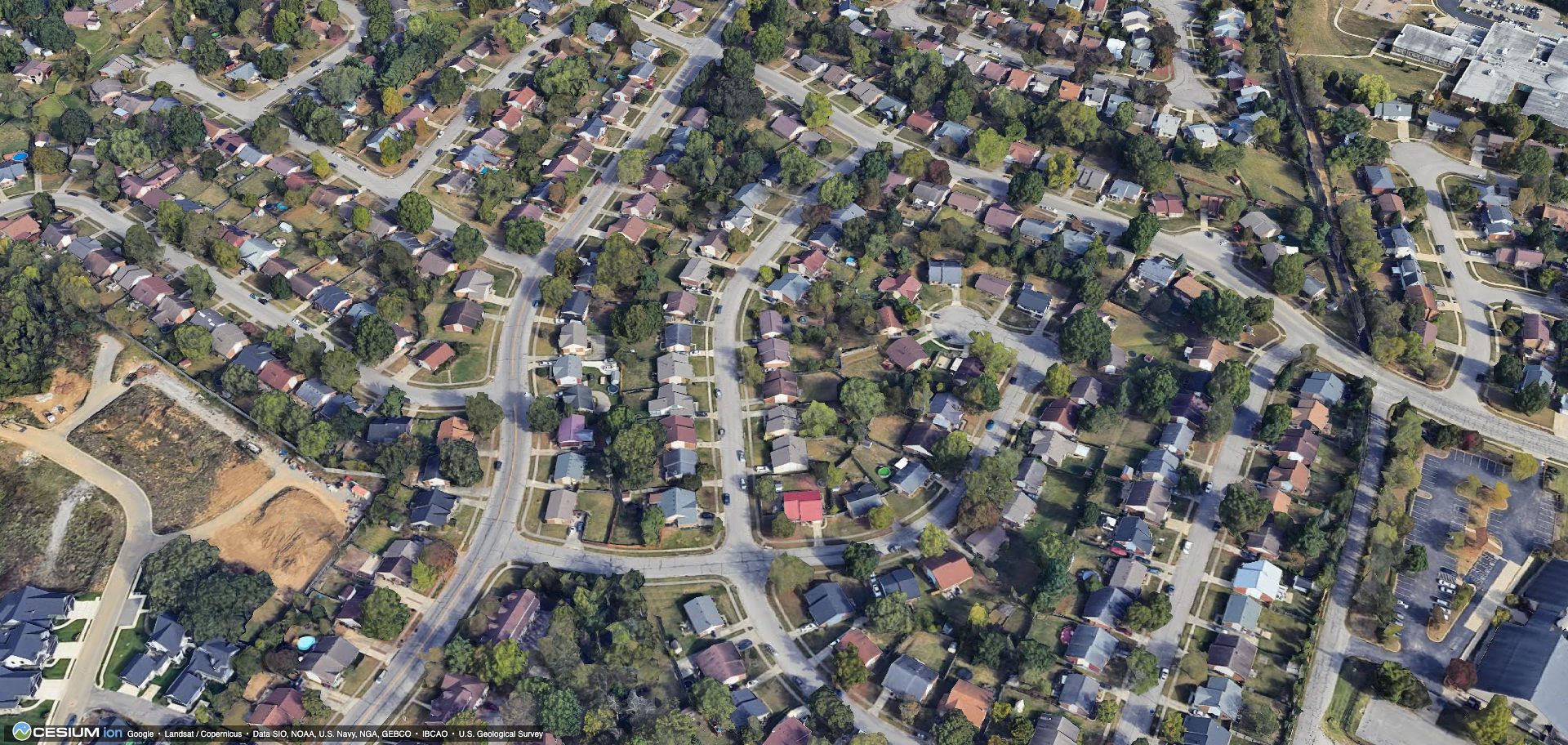
The single biggest name in the 30 months of transfer data is not an out-of-state fund. It is the most familiar name in Lexington housing: Ball.
Between 2024 and 2026, Ball Realty Investments LLC — registered to 3609 Walden Drive, Ball Homes’ headquarters — took title to 214 Lexington homes. To be precise about what that is: these were $0, affiliated-organization transfers, Ball moving its own rental portfolio from one Ball entity to another (Ball Homes LLC built or bought them; Ball Realty LLC held them from 2012; Ball Realty Investments holds them now). Ball didn’t buy 214 homes on the open market. What the paperwork reveals is something nobody has reported: the scale of the homebuilder’s in-house landlord operation, with 129 of those homes concentrated in Century Hills alone, plus clusters in Melody Village and a dozen other subdivisions Ball built.
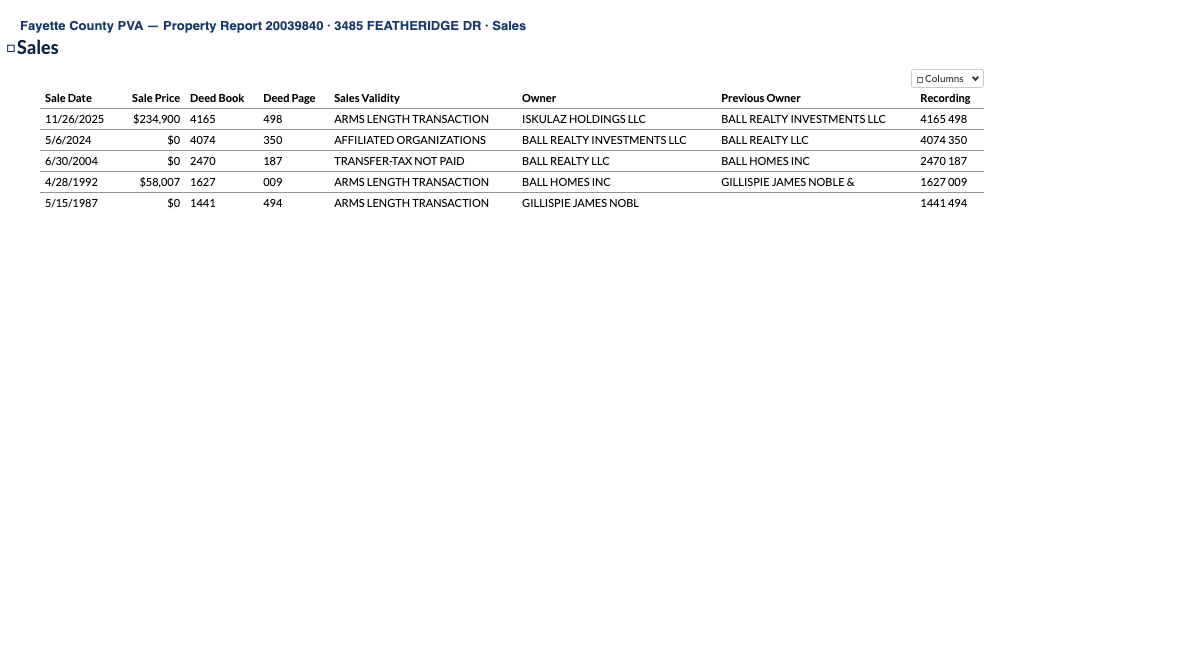
Take 3485 Featheridge Drive. Ball Homes built it and took the deed in April 1992 for $58,007. For 33 years it moved only between Ball entities. It has never — not once in its existence — been owned by someone who lived in it.
Last November, Ball sold it. The buyer was Iskulaz Holdings LLC — “Iskulaz” is an anagram of Zaluski, the same Eric Zaluski who co-founded BE4 Ventures — which closed on at least eight Century Hills-area houses on a single day, November 26, 2025, at $234,900 each, several bought directly from Ball Realty Investments. That same month, entity share citywide spiked to 22.7 percent. Iskulaz, formed in 2013, is the most active open-market accumulator in the data, with roughly 30 transfer rows across Century Hills, King Arthur, Lochness and a half-dozen other south-side neighborhoods.
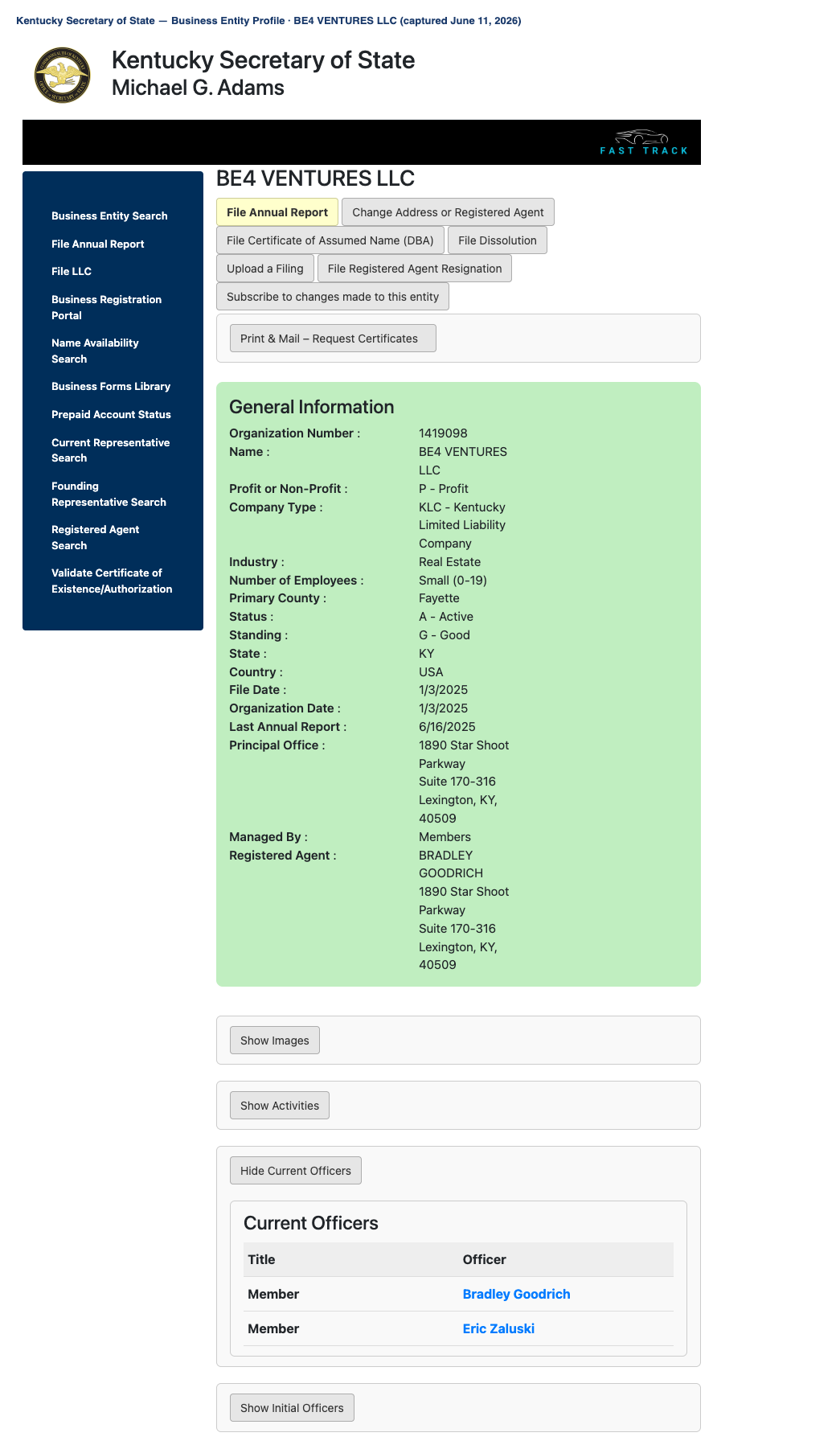
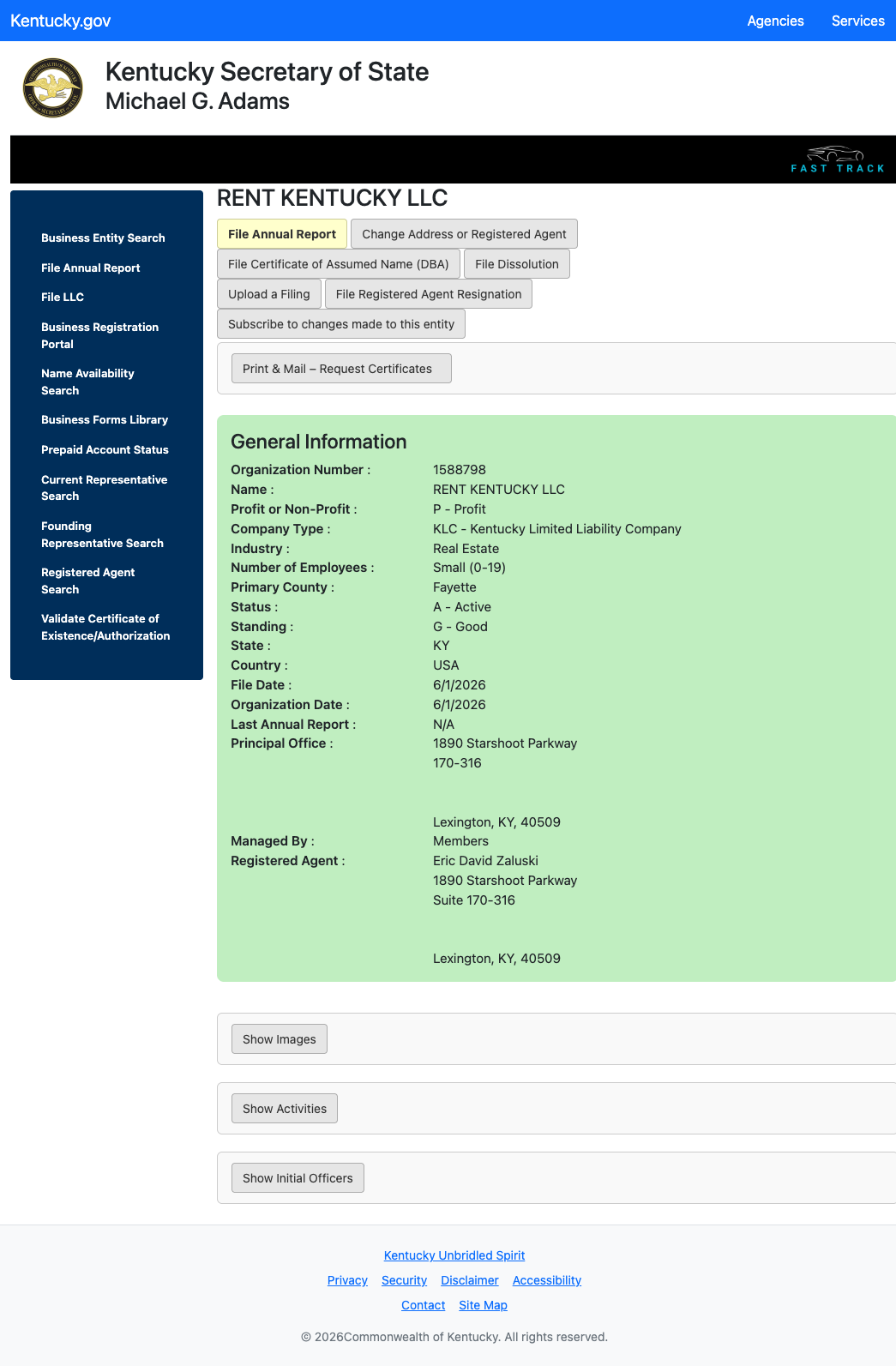
Iskulaz and BE4 list the same Hamburg mailbox suite. So the data’s biggest one-day bulk buyer of starter townhomes and its busiest one-at-a-time accumulator are not two trends — they are one partnership, Zaluski and Goodrich, operating under different names. And they are scaling up: on June 1, 2026 — ten days before this report — the same suite registered a new entity with the Secretary of State. Its name is Rent Kentucky LLC.
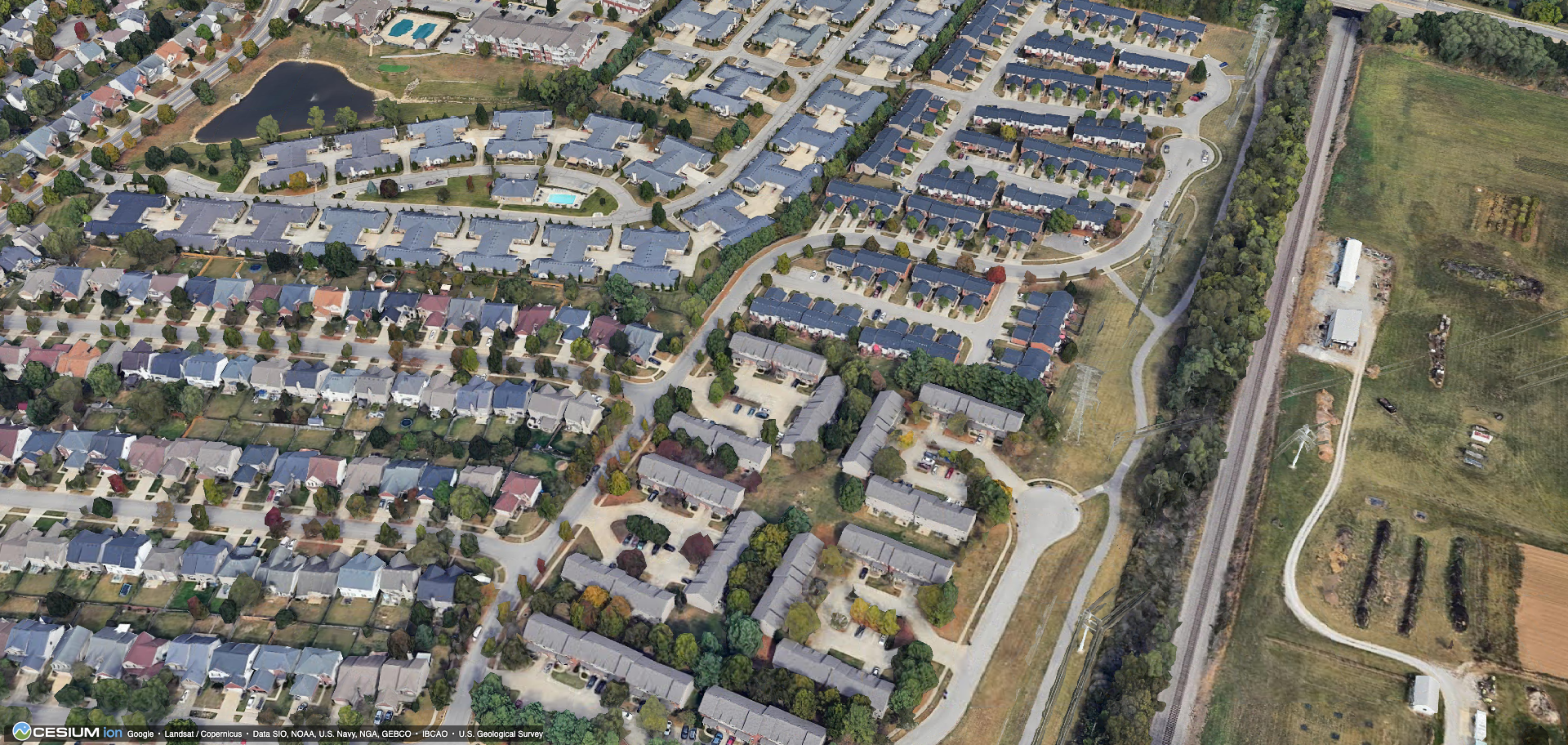
A generation ago, the path of a Century Hills townhouse was: Ball builds it, a family buys it. The path the deeds now describe is: Ball builds it, Ball rents it for three decades, and when Ball finally sells, the buyer is the next landlord — never a family at all.
The portfolio market
The open-market numbers, striking as they are, miss the biggest transactions entirely, because the biggest transactions never hit the open market.
Thirty-six times in the last 30 months, five or more Fayette County homes transferred in a single recorded deal. Together: 509 homes, $96.7 million. Among them:
- 46 townhomes at Glen at Lochdale — the 66-unit “Park at Willow Haven” community — $12.4 million, October 2024, to 3711 Lochdale Terrace LLC. Who owns it is not knowable from the public record: the LLC is manager-managed, organized by a frontman, with a law firm’s service company as registered agent. Twelve million dollars of Lexington townhomes, owner anonymous by design.
- 46 properties along the Leestown corridor (Sebastian and Greathouse tracts) — $11 million, April 2026, to Anderson 3200RR LLC, organized per state filings by Dennis Anderson of Anderson Communities, one of Lexington’s largest developer-landlords. The seller, JMS Real Estate LLC, had itself absorbed the portfolio through a chain of investor LLCs going back to a $4 million deal in 2000. These homes have been rental product for a quarter century; what changed in April is the size of the operator holding them.
- 84 townhomes near Citation Boulevard, accumulated in bulk deeds totaling roughly $12.2 million. The original buyer, Citation Townhomes LLC, was registered in November 2023 with its principal office at a Charleston, West Virginia address, behind a Lexington attorney as registered agent; that entity has since gone inactive, and title now sits with a successor, Citation Townhomes Lexington LLC, organized this March by a downtown tax attorney. Neither filing discloses a beneficial owner.
- 12 student-rental parcels on Aylesford Place, in the shadow of UK — $12.6 million in one September 2024 deed to Eden Companies Fund VII LLC, the numbered-fund vehicle of Eden Companies, which already managed student housing on those very blocks. Part of a UK-belt roll-up that also saw Ashland Capital Group — the investment LLC of a Lexington commercial real-estate attorney — take 23 University-area parcels for $6 million, and Core Lexington Maxwell SFH LLC take nine for $3.35 million.
- 20 condo units on Bainbridge Drive — $2.6 million to Vistara LLC of Frankfort.
- 16 Walden Drive townhomes taken by a single husband-and-wife LLC through the Master Commissioner’s foreclosure sale.
None of these were reported anywhere — not because anyone hid them, but because nobody was reading the deed books. A renter on Lochdale Terrace or Citation Boulevard woke up one morning in 2024 with a new landlord and no announcement. Multiply by 509.
A fragmented swarm, with sharks in it
The popular version of this story — BlackRock is buying your neighborhood — is not what the Fayette County records show. Of 1,598 distinct entities that took title to residential property in the window, 1,194 bought exactly one. Lexington’s investor market is mostly small: a contractor’s LLC, a family trust’s rental, a dentist with a duplex.
But 98 entities took five or more properties, and the top of that list behaves differently in kind, not just degree: Ball’s 200-plus-home internal portfolio; the Zaluski–Goodrich partnership’s 60-plus homes under two names; Truehold’s sale-leaseback machine buying through three shells; the SCJL family of LLCs — six numbered entities, all registered to the office of realtor-builder Sam Ryan Atkins, with one quietly re-domiciled to Delaware — holding some 60 homes. The swarm is local. The appetite at the top is institutional, whoever signs for it.
And the 2022 cohort never left. When the Herald-Leader last counted — in October 2022, the only prior deed-level analysis ever done here — it found 235 investors had taken roughly one in ten Lexington homes since 2019, and it named names. Those names are still in this data. Shane Eckman, the No. 1 buyer on the 2022 list, keeps buying through Reclaimed Development LLC in Cardinal Valley and Hollow Creek; a lender-intelligence service now tracks his network at roughly 556 properties across 15 holding companies. The Nest Opportunity Fund, whose Lexington director was No. 2 on that list, moved 19 downtown properties between its own entities in this window. Atkins was No. 8. Our data picks up where the 2022 count stopped and finds the share higher, the bulk market bigger, and the bottom tier more concentrated.
The policy that wasn’t
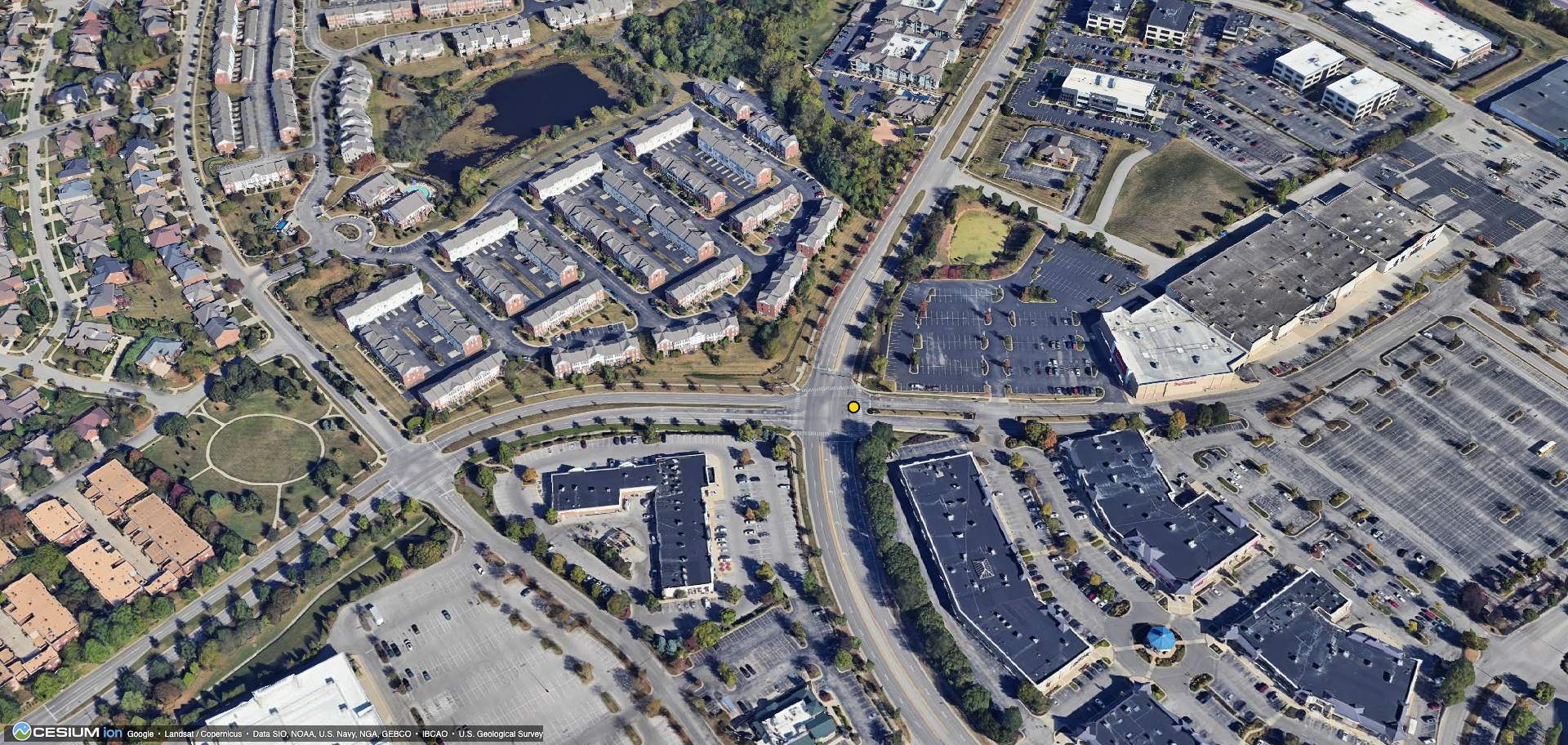
Lexington’s public record has noticed the phenomenon — but it was a citizen, not an official, who said it plainest. At a June 2023 council meeting preserved in the city’s video archive, Dottie Bean stepped to the public-comment podium and warned that downtown was becoming “a cheap place to live for six-figure-income families from places like California, New York, Oregon” and that “this trend of housing speculation… will leave Lexington with a lot of overpriced housing and a surplus of empty buildings.”
Bean knew what a story looked like. She spent 25 years as a reporter and editor at the Herald-Leader and 20 more inside city government before taking up local government one last time from the other side of the podium. She died in March, at 77, before anyone ran these numbers. The deed books spent the three years after her warning proving her right.
Commission discussions have flagged institutional investors arriving in a city they “hadn’t been paying attention to.” Public commenters have connected short-term rentals and investor purchases to affordability for years.
What the archive does not contain, in more than 2,700 recorded meetings, is a single council or committee agenda item about corporate purchases of single-family homes. The city’s affordable-housing work — the needs assessment that found a 22,800-unit gap, the Affordable Housing Fund — is entirely about building supply. Nothing tracks who is buying the supply that exists.
The state tried, barely. Rep. Adam Moore, a Lexington Democrat, filed HB 31 this session: owners of 50 or more single-family rentals would have been barred from buying more except as a personal residence. It was referred to committee on January 13, 2026, and died without a hearing when the session ended in April. A Democratic floor amendment with bulk-purchase limits failed the same way. In Washington, the 21st Century ROAD to Housing Act — passed by the House 396-13 on May 20 with a provision barring institutional investors who own 350-plus single-family homes from buying more — is the first federal threshold ever set. Measured against Fayette County’s actual market, 350 is a number almost no local operator touches; the entire visible top tier of Lexington’s buyout would walk under that bar.
Meanwhile the datasets policymakers cite don’t see Lexington at all. Redfin’s quarterly investor tracker covers 39 metros; Lexington is not one of them. The NAR figure exists because one economist mentioned it on one TV segment. The county’s own records — the ones this report is built on — sit in a public website’s monthly tables, read by nobody.
What it costs
The neighborhoods where entities buy hardest are the city’s poorest. ZIP 40517, home of the Century Hills-to-Appian Way townhome belt where Ball, BE4 and Iskulaz operate, has a median household income of $53,670 — the lowest of Lexington’s large ZIPs — and a poverty rate of 21.6 percent. ZIP 40505, covering Radcliffe, Highlawn and The Meadows, sits at $58,206 and 17.1 percent. The median home value in 40505 is $179,200, which is to say: the last housing in Lexington a $58,000-a-year household can buy is precisely the housing selling 25 to 40 percent to companies.
A first-time buyer with an FHA loan, an inspection contingency and a 45-day close does not lose to another family in these neighborhoods. They lose to a cash LLC that doesn’t need the appraisal — and in the bulk market, they never see the house at all. The for-sale sign never goes up on a portfolio deal; 509 homes in 30 months went straight from one landlord’s ledger to another’s.
There is no villain required for any of this. The Oldfields were entitled to sell a 28-year rental business. Habitat’s homeowner was entitled to her equity. Ball Homes can rent what it builds. Each transaction is legal, rational, ordinary. The sum of them is that Lexington’s entry-level housing is converting, parcel by parcel and bundle by bundle, into income product — at one in eight citywide, two in five at the bottom, and accelerating — while the institutions that might at least be counting it are not.
The deed books are public. Somebody just has to keep reading them. We will.
Methodology and disclosure
The Lexington Times scraped the Fayette County PVA’s monthly Sales List (qpublic.schneidercorp.com) for January 2024 through June 2026 — 18,969 recorded transfers. The PVA list reports each parcel’s current owner, so buyer attribution uses only the most recent sale of each parcel (14,897 unique residential parcels). “Entity” means a buyer whose recorded name contains a corporate marker (LLC, Inc., Properties, Holdings, etc.); family trusts, government and institutional buyers are excluded from entity counts. “Open market” means sales the PVA classifies as arm’s-length, above $10,000. This method undercounts investors who buy in personal names — NAR’s broader methodology put Lexington’s 2024 investor share at 18 percent. Bulk deals are groups of 5+ parcels deeded to the same buyer on the same date for the same recorded consideration; bundle prices are counted once, never summed per parcel. Ownership chains, mailing addresses, and deed book/page references come from individual PVA property reports. May 2024 exceeds the Sales List’s 1,000-row display cap and was recovered in full (1,006 sales) via date-range queries. June 2026 reflects only sales recorded by June 11 and is excluded from trend figures. Census figures are ACS 5-year estimates via Census Reporter. Meeting citations reference the LFUCG video archive at meetings.lexingtonky.news.
Entity identities (registered agents, organizers, formation dates, principal offices) come from live Kentucky Secretary of State business filings (sosbes.sos.ky.gov), supplemented by the linked public sources; Kentucky does not disclose LLC members in machine-readable form, and beneficial owners of Citation Townhomes Lexington LLC and 3711 Lochdale Terrace LLC could not be identified from public records.
Reporting for this story was produced with AI assistance under the direction of The Lexington Times; all figures derive from the public records described above and the named primary sources.
This investigation was reported and drafted with AI assistance (claude-fable-5) under the direction of The Lexington Times. All figures derive from Fayette County PVA sales records, Kentucky Secretary of State filings, and the other public sources cited inline; ownership chains were verified against individual PVA property reports with deed book and page references. Aerial images are 3D photogrammetry renderings (Google/Cesium), not photographs. Two document exhibits (424 Oak St and 2800 Point Ct sales tables) are re-rendered from the PVA’s recorded values for legibility.
Republishing: This is original Lexington Times reporting, licensed under Creative Commons CC BY-ND 4.0. You may republish this article, in full and unaltered, for free — including commercially — with credit to The Lexington Times and a link to the original.