Mental health facility discussed for incarcerated youth
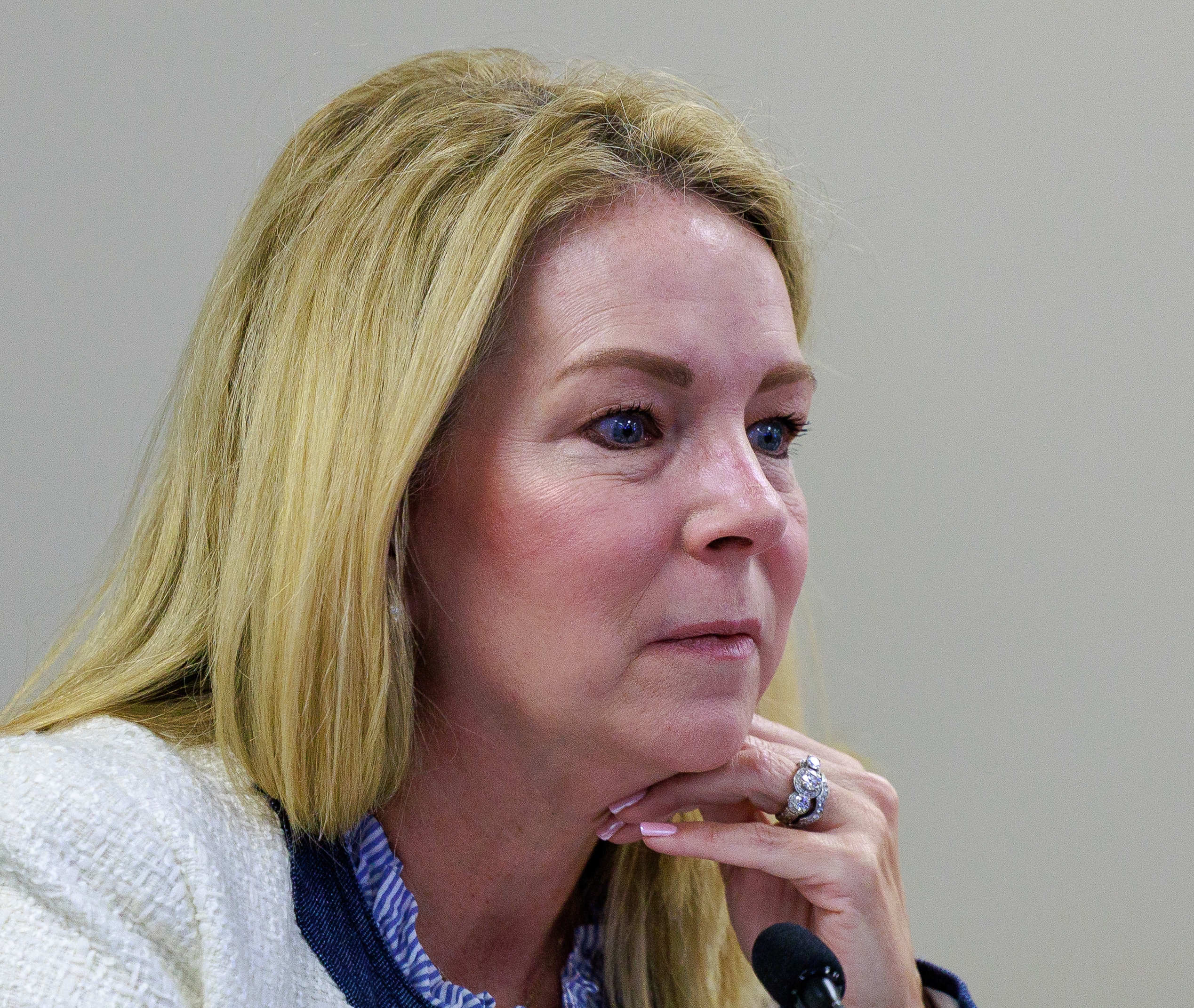
Subcommittee Co-Chair Stephanie Dietz, R-Edgewood, listens to a presentation Wednesday on the need for a high acuity mental health facility for incarcerated youth. A high-res version is available here.
FRANKFORT — Kentucky’s incarcerated youth often need mental health treatment. The Department of Juvenile Justice wants to build a $35 million high acuity mental health facility to care for them.
Commissioner Randy White told the Budget Review Subcommittee on Justice and Judiciary on Wednesday there is a “high need” for this type of facility, which is in the early planning phases.
Incarcerated children in Kentucky are currently receiving treatment in detention centers, which delays care and is often unsafe for the youth and staff, White said.
For an individual with severe needs, the department tries to have them placed into a private mental health facility. White said this means the youth is often sent out of state. He shared a recent example of a child who was placed in a treatment facility in Pennsylvania.
“When we require or seek placement for these violent individuals – if we’re fortunate enough to obtain a bed and position and treatment for these individuals – we have to send them far away from their support base and far away from their homes,” White said. “It could be somewhat traumatic for them to move that distance.”
White said the incarcerated children who need in-patient, high acuity treatment are often violent, which makes them difficult to place. State law does not require a mental health facility to accept these patients, he said. Sometimes youth sent to other states for treatment are returned due to the safety risk.
Rebecca Norton, who serves as the budget director for the Justice and Public Safety Cabinet, said the $35 million figure is a “preliminary estimate” based on a preliminary investigation into the project. The cabinet currently doesn’t have the funding to complete the design phase of the project, she said.
“The costs listed here are based on discussions that have been had as far as what would be requirements for square footage, and that’s based on the number of beds,” Norton said.
The proposed facility would have 24 beds, with 16 beds for clinical patients and eight beds for assessment and stabilization needs. The facility would have to be separated by gender and high- and low-risk offenders, as per statute, Norton told the committee.
The estimated annual operating budget for the facility is $12.1 million, she added.
Subcommittee Co-Chair Stephanie Dietz, R-Edgewood, asked White and Norton if there is a need for that many beds.
“Do you believe that we have that many youths that would qualify under the criteria for this type of facility?” Dietz asked.
White said the need for beds fluctuates.
“We see surges. We may go through five or 10 or we may see one or two,” he said. “… We have to have flexibility, and it’s not going to involve filling 24 or 18 beds consistently. We have to have the degrees of separation operationally to make sure that they’re safe. I can get you an exact number, but we do have individuals right now that could be placed in a high acuity facility.”
Norton said there is a “multitude” of youth within Kentucky’s juvenile justice system who have a mental health diagnosis and would benefit from an in-state facility dedicated to incarcerated youth.
Rep. Josh Bray, R-Mount Vernon, said he’d like to know if it is cost-effective to build this type of facility.
“I would be curious to see what the contract rate out of state is, because if that can be accommodated some other way, it seems like the numbers are just a little off from where I’m sitting,” he said, after learning one to five individuals are sent out of state per year due to needing intensive, specialized care.
Dietz asked if renovating some of the current juvenile justice detention centers to accommodate the mental health needs is an option.
White said renovations often cost more than building a new, standalone facility. Norton agreed it is not possible for some of the current facilities to be expanded due to space and financial reasons.
Rep. Daniel Elliott, R-Danville, asked if the department has discussed letting other states send incarcerated youth to Kentucky’s facility if the state decides to build one.
White said he isn’t aware of any internal discussions, but there are legal and logistical things to consider.
“We would just have to see what the bed space looked like and review the legal challenges associated with that,” White said, adding Kentucky sends youth to private, out-of-state facilities, not publicly-funded facilities.
The Kentucky General Assembly cannot act on legislation until the 2026 legislative session begins on Jan. 6. The next Budget Review Subcommittee on Justice and Judiciary meeting is scheduled for July 15 at 9 a.m.
For more information, visit legislature.ky.gov.