Lexington is preparing to test a new kind of public art — murals painted directly on streets — that city planners say can slow traffic and strengthen community identity.
During Tuesday’s Environmental Quality and Public Works Committee meeting, Hannah Crepps, principal planner for outreach and strategic planning, briefed council members on a pilot project that will bring “street art” to Shropshire Avenue in Council District 1.
“Street art is both traffic calming and placemaking,” Crepps said. “It can make it more comfortable to walk, ride, bike and drive, while also creating people-centered spaces that foster community.”
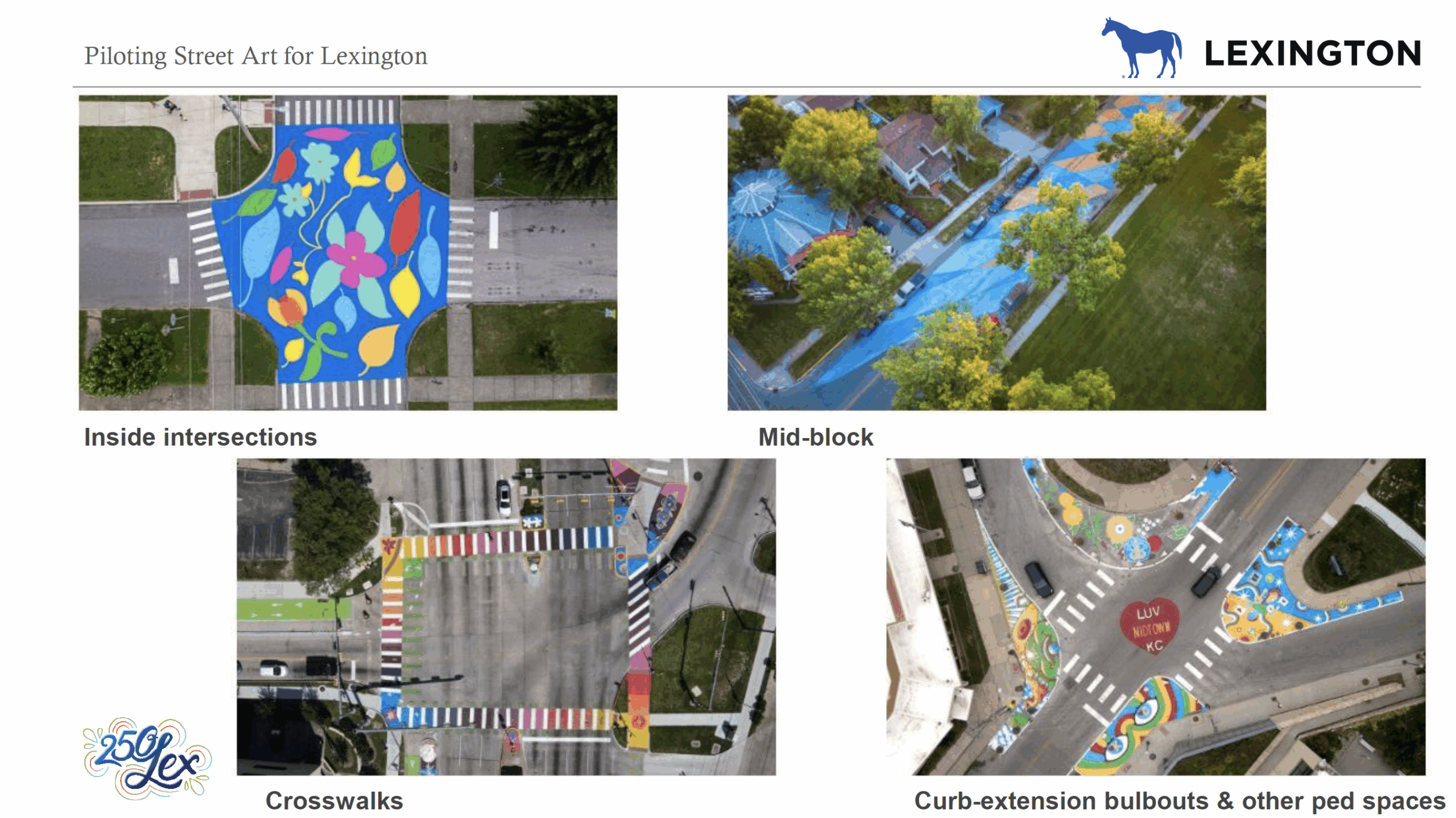
Also known as asphalt art or street murals, the designs can be placed in intersections, crosswalks, curb extensions or mid-block areas. Materials and lifespan vary — from chalk or tempera paint lasting days to thermoplastics designed for years of wear.
Crepps cited data from the Bloomberg Philanthropies Asphalt Art Safety Study, which found lower crash rates involving pedestrians and cyclists, fewer injury crashes, and reduced “near misses” in areas with such projects. “The numbers show it works,” she told the committee. “We can make streets safer and more engaging at the same time.”
The Shropshire Avenue project builds on a temporary chalk-art installation unveiled during the city’s May Streetfest. The Division of Planning is partnering with Council Member Tyler Morton, neighborhood residents, and local youth to choose an artist and refine the design.
Neighborhood teens and residents will review proposals and “act as a conduit for wider community engagement,” Crepps said. Installation will be done alongside the selected artist and the community, with Traffic Engineering ensuring compliance with federal road marking standards.
Council members were told the project aligns with multiple city plans and policies — including Imagine Lexington 2045, the Public Arts Master Plan, and the Complete Streets Policy — all of which encourage public art as a way to enliven public spaces and improve safety.
Crepps said Lexington can draw lessons from other cities. Louisville has an ongoing program with both internal and external projects, Cincinnati pairs city work with nonprofit partnerships, and Spokane funds a three-year pilot with traffic camera revenue.
The pilot will also help the city test a draft process for future installations, from funding sources and design approvals to data collection on traffic and community impact.
“This is a way to make our streets not just conduits for cars, but places for people,” Crepps said.
Sidebar: How Lexington will choose its first ‘street art’ mural
Community at the center of Shropshire Avenue pilot
The Shropshire Avenue street art pilot won’t be a top-down city project — it’s being designed from the ground up, with neighborhood youth and residents helping to select the artist and shape the final design.
The Division of Planning, working with Council Member Tyler Morton, will invite local artists to submit letters of interest. A smaller group will then be asked for full proposals.
A selection committee made up of neighborhood teens and adult residents will review the proposals, choose the artist, and “act as a conduit for wider community engagement,” Principal Planner Hannah Crepps told the Environmental Quality and Public Works Committee.
Once selected, the artist will work directly with the neighborhood to develop site-specific artwork that meets federal safety standards for roadway markings. Traffic Engineering will review the design for compliance with the Manual on Uniform Traffic Control Devices (MUTCD), ensuring proper striping, color and shape.
Installation will be a community effort — residents, youth, and the artist painting side-by-side.
Lexington’s process blends art, engineering, and neighborhood ownership, but other cities have taken different approaches:
- Louisville runs an ongoing program open to both city agencies and community groups.
- Cincinnati combines city-managed projects with nonprofit partnerships, often funded by grants.
- Spokane, Wash. operates a three-year pilot financed by red-light and speed-camera revenue.
Crepps said the Shropshire pilot will help Lexington test and refine its own model — and gather both traffic safety and community feedback before expanding the program.
“This is about art people can live with and feel proud of,” she said. “It’s not just in their neighborhood — it’s theirs.”