Lawmakers hear from ibogaine advocates
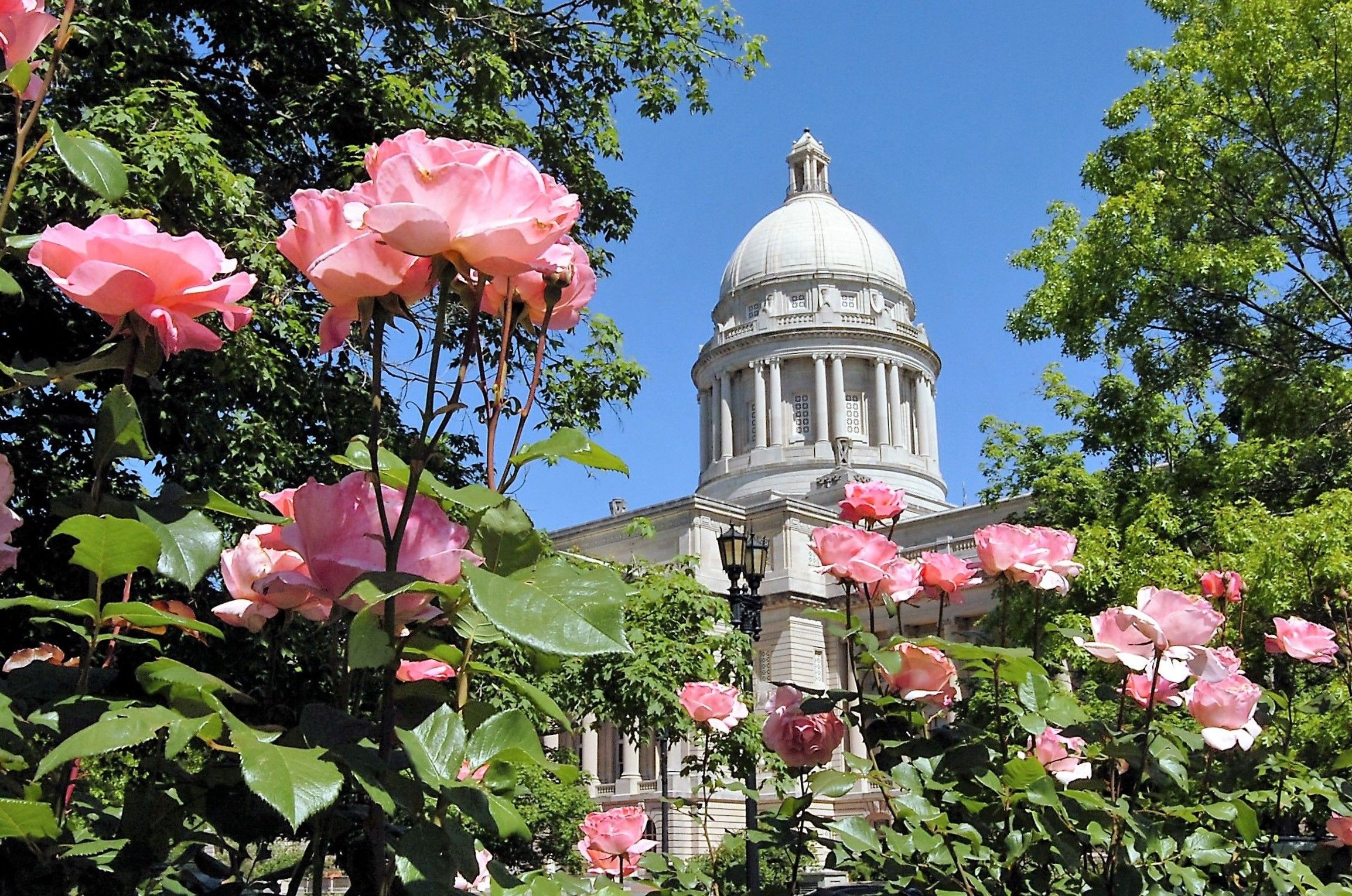
The Interim Joint Committee on Health Services heard testimony Wednesday about efforts to allow research on ibogaine as a possible treatment option for substance use disorder. Pictured here are the Kentucky State Capitol and the Capitol Rose Garden. here.
FRANKFORT — Kentucky lawmakers on Wednesday heard about efforts to research an alternative treatment method that advocates say could help scores of people who suffer from substance use disorder.
The Interim Joint Committee on Health Services heard from Sen. Donald Douglas, R-Nicholasville; Dr. Jean Loftus, ambassador for Americans for Ibogaine; and Jessica Blackburn Allen, a volunteer with Americans for Ibogaine who has been administered the compound during drug treatment.
Douglas said he is working on legislation for the 2026 Regular Session that would create a pathway to study the effectiveness of ibogaine as a treatment option. He described the substance as a naturally occurring compound – found in root bark in central west Africa – that has been used in other parts of the world for a long time.
He also noted that Kentucky’s 2024 overdose fatality report found that around 1,410 Kentuckians died of drug overdoses that year and that, according to other research, about 85% of individuals who complete a traditional rehabilitation program will relapse within a year.
“I’m really here today to introduce a different clinical model. We’ve been dealing with the same clinical model over and over for decades,” he said. “It’s not working. We simply have got to stop trading one addictive compound for another addictive compound. We’ve got to stop it.”
Loftus said the human and economic costs of addiction are high, and that ibogaine has the potential to help with co-occurring disorders.
“Ibogaine treats treatment-resistant depression, and by that, I mean depression that has failed all medication, all therapy, everything,” she said. “These conditions may seem very different, but they overlap in some important ways. Those who suffer from them are often impaired functionally. They have difficulty holding a job. They utilize a staggering amount of social services.”
Ibogaine is not a cure for addiction, but it interrupts acute withdrawal, post addiction withdrawal syndrome and craving so that the addicted person can then remain abstinent through support, Loftus said.
“Looking at costs, and again taking the case of addiction, ibogaine costs about one-eighth that of traditional treatment per person. And these numbers are for treatment attempts per person, not for treatment successes. So just because you spend $700,000 on traditional treatment for someone with addiction does not mean that it worked,” she said.
Allen, a licensed social worker from Eastern Kentucky, said her experience with substance use began at the age of 17 and escalated into a daily oxycodone or heroin habit by the age of 19. She said she tried the very best traditional treatments available, making five to six attempts over five years.
On Christmas Eve 2008, Allen took her last oxycodone and boarded a plane bound for Mexico, where she underwent treatment with ibogaine. She said she experienced a vision of herself lying in a casket while her mother wept, allowing her to feel the pain her addiction was causing others.
Allen said she woke up the next morning with no withdrawal symptoms or drug cravings and felt like an enormous burden had been lifted.
“My guilt, shame and depression that I came with were completely gone,” she said. “I felt overwhelmingly grateful and experienced joy from simply being alive. Within 24 hours, my life was transformed. The benefits from my first ibogaine experience have remained with me to this day.”
Ibogaine has not received approval from the Food and Drug Administration and remains classified as a Schedule 1 drug on the federal level. Schedule 1 drugs are considered likely addictive with no real medical benefits.
Committee Co-Chair Sen. Stephen Meredith, R-Leitchfield, noted that ibogaine remains an illegal substance and asked Douglas what the proposed bill would involve.
Douglas compared the measure to the general assembly’s recent work on medical marijuana and said it would clear a pathway to initiate research on ibogaine. He mentioned the possible formation of a legislative consortium to fund ibogaine studies and ultimately seek to reclassify the compound on the federal drug schedule.
Rep. Adrielle Camuel, D-Lexington, asked about current research on ibogaine.
“What has been done so far on ibogaine? Because what I was finding is that it’s a psychedelic, a psychoactive drug. It may occur naturally, but it seems to cause cardiotoxicity, psychosis, neurotoxicity. So where is the urgency to study this when we do have medications? We do have therapies to help people who are struggling with addiction,” she said.
Lofus said the current therapies are “woefully inadequate.”
“They fail people time and time again so we have therapies but they don’t work very well. We have excellent evidence that ibogaine works. We have anecdotal reports, person after person saying I tried everything, so we do need ibogaine to address that,” she said.
Sen. Michael J. Nemes, R-Shepherdsville, expressed gratitude for the legislation that could help people such as Allen, who have been destitute. He said it’s a chance that needs to be taken.
The next committee meeting is scheduled for Sept. 16 at 3 p.m.