The concept of “erasing history” has been a popular talking point over the last several years. It was first weaponized by Republicans to attack attempts by activists to remove Confederate monuments. Now, in a spectacular bit of irony, the same people who said that removing statues was tantamount to pretending that something did not happen are now trying to reshape our museums to pretend that certain things did not happen. However, eliminating information about people and events that paint the United States in a bad light does not eliminate their effects.
Most importantly, it also hinders our ability to have the necessary conversations that lead to efforts that mitigate those effects.
On March 27, 2025, President Donald Trump issued an Executive Order entitled “Restoring Truth and Sanity to American History,” which seeks to restore “objective facts” about American history to our nation’s historical sites, museums, and national parks. The order further accuses a “revisionist movement” of distorting American history such that “our Nation’s unparalleled legacy of advancing liberty, individual rights, and human happiness is reconstructed as inherently racist, sexist, oppressive, or otherwise irredeemably flawed.”
Most pointedly, the order directs the Secretary of the Interior to ensure that areas within his jurisdiction “do not contain descriptions, depictions, or other content that inappropriately disparage Americans past or living (including persons living in colonial times) and instead focus on the greatness of the achievements and progress of the American people.” It also prohibits the Smithsonian from spending money “on exhibits or programs that degrade shared American values, divide Americans based on race, or promote programs or ideologies inconsistent with Federal law and policy.”
This represents a troubling attempt to whitewash American history by excluding the narratives of communities that have been victimized by the United States government, which has not always lived up to the ideals that it has espoused to the rest of the world.
Indigenous, Black, and Rural communities are still feeling the effects of centuries of disenfranchisement and systematic exclusion. For example, Indigenous people have dealt with the forced taking of our lands and resources, the kidnapping of our children to be put into government-run boarding schools, systemic attacks on our languages and traditions, and attempts to terminate the sovereign status of our nations. The impacts of this intergenerational trauma are borne out in higher rates of poverty, lower life expectancy, and the increased prevalence of diseases of despair such as alcoholism.
This order is also being enforced in tandem with the Trump Administration’s restoration of Confederate place names and statues, honoring an insurrectionist movement that took up arms against the United States government in order to preserve slavery. South Carolina, the first state to leave the Union, cited “an increasing hostility on the part of the non-slaveholding States to the institution of slavery.”
If the goal is to honor the historic contributions of Americans, then glorifying those who took up arms against its government to defend slavery seems to run counter to that goal. Is white supremacy not the epitome of a race-based ideology?
This order has been implemented in a number of ways so far. The National Park Service has begun erecting signs on its properties to ask people to report items that depict Americans in a negative light. This effort is part of a broader review of all public-facing content to eliminate any items that may be “disparaging.” Just a couple of weeks ago, the Trump Administration called for a comprehensive review of the Smithsonian’s museums in order to ensure compliance with the Executive Order.
As the order says, the Smithsonian must be a “symbol of American greatness … igniting the imagination of young minds, honoring the richness of American history and innovation, and instilling pride in the hearts of all Americans.”
History does not always fill one with pride, yet the order repeatedly says that America’s museums and public lands should do so. This is an impossible task. How do you tell the story of Harpers Ferry National Park without also describing the American government’s perpetuation of chattel slavery? How do you tell the story of Harriet Tubman, whose home is managed by the National Park Service, without discussing the Fugitive Slave Act and attempts by the United States government to hold the Union together at the expense of the enslaved? How do you tell the story of Mount Rushmore without talking about how the Black Hills were stolen from the Lakota in violation of the Treaty of Fort Laramie?
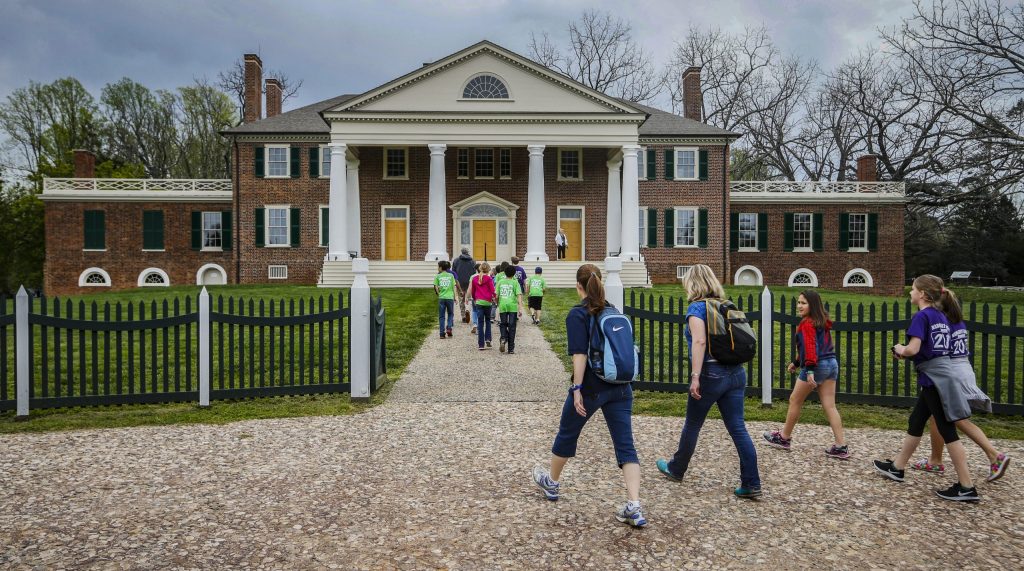
I have personal experience with these attempts to whitewash our history. In 2022, my wife and I visited James Madison’s Montpelier in Orange County, Virginia. Upon leaving, we were approached by a Fox News reporter and camera crew who wanted our thoughts on the mention of slavery during the house tour. I gave my honest answer, and it surprisingly made it to air, though my answer was contrasted with someone who bemoaned any mention of slavery. The segment used such mentions as an example of a “woke ideology.”
On August 19, 2025, President Trump posted on Truth Social that the Smithsonian focuses only on the negative aspects of American history, including “how bad slavery was.” His call was echoed by MAGA influencers who said that the Smithsonian should tell America’s story in a way that instills pride.
But teaching history is not meant solely to instill pride. It is also meant to help us contextualize the past so we can have a better future.
The first step towards addressing the wrongs of the past is acknowledging that they happened and continue to affect people today. Our museums should be places where those conversations begin.
History is not meant to flatter us; it is meant to teach us. A nation that demands only pride from its past demands forgetfulness, and a forgetful nation cannot hope to grow.
The post Commentary: On Whitewashing History appeared first on The Daily Yonder.