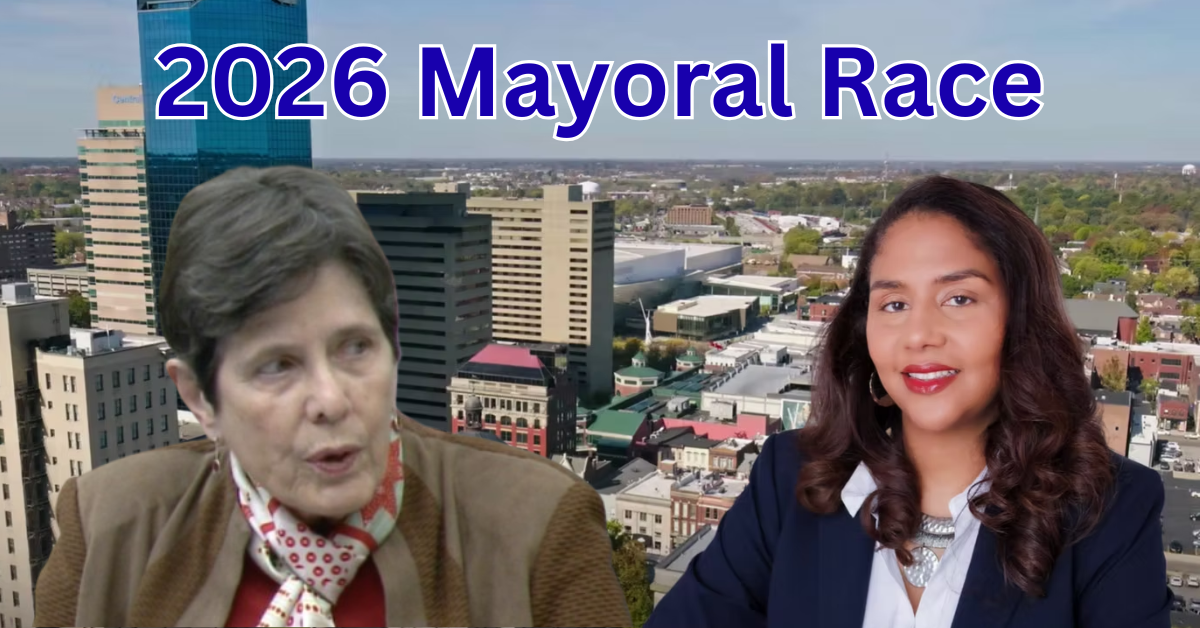
As Lexington heads toward the 2026 mayoral election, the outlines of a familiar but still-fluid contest are beginning to emerge. At its core, the race is shaping up as a test of whether voters want to double down on experience and continuity—or whether the city’s growth pressures, housing costs, and civic frustrations create an opening for a new governing style.
The likely matchup between incumbent Mayor Linda Gorton and first-time candidate Raquel Carter reflects that tension clearly. One represents institutional memory and incremental governance; the other is betting that energy, fundraising momentum, and a housing-first message can disrupt the status quo.
The Structural Advantage of Incumbency
Gorton enters the race with advantages that are difficult to overstate in Lexington politics. She has already won two citywide elections decisively, most recently capturing 71% of the vote in 2022. In a low-turnout, nonpartisan environment—where name recognition often matters more than ideology—that track record alone places her in a commanding early position.
Her case to voters is straightforward: steady leadership through the pandemic, continued economic growth, investments in public safety, and a governing style that emphasizes caution over upheaval. For many Lexington voters, particularly older residents and habitual municipal-election participants, that résumé signals reliability rather than stagnation.
Yet the very strength of that record introduces uncertainty. A third term would be historically rare in Lexington’s post-merger era, and Gorton’s age and long tenure inevitably raise questions about whether continuity shades into complacency. Her occasionally strained relationship with the Urban County Council—highlighted by budget vetoes and growth-boundary debates—also offers critics a tangible line of attack: that the city is governed more defensively than imaginatively at a moment of rapid change.
Carter’s Opening—and Its Limits
Carter’s candidacy is notable less because she is a political insider and more because she is not. Her early fundraising success—more than $100,000 raised well before the filing deadline—signals real interest from donors who appear eager for an alternative voice. In Lexington mayoral politics, early money often correlates with seriousness, not just curiosity.
Her message centers on housing supply, economic innovation, and a sense that Lexington must move faster to meet growth pressures rather than manage them incrementally. That framing is well calibrated to younger voters, real estate and business interests, and residents frustrated by rising housing costs and slow-moving policy processes.
Still, Carter faces structural hurdles. Lexington’s nonpartisan electorate has historically favored candidates with demonstrated governing experience, particularly in executive roles. In a race without party labels, “ready on day one” often becomes shorthand for voters trying to minimize risk. Carter’s challenge will be translating private-sector credibility into public-sector trust—especially among voters who are comfortable with Gorton’s approach, even if they occasionally disagree with it.
A Race Defined by Absence—So Far
One of the most striking features of the race at this stage is what is missing. There is no polling. There are no major endorsements. And while Gorton has announced her intent to run, she has not yet reported campaign fundraising, relying instead on the latent power of incumbency.
That absence keeps the race unusually open for this point in the cycle. Filing deadlines in early January leave room for additional candidates to enter, potentially complicating the dynamic in the May primary. Even a third or fourth credible contender could fracture the vote in unpredictable ways, particularly if they target a specific issue constituency such as environmental preservation, neighborhood protection, or homelessness services.
The Issues That Will Decide It
If the race crystallizes around two candidates, housing is likely to be the defining issue. Carter is clearly positioning herself as the pro-expansion candidate, while Gorton continues to walk a balancing line between growth and preservation. Homelessness, public safety, and downtown investment will also loom large, especially as federal funding uncertainty and local budget pressures intensify.
Ultimately, the question for voters may be less about ideology and more about tempo: does Lexington need steady hands on the wheel, or a sharper pivot to address problems that feel increasingly urgent?
For now, Gorton remains the favorite by virtue of history and structure. But Carter’s early momentum suggests this will not be a perfunctory re-election campaign. In a city accustomed to quiet mayoral races, that alone marks a meaningful shift—and one worth watching closely as filing deadlines pass and the field comes into focus.
Republishing: This is original Lexington Times reporting, licensed under Creative Commons CC BY-ND 4.0. You may republish this article, in full and unaltered, for free — including commercially — with credit to The Lexington Times and a link to the original.