LEXINGTON, Ky. — Thirteen of Lexington’s largest hotels could soon charge guests a 2 percent surcharge on room bills under a proposed tourism improvement district pitched to the Urban County Council’s Budget, Finance and Economic Development Committee on Tuesday.
The proposal, presented by VisitLex and national consulting firm Civitas, would create a management district modeled on Kentucky law, imposing the assessment on full-service hotel properties within five miles of the city center that have at least 2,000 square feet of meeting space and a full-service restaurant. The seven-year program would generate an estimated $2 million annually, with proceeds directed toward convention marketing, group sales incentives and destination development — activities currently supported in part by federal American Rescue Plan Act funds set to expire at the end of this year.
No vote was requested Tuesday. VisitLex Executive Director Mary Quinn Ramer told the committee the presentation was intended to introduce the concept, with the next step being a formal petition process among hotel owners. Kentucky law requires signatures from at least 33 percent of property owners in a proposed district, representing more than 51 percent of assessed parcel value, before the matter can return to the council for action by ordinance.
The district would be governed by a nine-member board of directors, at least two-thirds of whom must be hotel owners or their representatives. The city would collect the assessments, likely for an administrative fee similar to the half-percent charged on transient room tax collections, according to discussion during the meeting.
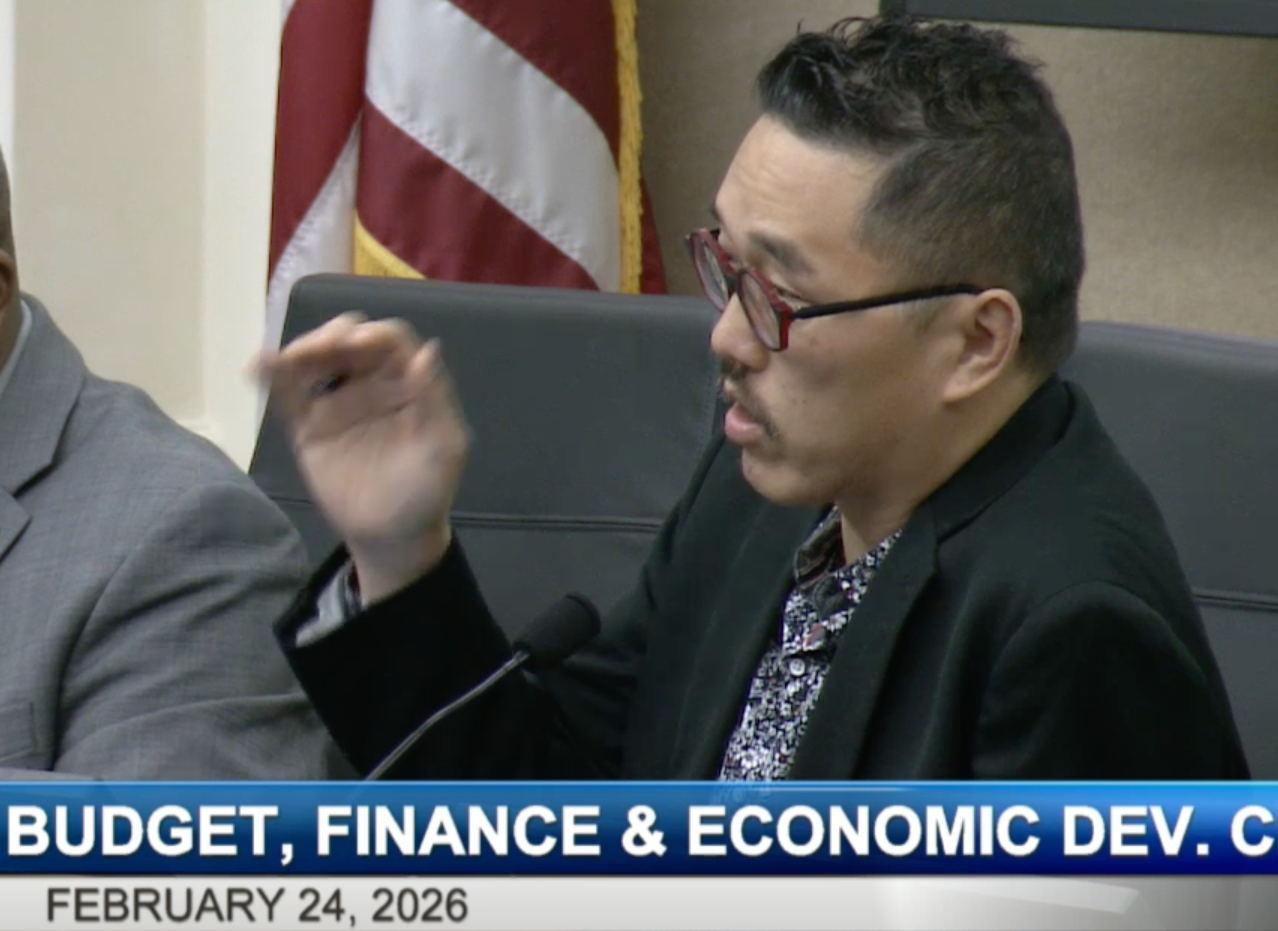
Several council members pressed presenters on the structure. Council Member Dave Sevigny questioned why the 13 hotels could not simply form a voluntary cooperative and raise their own prices rather than creating a formal district. Tiffany Gallagher of Civitas responded that voluntary models are difficult to sustain and create “free riders,” while the assessment model ensures all participating properties contribute evenly. Council Member Tyler Morton asked whether the new revenue could help address homelessness and public safety challenges affecting tourism. Ramer acknowledged hotels have felt those impacts firsthand but noted that state statute strictly limits how transient tax revenue can be spent, and those restrictions were not part of the district conversation.
Louisville formed Kentucky’s only existing tourism improvement district in December 2022, collecting 1.5 percent on room revenue and generating roughly $8 million a year. Presenters noted that Lexington’s $10.5 million destination marketing budget lags behind competing cities, with Louisville’s base budget at approximately $26 million.
The committee also received the results of a comprehensive arts and cultural economy audit conducted for LexArts by London-based consulting firm BOP Consulting. The study found that Lexington’s creative economy generates $1 billion in annual output, supports 7,080 jobs — about 4.2 percent of local employment — and produces a multiplier effect of $1.62 for every dollar invested in the sector. LexArts President and CEO Amy Sweetall presented the findings alongside the consulting team.
The audit yielded 24 recommendations spanning creative economy development, talent retention, audience growth, regulatory streamlining and diversity, equity and inclusion. Researchers found that while Lexington artists produce high-quality work, they do so with limited resources and limited professional development opportunities. The audit also called for a more proactive approach to DEI to better reflect the community’s diversity.
Council Member Liz Sheehan urged LexArts to update some of the data, noting she was uncertain how certain recommendations would be implemented or whether they remained relevant. Vice Mayor Dan Wu moved at the close of the meeting to remove the related LexArts Finance and Equity Review from the committee’s standing list of referred items, a motion that passed without opposition.
In other business, Commissioner Hensley and Director Wes Holbrook presented the city’s January 2026 financial update, cautioning that a $7.9 million accounting adjustment required by the Governmental Accounting Standards Board — related to subscription-based technology services — was creating significant but misleading variances on the financial statements. The adjustment appears as both a revenue and an expense, netting to zero, but inflated the city’s apparent revenue surplus to nearly $11 million when the underlying variance was closer to $3 million.
Holbrook told the committee that payroll withholding collections dipped in January due to a confluence of factors: a severe ice storm that shut down city offices and slowed mail processing, delayed lockbox bank processing and the higher collection targets typical of the fiscal year’s third quarter. He said February receipts were already recovering. Franchise fee revenue from higher gas and electricity usage during the cold snap is expected to flow into city coffers in the coming months.
The committee approved the January 27 meeting summary without discussion. Chair James Brown adjourned the meeting after the committee voted to remove the LexArts equity review from its referred items list.
The BFED Committee meets in the Council Chamber at 200 E. Main St. Meetings are livestreamed and archived by LexTV and broadcast on Spectrum 185 and MetroNet 3.