Defendant created fake painting company after pandemic began, fabricated tax records to obtain federal disaster and payroll loans
FRANKFORT, Ky. — A Lexington man pleaded guilty Monday in federal court to wire fraud and money laundering after admitting he invented a painting company, fabricated its financial records and used the fictitious business to steal more than $132,000 in COVID-19 pandemic relief funds that he spent on real estate, a vehicle and luxury goods in Las Vegas.
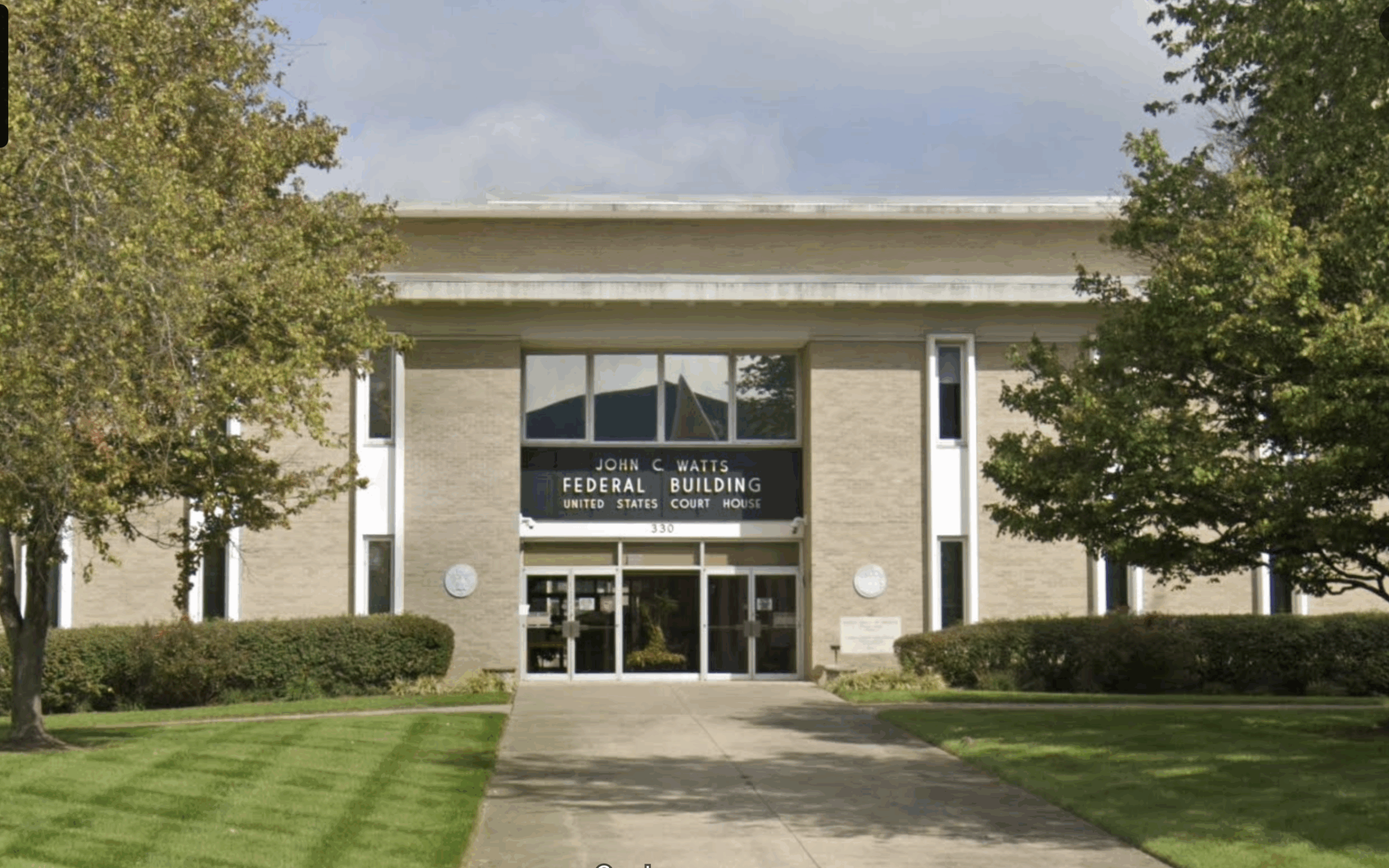
Antoine Adams Jr. entered the plea before U.S. District Judge Gregory F. Van Tatenhove in Frankfort, waiving his right to a grand jury indictment and accepting a two-count federal information, according to court records filed in the Eastern District of Kentucky (Case No. 5:26-cr-00030-GFVT).
The plea agreement, signed by Adams on March 6 and filed March 24, lays out a scheme that ran from roughly April 2020 — weeks after Congress created emergency small-business relief programs under the CARES Act — through October 2021.
The scheme
Adams registered a company called A2 Painting Co LLC with the Kentucky Secretary of State, obtained a federal employer identification number and set up an email address for the business — all after the pandemic had already begun, the plea agreement states. On June 16, 2020, he filed an Economic Injury Disaster Loan application with the U.S. Small Business Administration on A2 Painting’s behalf, claiming the company had gross revenues of $185,206, eight employees and had been established on May 20, 2018.
Those representations were false, Adams admitted. The SBA approved the application anyway, awarding an $84,700 disaster loan and an $8,000 advance.
Between April 2020 and October 2021, Adams also applied for a Paycheck Protection Program loan for A2 Painting, uploading a fraudulent tax form to support the fabricated revenue figures, according to the agreement. The SBA approved that loan for $39,550.
In total, the government says Adams obtained $132,250 in fraudulent pandemic aid.
Where the money went
Rather than covering any legitimate business expenses, Adams used the stolen funds to buy two pieces of real property, a vehicle and luxury goods in Las Vegas, the plea agreement states.
One transaction detailed in the filing: On June 25, 2020 — nine days after receiving the disaster loan — Adams wrote a $12,000 check from his A2 Painting bank account to a Lexington car dealership as a deposit on a vehicle for his mother.
What he faces
The wire fraud charge carries a maximum sentence of 20 years in federal prison and a fine of up to $250,000. The money laundering count carries up to 10 years and the same maximum fine. Adams also faces up to three years of supervised release on each count.
Under the plea deal, Adams agreed to pay restitution of at least $84,700 plus interest and the $8,000 advance on the disaster loan, and $39,550 plus roughly $3,950 in interest and processing fees on the payroll protection loan. He also consented to a $132,250 forfeiture money judgment — meaning the government can seize that amount in assets tied to the fraud — and agreed to surrender his passport, which the court receipted March 25.
Adams waived his right to appeal the conviction. The government, in return, agreed not to bring additional charges based on evidence it currently possesses from his conduct in the Eastern District of Kentucky.
Sentencing is set for July 7, 2026, at 2:30 p.m. before Judge Van Tatenhove in Frankfort.
Assistant U.S. Attorney Kate K. Smith is prosecuting the case on behalf of the U.S. Attorney’s Office for the Eastern District of Kentucky. Adams is represented by Abe Mashni of Mashni Law, PLLC, in Lexington.
Adams has been released on conditions pending sentencing.
A guilty plea is not a conviction. Under the plea agreement, Adams admits the facts set forth above, but he has not yet been sentenced. All defendants are presumed innocent until proven guilty or, as here, until a court accepts a guilty plea and enters a judgment of conviction.