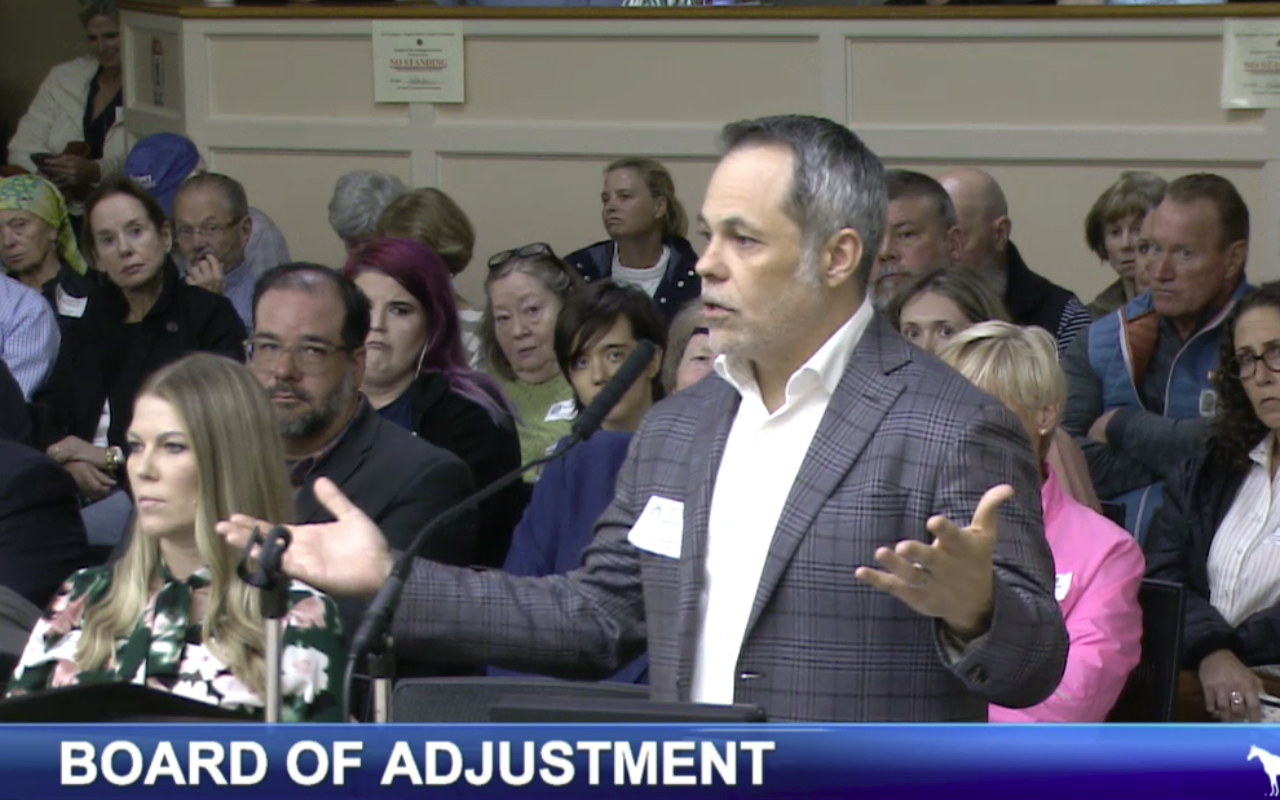
LEXINGTON, Ky. — Lexington’s Board of Adjustment voted 4-2 Monday to approve a conditional use permit for a 52-bed inpatient mental health and eating disorder treatment center in the heart of the Chevy Chase neighborhood, overriding sustained opposition from hundreds of residents, parents, and school officials who packed the downtown Council Chambers and spilled into a mezzanine overflow area. When the result was announced, jeering, booing, and shouting erupted from the crowd — audible on the LexTV recording of the meeting.
The permit, PLN-BOA-26-00006, authorizes Behavioral Health Real Estate Associates — working with affiliated Tennessee-based real estate firm ZLD Partners and proposed operator Roaring Brook Recovery — to convert a largely dormant building at 319 Duke Road into a residential mental health facility. Board members Chad Walker, Harry Clark, Brandon Gross, and Ross Boggess voted in favor. Chair Bob Sturdivant and member Linda Tucker voted no.
The approval came after one of the most heavily attended zoning hearings in recent Lexington memory. More than 260 people entered the Council Chambers at 200 East Main Street, with the line outside reportedly wrapping around the block before the 1:30 p.m. hearing began. The fire marshal ordered standees into the hallway and mezzanine, where a television feed was set up. Dozens of residents who had waited hours ultimately left before the public comment period ended to pick up children from after-school activities.
City planning staff had recommended approval of the permit, a position that applicant attorney Bruce Simpson, a veteran Lexington land-use lawyer, leaned on throughout the hearing. “I’ve been before this body since 1988,” Simpson told the board, “and there’s one question that’s not in dispute. They’re here to advocate for the least of these, and they’ve done so today, recommending approval.”
The proposed operator, Victor Rivera of Roaring Brook Recovery, described a voluntary, sub-acute program focused on primary mental health diagnoses — depression, anxiety, trauma, and eating disorders — with patients stabilized elsewhere before admission. “We’re not doing detox,” Rivera told board members. “If they need detox, we would refer that out.” The applicant submitted 33 proposed operating conditions, including controlled access points, alarmed exits, no on-street parking, and a restriction against admitting patients whose primary diagnosis is substance use disorder.
Opposition was organized and legally sophisticated. Attorney Jessica Winters, representing a neighborhood coalition called Friends of Chevy Chase, delivered a nearly 45-minute formal presentation arguing the permit should be denied on legal, procedural, and substantive grounds. The property sits less than 500 feet from Christ the King School and Church, with Cassidy Elementary and Morton Middle School within walking distance. Lexington’s zoning ordinance requires rehabilitation homes in R3 zones to be located more than 500 feet from residential uses — a requirement the applicant asked the board to waive entirely, given the property is surrounded on three sides by homes and apartments. “The applicant is not asking for a reduction,” Winters told the board. “It is asking you to eliminate the spacing requirement entirely.”
Winters also raised a procedural challenge: the application was publicly noticed under the name Behavioral Health Real Estate Associates, a Delaware entity that did not register in Kentucky until March 17 — weeks after the January 28 permit filing — before the applicant name was quietly changed in city records to ZLD Partners without re-noticing affected property owners. “Failure to do so is a jurisdictional defect,” she argued, calling it independent grounds for denial.
Ryan Howler, a Lexington real estate developer who said he has owned and operated behavioral health clinics nationally, testified in opposition despite having children enrolled at Christ the King. Walking through the 33 proposed conditions, Howler told the board that only roughly four — privacy fencing, alarmed exits, camera coverage in common areas, and parking restrictions — could realistically be enforced by local zoning staff. Of the condition barring patients whose primary diagnosis is substance use disorder, he said: “In practice, that distinction erodes over time under census pressure. I’ve watched it happen in my own facilities. The rules simply get interpreted more flexibly, one admission at a time.”
Anne Trumantine Brueggemann, principal of Christ the King School, delivered some of the most direct testimony of the day. “I have 538 students who show up every day who are two-year-olds to eighth graders,” she said. “I’m not worried about all 52 people at this facility. I’m worried about the one who has a bad day.”
Two supporters offered personal accounts that provided a counterweight to the opposition’s volume. Erin Scussel, a Turkey Foot Road resident and university researcher, described voluntarily checking herself into a similar residential facility in Atlanta’s North Druid Hills neighborhood after a mental health crisis in 2016. “I owe my life to them,” she said, arguing that a community residential setting had made the difference in her recovery in ways an institutional hospital could not. Kian Johnson, 26, disclosed a decade-long battle with an eating disorder and described traveling to West Palm Beach for treatment in 2020 before relapsing upon returning to Lexington. “There is still nothing” in Kentucky for people like him, he told the board. “I want so badly to live. I’m just a human being who’s suffering, and I need a helping hand.”
The hearing also surfaced ongoing compliance concerns at the property. Winters told the board the current operator — distinct from Roaring Brook, which has the property under contract — was allegedly running an outpatient mental health program at 319 Duke Road without authorization under an existing personal care facility permit. A cease-and-desist letter had directed the illegal use to stop by March 24; as of Sunday, Winters said, the operation continued. “The neighborhood has no reason to believe that conditions will be enforced going forward.”
The 319 Duke Road property has a layered zoning history. Originally designed as a high-end 24-unit assisted living community in Chevy Chase and certified by the Kentucky Department for Aging and Independent Living, it was later approved for a personal care facility use that was never activated. Opponents argued the rehabilitation home proposal — at 52 beds on 1.3 acres — represented a dramatic intensification of use compared to anything previously authorized at the site, and the largest bed-count-to-lot-size ratio of any previously approved rehabilitation home in Lexington.
Attorney Nathan Billings, who said he spent more than 60 pro bono hours on the case, framed the board’s task in closing: “This case is about land use. It’s not a case about whether mental health exists or we need facilities.”
The 4-2 vote suggests the board was persuaded by staff’s recommendation and the applicant’s case on the merits, though the dissenting votes from Chair Sturdivant and Tucker indicate the legal and procedural concerns raised by opponents found some traction. Whether opponents pursue an appeal in circuit court — a route Billings appeared to be preserving the record for throughout the hearing — remains to be seen.
The board’s next regular meeting is May 11 at 1:30 p.m. in Council Chambers at 200 East Main Street. Meetings are broadcast live on LexTV and streamed online.