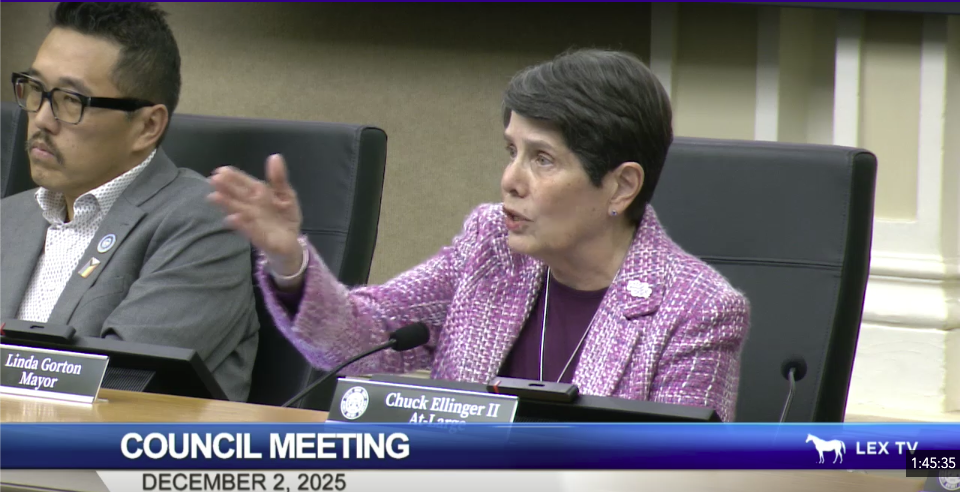
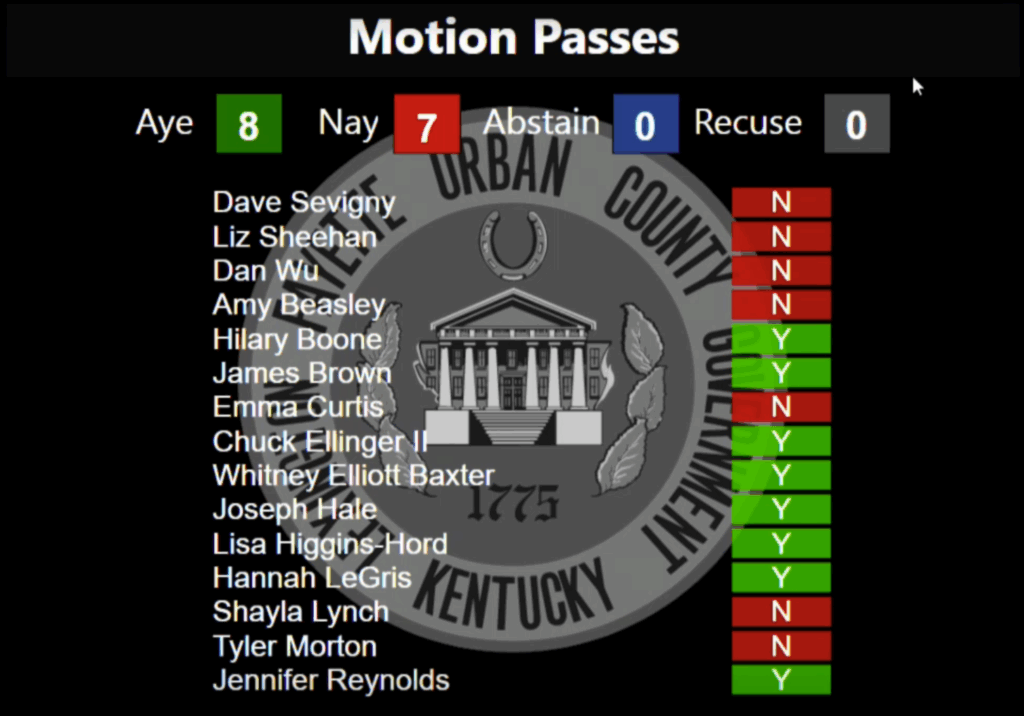
In one of the closest and most contentious votes in recent Lexington memory, the Urban County Council on Tuesday approved an $86 million plan to move City Hall to 200 W. Vine St., advancing a long-discussed project after nearly two hours of impassioned public comment warning that the city was prioritizing workspace for government over the basic needs of residents. The final vote was 8–7, with opponents calling the moment “not the time” for a major capital project as federal and state cuts loom.
The decision authorizes Mayor Linda Gorton or her designee to enter into a public-private partnership with the Lexington Opportunity Fund, moves $30 million toward the initial payment, and sets up a long-term lease-to-own arrangement with estimated annual payments of about $3.5 million for up to 35 years. The agreement still requires approval from the Kentucky Local Government Public-Private Partnership Board.
Public opposition dominated the night
The mayor opened public comment to a packed chamber, and residents lined up—mostly to oppose the project—arguing that the proposal was rushed, poorly communicated, and misaligned with the urgent needs of Lexingtonians struggling with housing insecurity, hunger, and stagnant wages.
The central theme: the timing is wrong.
Many speakers described severe housing burdens, mold-ridden apartments, inadequate food access, and the erosion of federal support programs. They argued the city should preserve capital funds for shelters, permanent supportive housing, youth services, transit, and food assistance.
- Christian Torp called the proposal “a deal dropped in the night” and questioned why Lexington would “lease it back from ourselves” after spending $30 million to purchase the building. The existing City Hall, he said, “might not be wonderful, but it is absolutely serviceable.”
- Deborah Winslow, District 3, accused the administration of giving the public inconsistent information about safety and maintenance issues in the current building. She criticized the involvement of the Webb Companies, citing their “checkered history” with CentrePointe.
- Patty Cooper, District 11, said she had heard “so many stories from people who don’t have housing,” and warned that a large financial outlay seemed untenable as social needs go unmet.
- Elena Broderson, District 4, said the building plan was “a superficial desire that feeds ego over community.”
- Walter Taylor, District 12, compared the deteriorating work environment to housing conditions many Lexington residents can’t escape: “We can’t use $30-plus million of taxpayer money to just move down the street to our dream houses.”
- Veroqua Moore, District 2, said she sees children without food, seniors in infested apartments, and long lines for food distribution. “Why can’t we put a little more money into food?” she asked.
- Adrienne Williams, District 5, shared the story of a mother and four-year-old daughter evicted for lack of affordable housing: “It’s a disservice that our government is not more focused on that.”
- Hart Hallows, District 3, calculated that the $30 million down payment could create or preserve more than 2,000 units of affordable housing.
- Nikita Paramal, District 3, said she had “not heard anyone at the doors ever ask for a new government center.”
Only one speaker—Alan McDaniel of the Downtown Lexington Partnership—spoke strongly in favor, saying the new site would better accommodate visitors and reduce maintenance burdens.
Council split sharply: opponents cited timing and public distrust; supporters cited fiscal responsibility and decades of delay
Opposition: “The time is not now.”
Several councilmembers said the proposal was not inherently bad but was mistimed and inadequately presented to the public.
- Councilmember Tyler Morton (D1) said he heard an “overwhelming and clear” response from constituents that “now is not the time,” citing rising costs, housing insecurity, and federal uncertainty. “Our people must come first.”
- Councilmember Emma Curtis (D4) connected her opposition directly to expected federal cuts: “I’m not comfortable committing this amount of money right now without having tangible commitments to filling those gaps.”
- Councilmember Liz Sheehan (D5) acknowledged the need but preferred alternatives with “less risk, more reward,” including potential preservation of the historic courthouse.
- Vice Mayor Dan Wu, Councilmember Amy Beasley (D8), and Councilmember Shayla Lynch (D2) also voted no, echoing concerns about unmet community needs and insufficient public engagement.
Supporters: “There is never a good time, and doing nothing costs more.”
Eight members argued that Lexington has postponed this decision for 43 years and now faces ballooning maintenance costs, accessibility concerns, and a building many employees consider unsafe.
- Councilmember Whitney Elliott Baxter (D9) said the city has spent decades “putting a Band-Aid on this building,” including $2 million on obsolete elevators. “We are not serving our community well” with the current facility.
- Councilmember James Brown (At-Large) said the plan was thoroughly vetted: “This project is an investment in this community… in the folks that come and speak and engage with us.”
- Councilmember Jennifer Reynolds (D11) framed the vote as a matter of fiscal stewardship: “This is not about wanting something shiny and fancy… otherwise we’re going to be staying in a house that is falling down around us.”
- Councilmembers Chuck Ellinger II (At-Large), Hilary Boone (D12), Joseph Hale (D7), and Lisa Higgins-Hord (D6) joined the majority to approve the new City Hall.
The vote marked the first major high-profile decision for Councilmember Lisa Higgins-Hord, recently appointed to represent District 6.
What happens next
The project now heads to the Kentucky Public-Private Partnership Board. If approved, the city will proceed with purchasing the Vine Street property and moving into design and construction phases.
Even after the vote, the council spent part of the evening discussing how to allocate $2.8 million toward future homelessness initiatives—highlighting the same tension voiced repeatedly during the meeting: whether Lexington can advance major capital projects while also addressing its growing housing and poverty crisis.