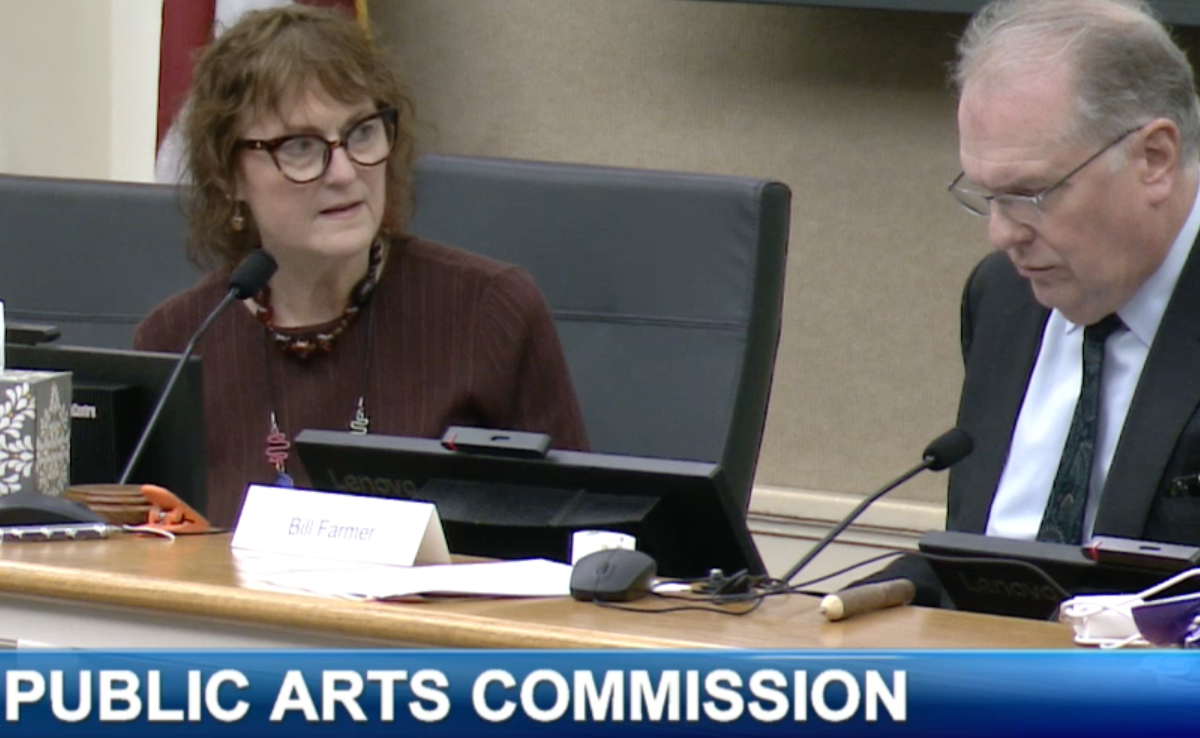
LEXINGTON – The Lexington Public Art Commission voted Tuesday to advance plans for a permanent sculpture outside the Lyric Theatre while delaying action on a proposed street-painting pilot near Shropshire Avenue, signaling both enthusiasm for cultural placemaking and caution about traffic design and funding details.
Commissioners unanimously supported moving forward with approval of the Lady Lyric sculpture, a 15-foot steel figure currently installed outside the Lyric Theatre, clearing a key procedural hurdle for the artwork to remain on city property long-term. The piece, created by University of Kentucky student Hannah Stein, celebrates African American women and draws visual connections to the theater’s Kente-pattern mosaic wall.
Lyric Theatre Executive Director Christian Durr told commissioners the sculpture had already generated strong public response during its temporary installation and filled a long-neglected space that previously collected trash.
“There is no other sculpture that I know of in Lexington — and possibly Kentucky — that specifically reflects African American women,” Durr said, adding that the Lyric’s core supporters are Black women. “This piece says: we see you, we appreciate you.”
While the commission approved the artwork itself and its location, members asked Durr to return in February with a formal funding request to cover permanent installation costs, including a deeper concrete foundation below the frost line and an interpretive plaque. Structural plans stamped by a city-approved engineer were submitted Tuesday, addressing earlier safety concerns raised by staff.
By contrast, commissioners declined to score or advance a funding recommendation for a proposed asphalt art pilot near the intersection of Shropshire Avenue and Goodloe Street, citing unresolved questions about site selection, traffic impacts, artist compensation, and long-term maintenance.
The proposal, presented by city planning staff and Living Streets Lexington, would use painted asphalt to visually narrow roadway space and slow traffic — a strategy planners said has reduced crashes in other cities. But several commissioners said the Shropshire intersection may be too complex for a first test.
“This feels exploratory,” one commissioner said, urging planners to return with clearer cost breakdowns, a defined artist selection process, and written confirmation from traffic engineers.
Members also suggested shifting the pilot to nearby Lewis Street, where striped buffer zones already exist and fewer traffic conflicts are present.
Commissioners emphasized that any future proposal must clearly define how much funding would go to artists versus materials, how long the artwork would remain in place, and who would be responsible for maintenance if the paint fades or fails.
The discussion fed into a broader conversation later in the meeting about temporary versus permanent public art, prompted by past confusion over responsibility for damaged installations on city property. Chair Celeste Blount said a subcommittee will draft clearer guidelines on maintenance expectations, decommissioning timelines, and agreements for privately owned art placed in public spaces.
The commission is expected to revisit both the Lyric installation funding request and a revised asphalt art proposal at its February meeting.