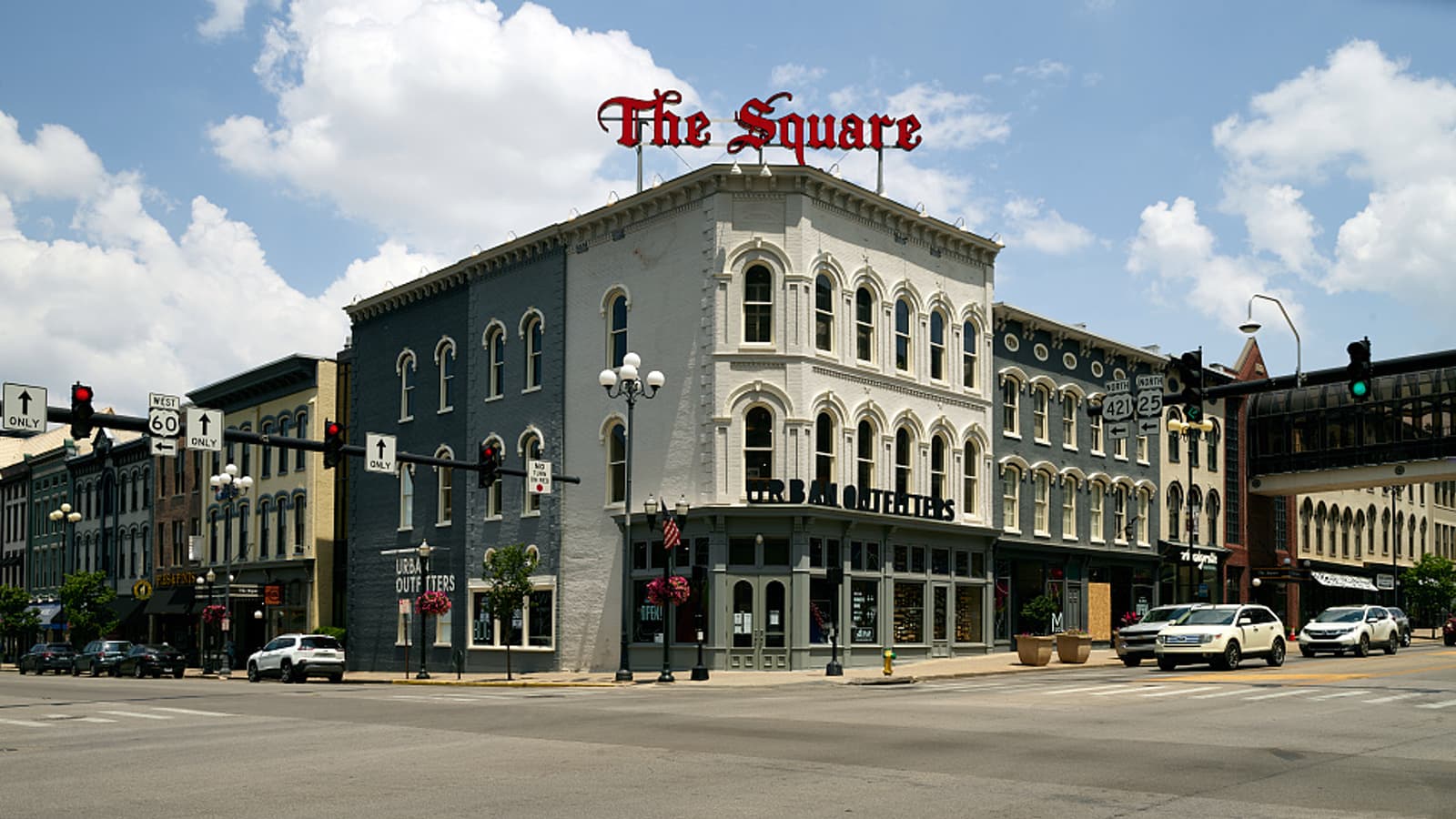
“This wasn’t charged as a human trafficking case, but probably could have been, given the facts.”
U.S. District Judge Gregory Van Tatenhove at Serafin Bayona‘s May 2025 sentencing hearing
For at least two years, a forced labor operation ran out of ordinary-looking homes in Lexington neighborhoods—a brick ranch on Ascot Park, a townhouse on Hanna Place where 14 people slept, a trailer in the Imperial Park off Loudon Avenue. The victims worked at factories in Georgetown and Frankfort that you’ve probably driven past. They were paid. They were not free to leave.
On May 7, 2025, a federal judge in Frankfort sentenced the man who ran it to more than 11 years in prison. The victims are still too afraid to have their names spoken in open court.
“You Monetized That Longing”
Serafin Bayona, 35, stood before U.S. District Judge Gregory Van Tatenhove last year to receive his sentence: 135 months in federal prison for financially benefiting from forced labor. What should have been a routine sentencing hearing turned contentious when Bayona attempted to walk back facts he had already admitted under oath.
“I could fight this case,” Bayona told the judge through a Spanish interpreter, “but there’s no guarantee of what will be the outcome.”
He claimed he was merely a money lender. He said people were talking against him so they wouldn’t have to repay their debts. His own attorney, visibly frustrated, later confirmed on the record that he had provided Bayona with all discovery materials and visited him in jail numerous times with an interpreter.
Judge Van Tatenhove, who has served on the federal bench for two decades, wasn’t persuaded. He noted that Bayona himself had made an “extraordinary effort” to enter the United States illegally—an on-foot, multiple-day journey through mountains—because of the opportunity he perceived here.
“And then you monetized that longing and desire amongst others, who out of desperate circumstances make desperate choices, and you took advantage of them,” the judge said. “That’s deeply troubling.”
Van Tatenhove added a detail from his own career that underscored the significance of the case.
“I’ve been on the bench for 20 years. During that time I’ve actually traveled all over the world teaching other countries about the problems associated with human trafficking,” he said. “One of the things I say to my colleagues around the world is this isn’t just a problem in your country. It can be a problem in our country as well.”
He paused.
“This wasn’t charged as a human trafficking case, but probably could have been, given the facts.”
The Fear That Remains
Even with Bayona heading to federal prison, his victims remain terrified.
Assistant U.S. Attorney Erin Roth told the court that the victims who cooperated with the FBI’s investigation were “petrified to this day of being discovered and their identities being known.” Their primary concern isn’t for themselves—it’s for family members still living in Mexico.
The court documents explain why.
Bayona allegedly maintained connections with Mexican cartel figures who helped facilitate border crossings. When victims tried to leave his operation or failed to pay, the threats extended across international lines. WhatsApp messages recovered by investigators showed Bayona warning victims:
“No matter where you or your family go I will find them.”
“I am going to take away what you care about most.”
“Too bad you didn’t think about your kids.”
“Prepare yourself because there is going to be nowhere for you to hide, not even your family in Mexico.”
In one case documented in the FBI’s affidavit, a victim’s father was found shot dead in Mexico in October 2023—after Bayona had sent a text threatening to “give the order to kill” the victim’s parents if debts weren’t paid. Investigators noted they could not confirm whether the murder was connected to Bayona’s threats.
Perhaps the most haunting evidence in the case file is an audio recording obtained by the FBI. It captured a young girl—a victim’s niece still in Mexico—speaking in Spanish:
“Uncle, I’m very scared because Serafin is going to kill us… We don’t have anywhere to go.”
The child and two other family members had fled to a neighboring city and were hiding in a hotel.
How the Operation Worked
According to court documents and the FBI’s affidavit, Bayona ran what amounted to a debt bondage scheme targeting Mexican nationals who wanted to come to the United States.
The pipeline worked like this:
Bayona would connect with people in Mexico—often through word of mouth or family connections—and offer to finance their illegal entry into the U.S. He charged between 250,000 and 370,000 Mexican pesos (roughly $14,000 to $21,000 USD) for the service. Victims signed contracts, sometimes through family members, committing to repay the debt.
Bayona coordinated with an alien smuggling organization operating at the border crossing in Naco, Sonora. Victims were given a password—”Nasario”—to identify themselves to the coyotes (human smugglers) who would guide them across. The password also served to identify them to cartel members who controlled the crossing routes.
After crossing into Arizona, victims would be housed briefly in a trailer park just north of Naco before being transported to Lexington, Kentucky. The journey typically took about 15 days.
Upon arrival, victims were placed in one of several properties Bayona maintained around Lexington. And that’s when the real trap closed.
The Debt That Could Never Be Repaid
Bayona didn’t just collect on the smuggling fee. According to multiple victims who spoke with the FBI, he layered on charges for virtually every aspect of daily life:
- Rent: $500 per month (for overcrowded housing—one home had 14 occupants)
- Transportation to and from work: $370 per month
- Food: $100 per week
- Cleaning fee: $120 per month (even though victims did the cleaning themselves)
- Job placement fee: $800 to $1,200
- Check cashing fee: 2% of each paycheck
- Interest on original debt: 10%, kicking in six months after arrival
One victim told investigators he was charged $100 simply for buying new clothes without Bayona’s permission.
Bayona kept meticulous records. Multiple victims described him carrying two notebooks—one to track overall debt balances, another for weekly fee collection. Law enforcement surveillance observed him retrieving what appeared to be a notebook from his white Chevrolet Malibu and reviewing paperwork while parked outside a check-cashing business on Alexandria Drive.
The math was designed to be inescapable. One victim told the FBI she “has been able to keep very little of the money she has made from her job” and “has not been able to send any of the money to Mexico for her children.” Others reported paying for over a year without making a dent in their principal balance.
When victims tried to leave or protested the fees, Bayona turned to violence.
The Lexington Addresses
The operation touched multiple Lexington neighborhoods. Court documents identify four primary locations:
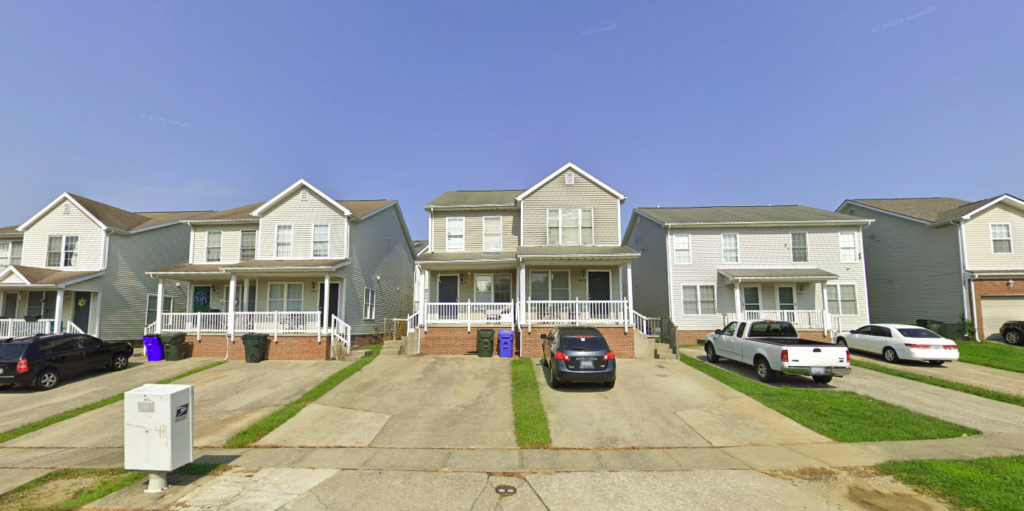
A 1300 square-foot townhouse on Hanna Place served as housing for victims. At one point, 14 people lived in the residence, each paying $500 to $700 per month to Bayona.
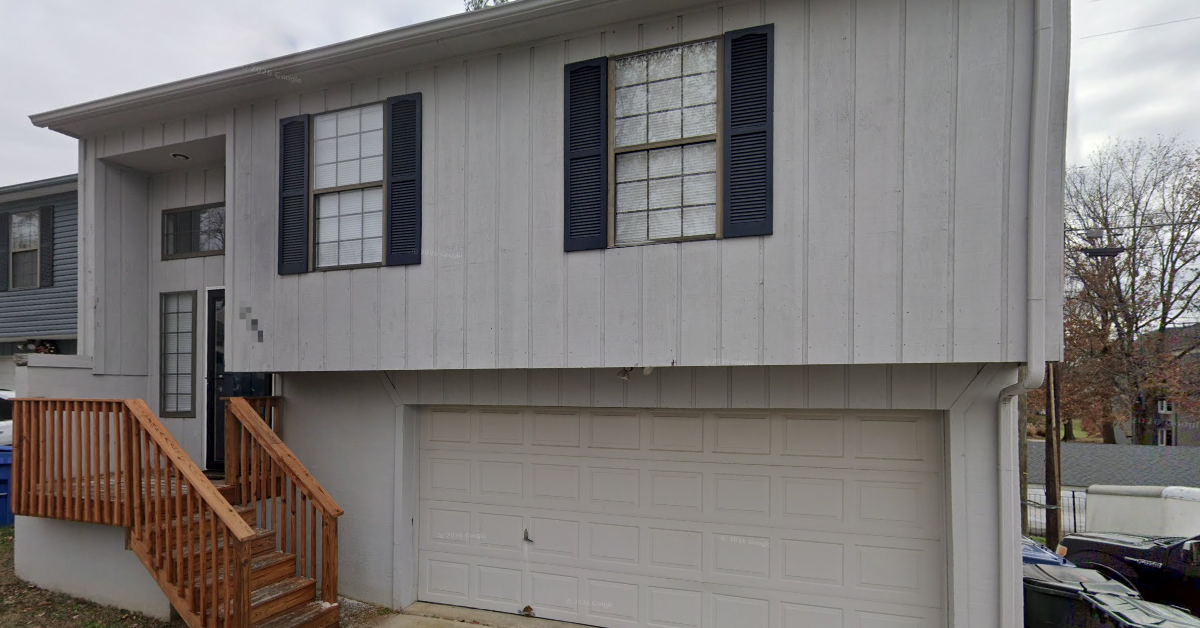
Santa Fe Court was Bayona’s primary residence, where he lived with his girlfriend and their children. But it also served darker purposes—some victims told investigators they were held in the garage “against their will.” When search warrants were executed, agents found firearms in the bedroom and fraudulent identification documents stored in a dresser. A desk in a home office had a pistol holder mounted underneath.
Ascot Park—a red brick single-story home with a white door—housed additional victims. One man told the FBI he lived there for approximately eight months after arriving from Mexico.
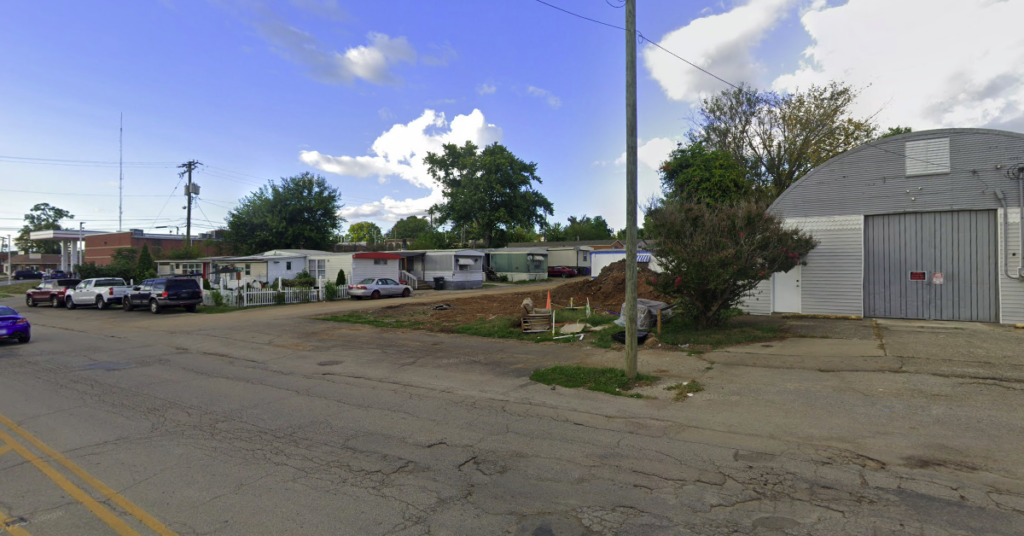
W. Loudon Avenue, a trailer in the Imperial Trailer Park, was another victim residence. It was also the site of a July 2023 incident in which a victim reported that Bayona had threatened him with a gun over an insufficient debt payment.
Bayona also frequented an Alexandria Drive strip mall, home to Imperio Multi-Services, a check-cashing business. According to the FBI, Bayona collected victims’ paychecks every Friday and cashed them there, taking his 2% fee off the top. Surveillance footage from Lexington Police traffic cameras captured him stopped at a red light, sorting through papers “consistent in size with checks or pay stubs.”
Where Victims Worked
The victims weren’t hidden away. They worked at businesses throughout Central Kentucky—companies whose names you might recognize if you live in the region.
According to the FBI’s affidavit, victims were employed at:
- Orbis Corporation in Georgetown (a packaging manufacturer)
- Montaplast in Frankfort (an automotive parts supplier)
- Aichi Forge in Georgetown (another automotive parts manufacturer)
- Candlewood Suites in Lexington
At one employer, Bayona had arranged to receive victims’ paychecks directly from the company. Another employer—Montaplast—refused to allow this, forcing victims to pick up their own checks. They were still required to hand them over to Bayona for cashing.
Victims were expected to work every day. When one man told Bayona he was “too tired to continue to work without rest,” Bayona put a pistol to his head and threatened to kill him if he didn’t work two jobs and pay off his debt. Another victim witnessed the incident.
How It All Unraveled
The investigation began almost by accident.
In May 2022, Lexington Police responded to a domestic violence call. The victim, a woman who had previously been in a romantic relationship with Bayona, revealed that he had helped her and others enter the U.S. illegally from Mexico. She told officers Bayona “may be part of a cartel” and smuggled immigrants across the border.
That tip made its way to the FBI.
Over the following year, more victims came forward—some through Kentucky Refugee Ministries, a nonprofit that provides services to immigrants and refugees in the state. Their accounts corroborated each other in striking detail: the same debt structure, the same fee schedule, the same threats, the same notebooks.
In July 2023, the investigation intensified. Multiple victims fled Bayona’s properties, prompting him to search frantically for them. FBI surveillance teams tracked his movements between houses. Cell site location data confirmed he was regularly present at the addresses victims had identified.
Two victims who escaped from the Santa Fe Court property managed to flee the state entirely. But even then, they weren’t safe. Days later, they captured video of Bayona and an associate standing outside their out-of-state hiding place next to his white Chevrolet Malibu. The threats that followed grew more violent: Bayona sent messages saying he no longer wanted their money—he wanted them to “pay with their life.”
On April 30, 2024, federal agents executed search warrants at Bayona’s properties. They seized more than $50,000 in cash, which Bayona later admitted was generated through his forced labor operation. They also recovered firearms, including a Glock 27 pistol.
Bayona was arrested that day.
What Wasn’t Charged
The original criminal complaint against Bayona included three categories of offenses: forced labor, bringing in and harboring illegal aliens, and possession of a firearm by an illegal alien (Bayona himself had entered the country illegally at least eight times since 2005 and had been issued a 20-year ban in 2014).
In the end, he pleaded guilty to just two counts of financially benefiting from forced labor—a negotiated resolution that spared victims from having to testify publicly.
But the court record hints at a larger picture.
Prosecutor Erin Roth told the judge at sentencing that if the case had gone to trial, “there were several additional charges that would be brought.” Defense attorney William Butler referenced “multiple identity thefts” that weren’t included in the final charges.
And then there’s the matter of Serafin’s brother.
The FBI affidavit says a victim identified Serafin’s brother as someone who “does the same thing as Serafin BAYONA and has victims of his own.” When law enforcement went to check on a victim at the Loudon Avenue trailer in July 2023, they found Serafin’s brother there instead—even though the victim said Jose had never been to the trailer and had no reason to be there.
No charges have been filed against Serafin’s brother in connection with this case.
The Sentence
Judge Van Tatenhove approved the binding plea agreement and imposed the agreed-upon sentence:
- 135 months in federal prison (approximately 11 years and 3 months)
- 3 years of supervised release
- $52,287 in restitution to victims, paid from the cash seized during the search warrants
- Forfeiture of the seized currency and the Glock pistol
Under federal law, Bayona must serve at least 85% of his sentence. Upon release, he will be deported to Mexico. He is currently incarcerated at FCI Berlin in New Hampshire.
The judge waived any fine based on Bayona’s financial situation but noted that he owes the community “a debt before you go back to your home community.”
“The way you pay that debt is that we’ll take your liberty away from you for a significant amount of time.”
What We Still Don’t Know
The Bayona case offers a disturbing window into forced labor operations that may be more common than most Kentuckians realize. But significant questions remain unanswered:
How many victims were there? The FBI affidavit references “34 other people in Lexington who had contracts with BAYONA” as of June 2023. The restitution order divides $52,287 among victims listed in a sealed document—but that number has never been made public.
Are others still trapped? Bayona’s brother allegedly ran a parallel operation. Other co-conspirators are referenced but not charged. It’s unclear whether victims remain in debt bondage to others in the network.
Did employers know? The factories and businesses where victims worked have not been publicly implicated in any wrongdoing. But the question of how dozens of workers in an alleged forced labor ring obtained employment—some using fraudulent documents provided by Bayona—may warrant further scrutiny.
What happened to the families in Mexico? The threats against victims’ relatives were detailed and specific. One father was murdered. The fate of others remains unknown.
A Problem Closer Than We Think
In his closing remarks at sentencing, Judge Van Tatenhove tried to articulate why this case mattered beyond the specific facts.
“This is an insidious kind of crime because it takes some of the most vulnerable people in our communities and it takes advantage of them,” he said.
“We don’t want to live in a community that’s destabilized by this kind of behavior, in which way too many victims are living in circumstances that are crowded and unhealthy, with very little way of creating any kind of independent life given their financial servitude to the person who arranged to bring them here.”
The homes on Ascot Park and Hanna Place and Santa Fe Court look like any other homes in Lexington. The factories in Georgetown and Frankfort employ thousands of Central Kentuckians. The trailer park off Loudon Avenue is one of many scattered throughout the city.
The operation hid in plain sight for years.
Resources
If you have information about human trafficking or forced labor, or if you or someone you know needs help:
- National Human Trafficking Hotline: 1-888-373-7888 (24/7, confidential)
- Text: 233733 (BEFREE)
- FBI Louisville Field Office: (502) 583-3941
- Kentucky Refugee Ministries: (859) 226-5661
This story is based on federal court documents filed in United States v. Serafin Bayona, Case No. 5:25-cr-00003-GFVT, Eastern District of Kentucky, including the FBI affidavit in support of the criminal complaint, the plea agreement, and the official transcript of the May 7, 2025 sentencing hearing.