🌎 Resumen en español · traducción automática
Un perro llamado Choco pasó más de 565 días bajo custodia de Animal Care & Control de Lexington después de ser incautado en un caso de crueldad animal, porque la ciudad no tenía autoridad legal clara para mantener o colocar en adopción animales una vez terminado el juicio. El Comité de Servicios Sociales y Seguridad Pública revisará el martes 9 de junio una propuesta de cambios a la ordenanza de crueldad animal que incluye un procedimiento de "costo de cuidado" ya usado en más de 40 estados, nuevas protecciones para mascotas dejadas afuera en temperaturas extremas, y nuevas reglas sobre amarres y collares.
Traducción y resumen generados por IA a partir del artículo en inglés. Puede contener errores; consulte el texto original.
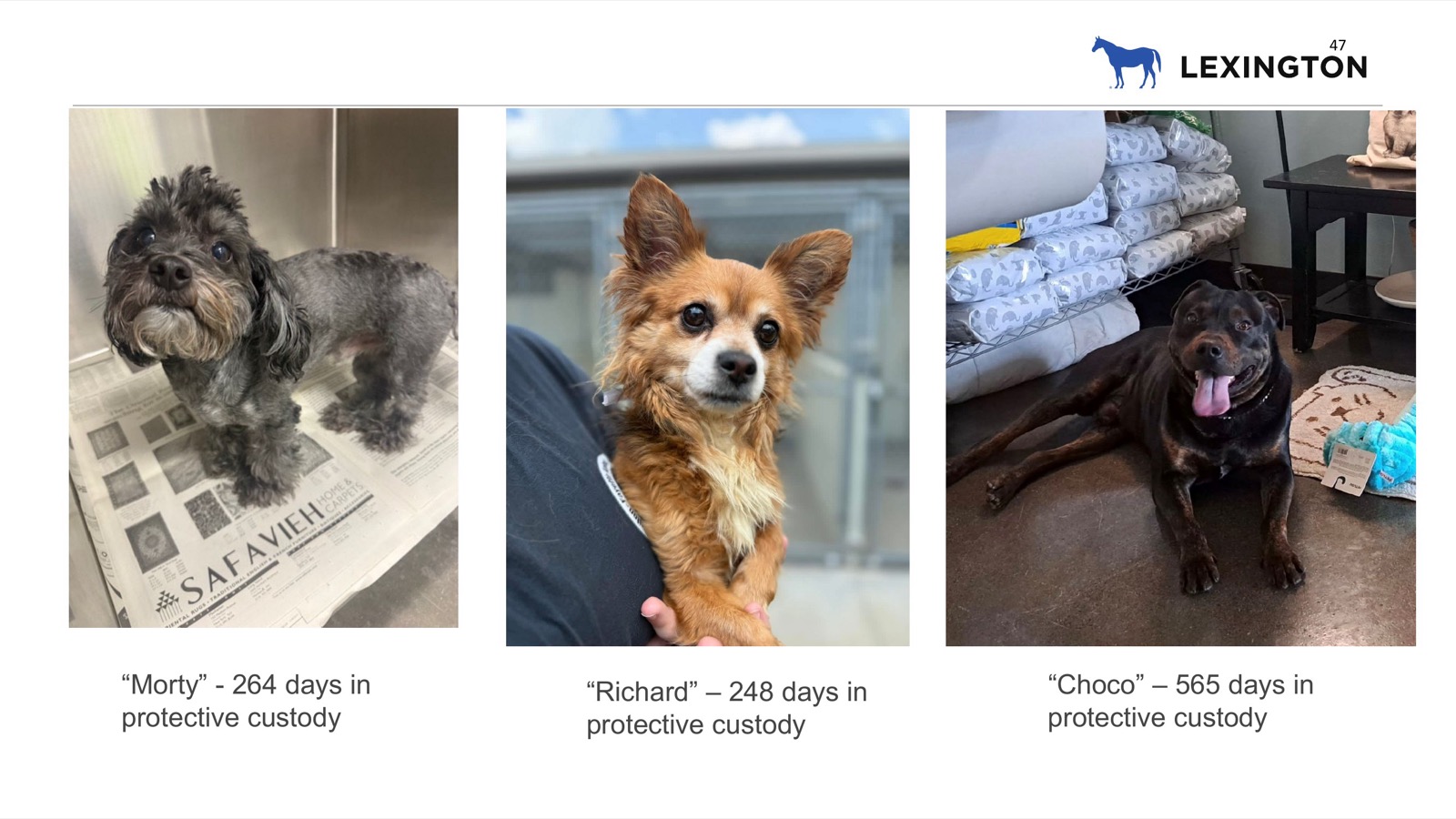
LEXINGTON, Ky. — A dog named Choco spent 565 days — more than a year and a half — in the custody of Lexington-Fayette Animal Care & Control after being seized in a cruelty case. Two others, “Morty” and “Richard,” waited 264 and 248 days. The reason they sat so long, the agency says, is that once a court case ends, the city has no clear legal authority to keep a seized animal or place it for adoption.
A package of proposed changes to Lexington’s animal-cruelty ordinance aims to close that gap — along with new protections for pets left outside in dangerous heat and cold, and a rewrite of the city’s tethering and collar rules. The Social Services and Public Safety Committee is scheduled to review the draft Tuesday, June 9, at 1 p.m.
The update is sponsored by Fourth District Council member Emma Curtis and was developed over months by the Fourth and Fifth District council offices, Animal Care & Control staff, the Fayette County Attorney’s Office, LFUCG’s Department of Law, and community advocates. It traces back to the summer of 2025, when residents and advocates raised concerns about animals being left outdoors during periods of extreme heat. Sarah Ritter, a legislative aide to Curtis, and Jai Hamilton, lead cruelty investigator for Animal Care & Control, are listed as presenters.
‘Cost of care.’ The centerpiece is a procedure already used in more than 40 states. Today, Animal Care & Control can seize and impound an animal that is the subject of a cruelty violation, but the ordinance “does not tell us what to do with the animal,” the agency’s presentation notes. An owner can reclaim the animal, or the shelter can hold it until the case is resolved — after which it has no authority to keep it. That can leave animals in long, expensive limbo, as Choco’s case shows.
Under the proposed “cost of care” process, a court would hold a hearing shortly after a seizure to decide whether there was probable cause. If so, a judge could set a bond — typically in 30-day increments — calculated to cover the animal’s food, shelter and veterinary costs while the case is pending. An owner who cannot or will not pay would forfeit ownership, freeing the shelter to put the animal up for adoption or transfer it to a rescue rather than warehousing it for the length of a prosecution.
Extreme heat and cold. The draft adds a definition of “unsafe weather conditions” — extreme hot or cold temperatures, or weather events that compromise animal safety, generally when the county is under a warning, advisory or special weather statement — and makes it illegal to “confine and leave unattended” a domestic animal in those conditions. “Confine” is meant to cover animals left outdoors tethered, in a kennel, loose in a fenced yard, or in a tent; “unattended” means no person is present. The thresholds, drawn from the LFUCG Office of Homelessness Prevention and Intervention’s activation plan, are a heat index above 95 degrees or temperatures below 32. Cattle, fowl and horses are excluded.
Tethering and collars. The revisions swap the word “dog” for “animal” so the tethering rules cover other pets tied out outdoors. They also untangle a long-ignored provision: the current code bans prong and pinch collars outright, but Animal Care & Control says that language is outdated and has gone unenforced because the collars are commonly used for training and control. The update would permit prong and pinch collars to be used as collars, while keeping a prohibition on tethering or tying out a dog with a metal collar.
Tuesday’s committee meeting is a review and discussion, not a final vote; any ordinance change would still need approval from the full Urban County Council. The animal-care item shares the agenda with a separate proposal to ban parking in bike lanes. The full committee packet is available online.
This article was drafted with AI assistance (claude-opus-4-8) and finalized for publication by The Lexington Times. Reporting is grounded in the LFUCG Social Services and Public Safety Committee agenda packet for June 9, 2026, and the Lexington-Fayette Code of Ordinances. The cover image is a slide from Lexington-Fayette Animal Care & Control’s presentation in that packet. The proposed ordinance had not been voted on at the time of publication.