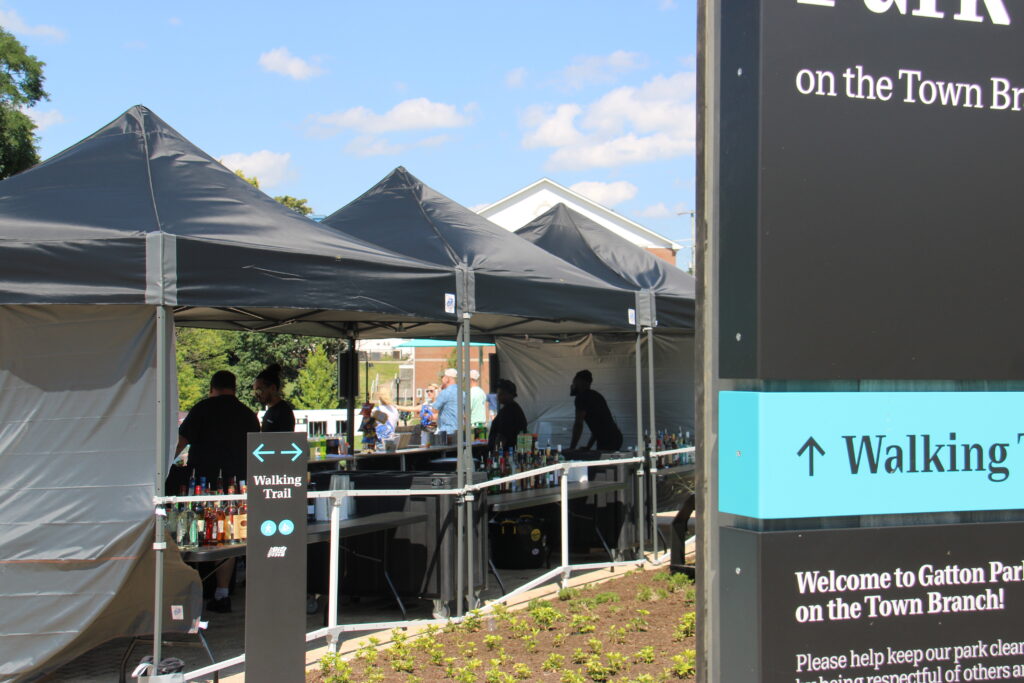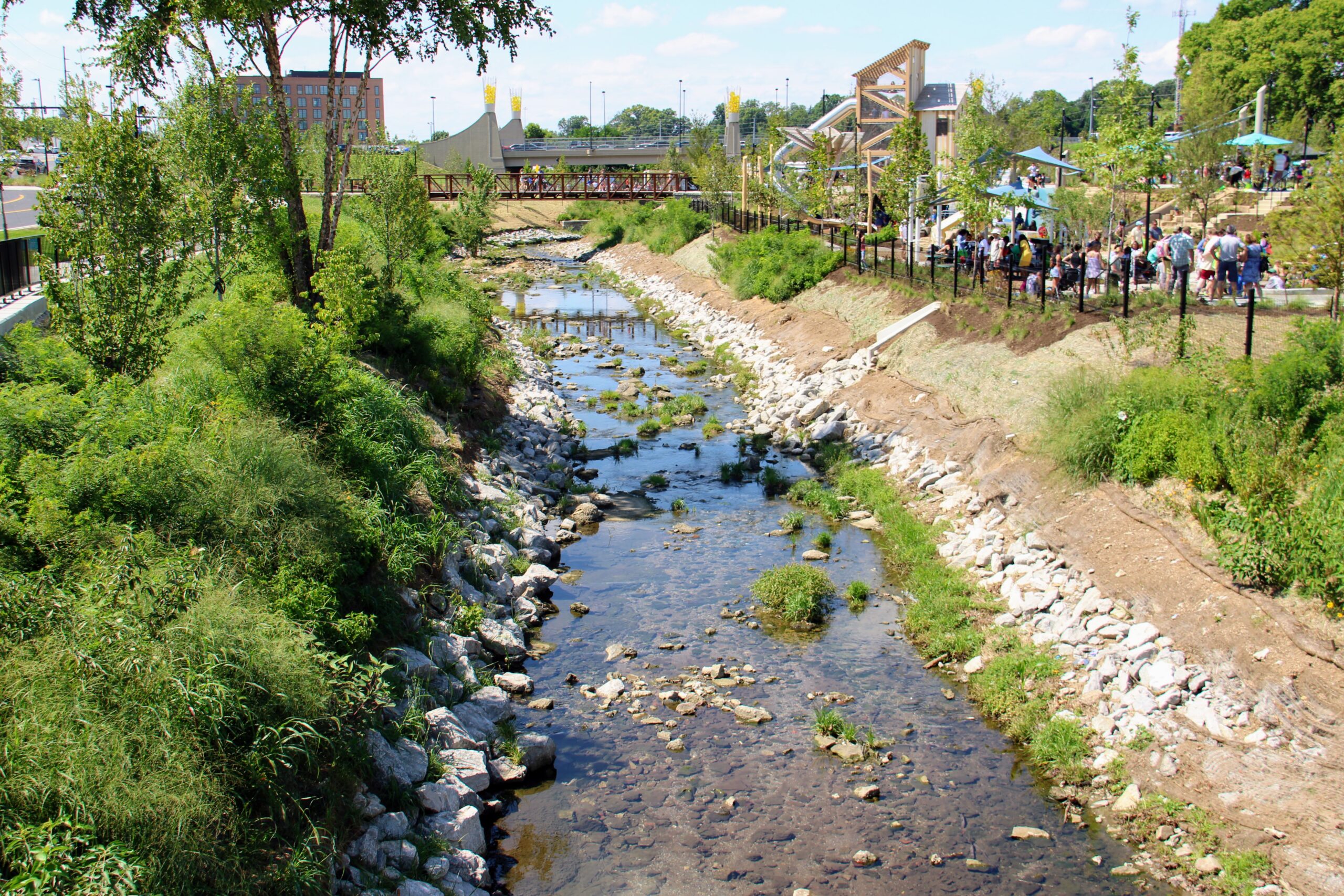
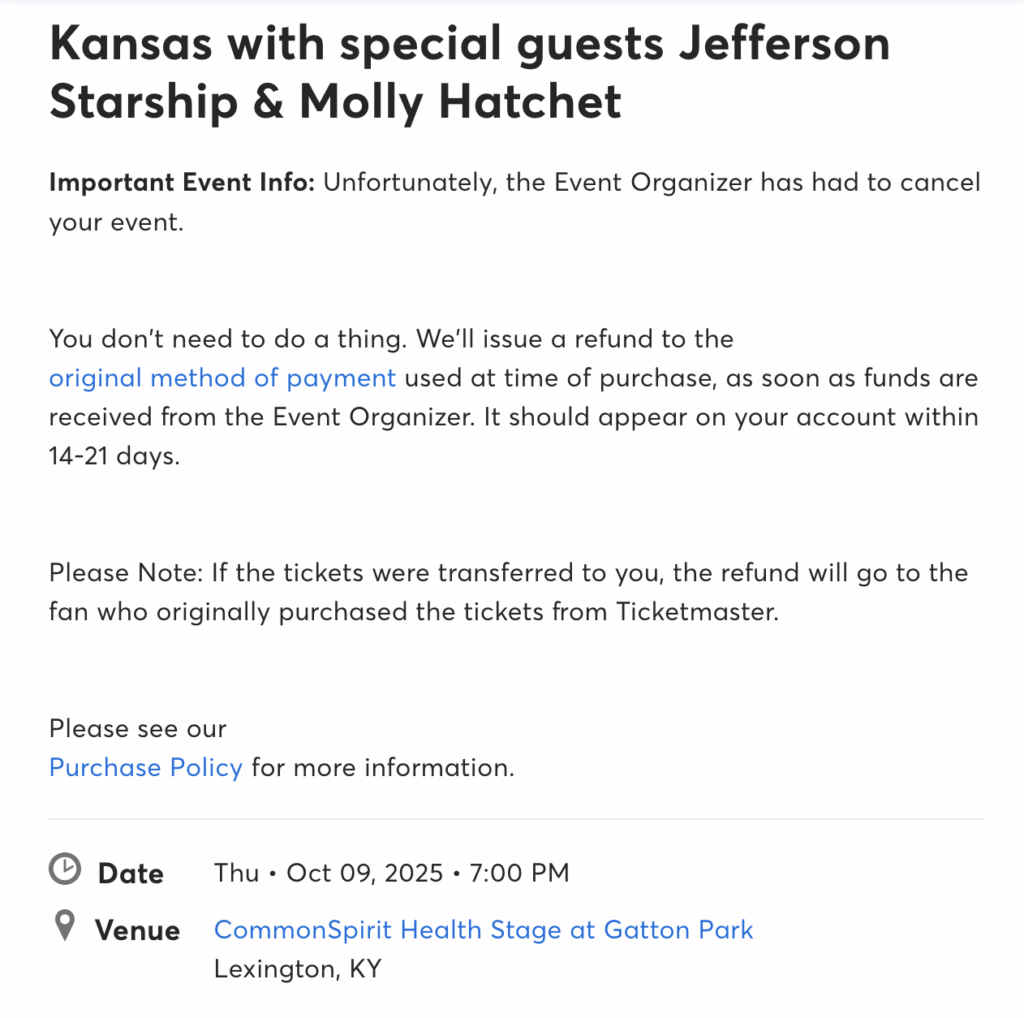
So it finally happened: a concert at Lexington’s shiny new Gatton Park got canceled — not because of rain or politics, but because not enough people cared to buy a ticket.
Kansas, Jefferson Starship, and Molly Hatchet — a lineup that reads like the playlist at a 1983 Camaro meetup — were supposed to play there on October 9. Ticketmaster now says: “Event Canceled.” Refunds coming in 14–21 days.
Honestly, who could have guessed that a $400 meet-and-greet package for a Thursday-night classic rock triple bill in 2025 wouldn’t move the masses?
A Park Built by the Rich, for the Bored
Let’s be honest — Gatton Park is gorgeous. The landscaping is flawless, the amphitheater gleams, and the Wi-Fi is free thanks to corporate sponsors. But the whole project feels like it was dreamed up in a boardroom full of people who don’t spend much time downtown after 5 p.m.
The park’s backers — some of the richest and most influential people in Lexington — imagined it as a civic crown jewel, a place that would “bring people together.” But whose people? Because most working-class Lexingtonians didn’t exactly ask for this.
They just built it for us, then priced the fun right back out of reach.
The Attendant Who Knows Better
When I went to Gatton Park’s opening day earlier this year, I chatted with a parking-lot attendant who’s downtown every day. He looked out over the shiny green lawn, the polished stone, the fancy new amphitheater — and laughed.
“Yeah, it’s nice,” he said. “But just wait until the homeless take it over.”
He wasn’t being cruel — he was being real. He saw what, for many, is taboo to say out loud: downtown Lexington has a growing homelessness problem, and no amount of corporate art, stages, or private-foundation money will make it disappear.
The Problem the Park Can’t Landscape Away
Walk a few blocks in any direction from Gatton Park and you’ll see what he meant. The encampments, the folks just trying to survive, the ones just sitting in Phoenix Park — because there’s nowhere else to go.
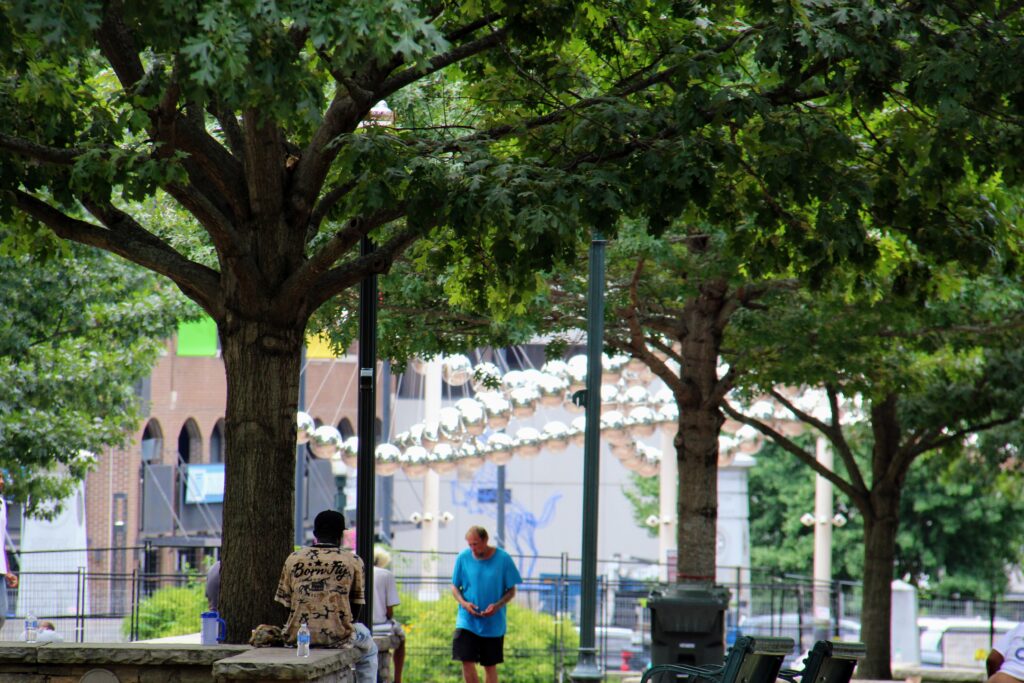
That’s the reality the city’s elite keep trying to fence off, repave, or outshine with “public-private partnerships.” The problem isn’t that the park exists — it’s that our city leaders keep acting like this kind of spending is the same thing as solving anything.
To her credit, Allison Lankford, president and CEO of Gatton Park, says the park is trying to balance openness and order.
In an email to The Lexington Times, she wrote:
“Gatton Park is committed to creating a welcoming and inclusive public space.
We are following best practices established by other urban park conservancies to ensure that all individuals are treated with dignity and compassion. The park will have set opening and closing hours each day, as well as on-site ambassadors and 24/7 private security… These teams will work closely with local service providers to connect individuals experiencing homelessness with the support and resources they need.”
It’s a thoughtful, measured response — but also a telling one. “Ambassadors” and “24/7 private security” are the modern euphemisms of gentrified public space: polished and well-meaning, but ultimately designed to keep things tidy, contained, and controlled.
You can’t landscape your way out of poverty. You can’t power-wash social decay. And you can’t call it “revitalization” if the only people revitalized are real estate investors.
A Cautionary Stage
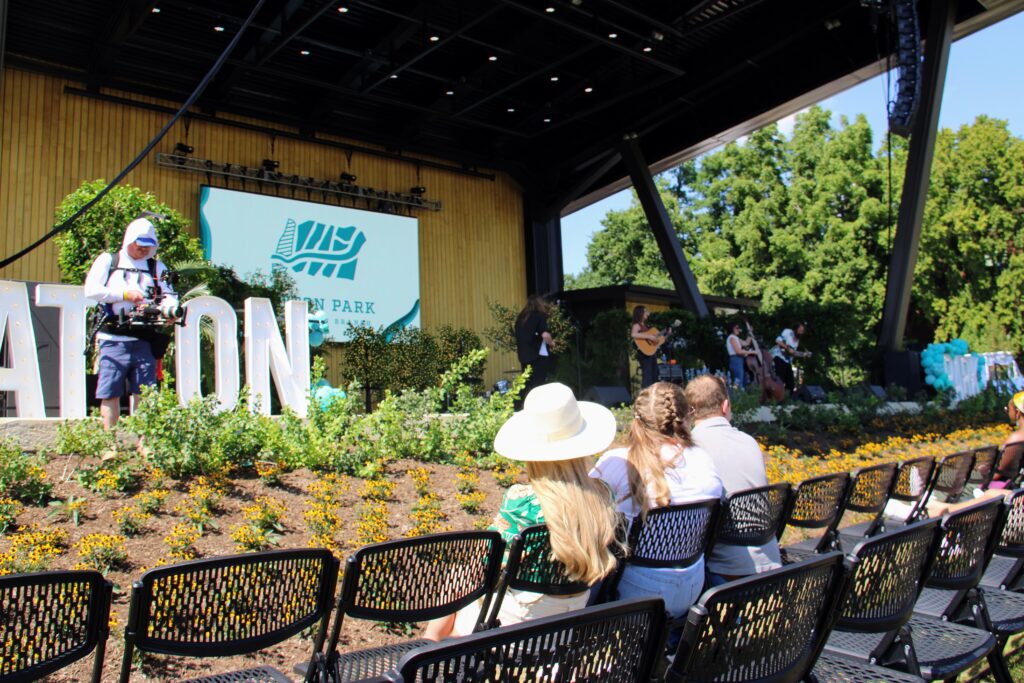
So yes, a high-profile concert at Gatton Park flopped. And it’s funny, in a darkly civic way — like watching Lexington’s champagne class trip over their own branding.
But it’s also symbolic. Because this park, for all its beauty, might end up being the perfect metaphor for modern Lexington:
- Expensive, elite-curated, well-intentioned — and completely detached from the daily reality just outside its fences.
- A showpiece that will struggle to coexist with the city’s unsolved problems.
- A space where the people who built it will soon whisper, “It’s a shame what’s happened down there.”
The irony is, it didn’t “happen.” It’s been happening — while they were busy fundraising for the next ribbon cutting.
The Lesson the City Won’t Learn
If city leaders want Gatton Park to succeed, they’ll need to treat it like more than a selfie backdrop. They’ll need to grapple with the fact that the same downtown they’re trying to beautify is home to some of Lexington’s most vulnerable residents.
That means investing in housing, services, and empathy — not just lawn chairs and light shows.
Until then, Gatton Park will remain what it is: a very nice place to pretend everything’s fine.