-
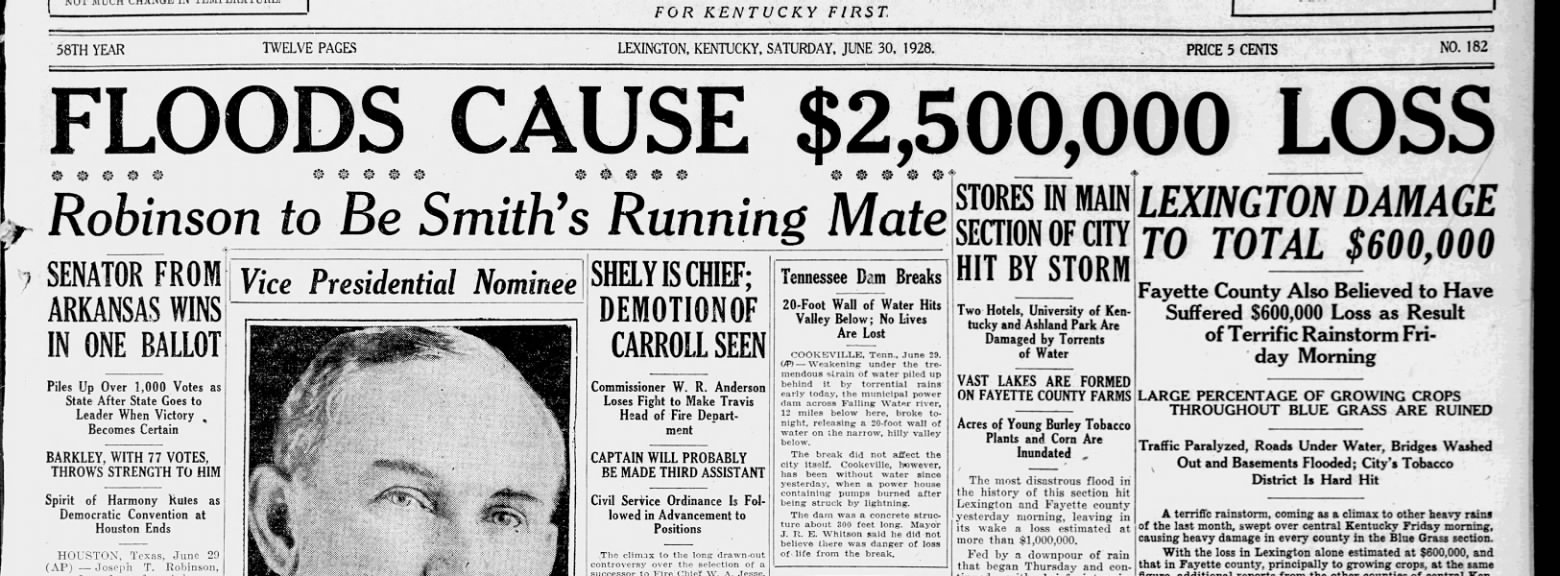
“So This Is Venice!” — When Summer Cloudbursts Turned Main Street Into a River
Every summer, usually in late June or July, Lexington gets a warning that sounds routine until it isn’t: flash flooding possible. The city sits in a shallow limestone bowl, its founding creek — Town Branch — buried under the pavement of Vine Street since the nineteenth century, and when a cloudburst stalls overhead the…
-
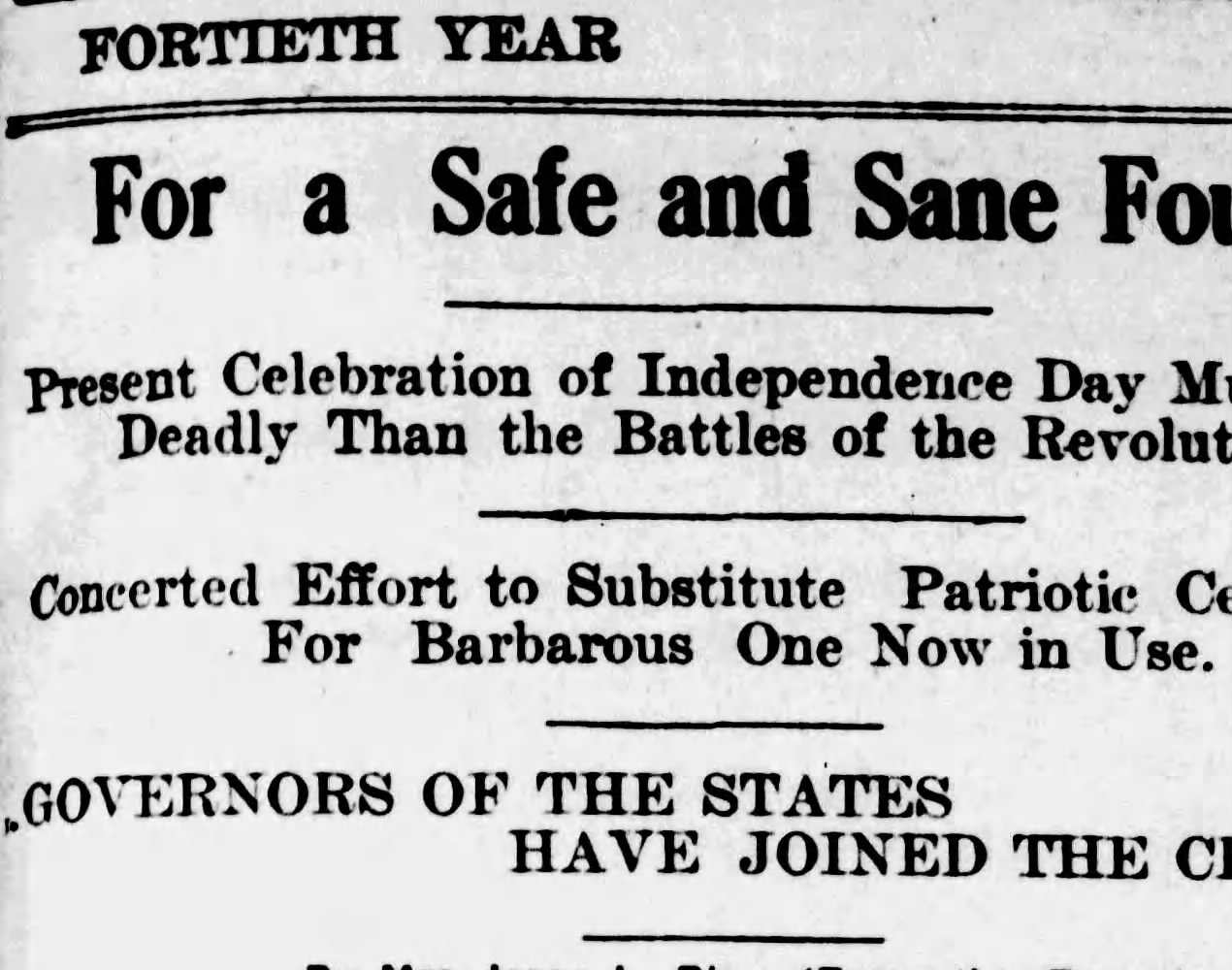
“More Deadly Than the Battles of the Revolution”: The Crusade to Tame Lexington’s Fourth
In 1910 the Lexington Herald gave a full section front to the safe-and-sane crusade — the campaign insisting America’s fireworks Fourth killed more people than the Revolution it commemorated.
-
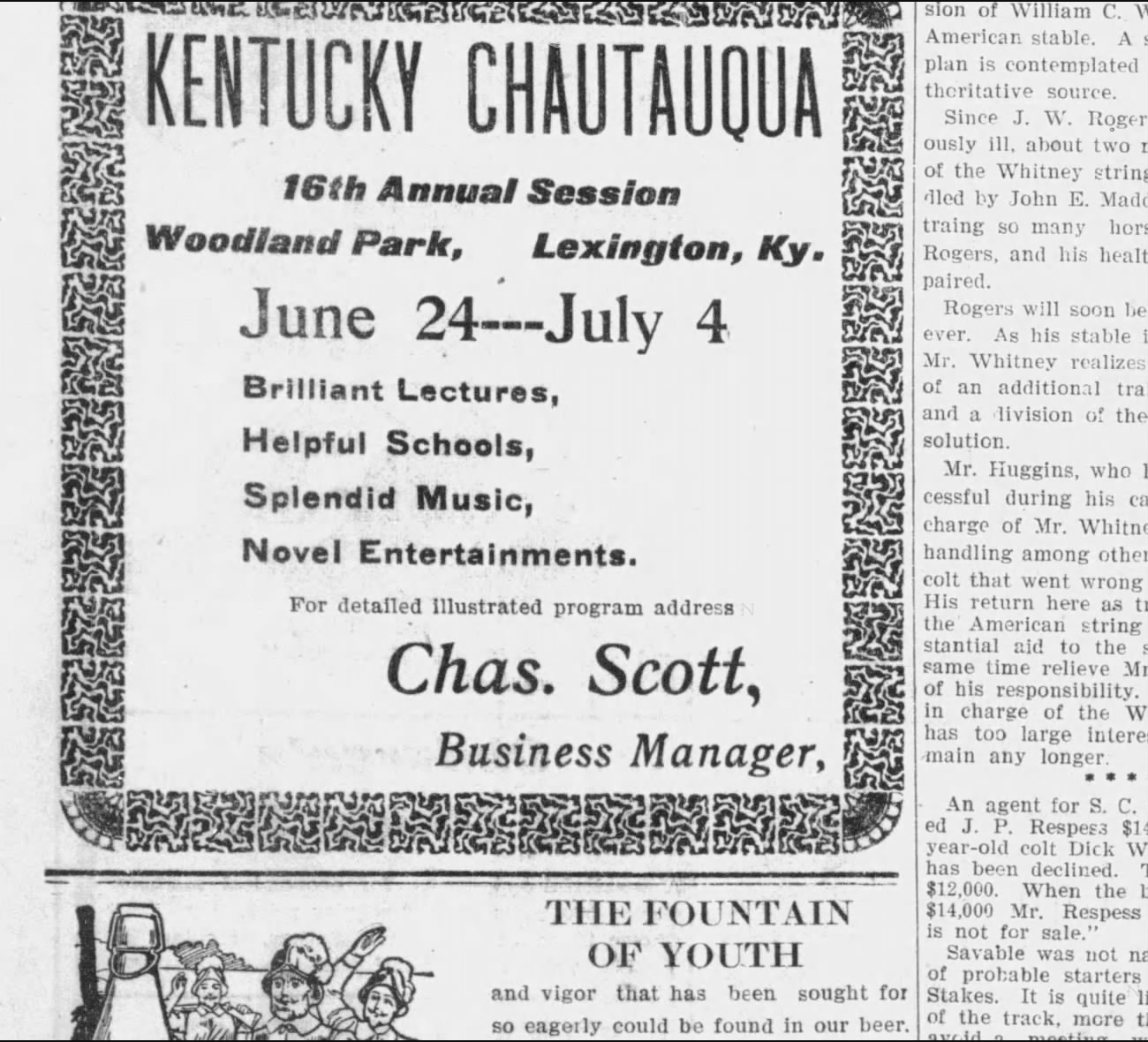
Brilliant Lectures, Leaky Balloons: How Lexington Did the Fourth a Century Ago
At Woodland Park’s Kentucky Chautauqua, the Fourth of July meant brilliant lectures, helpful schools, splendid music — and a former Opera House stagehand going up in a balloon he called a thing of shreds and patches.
-
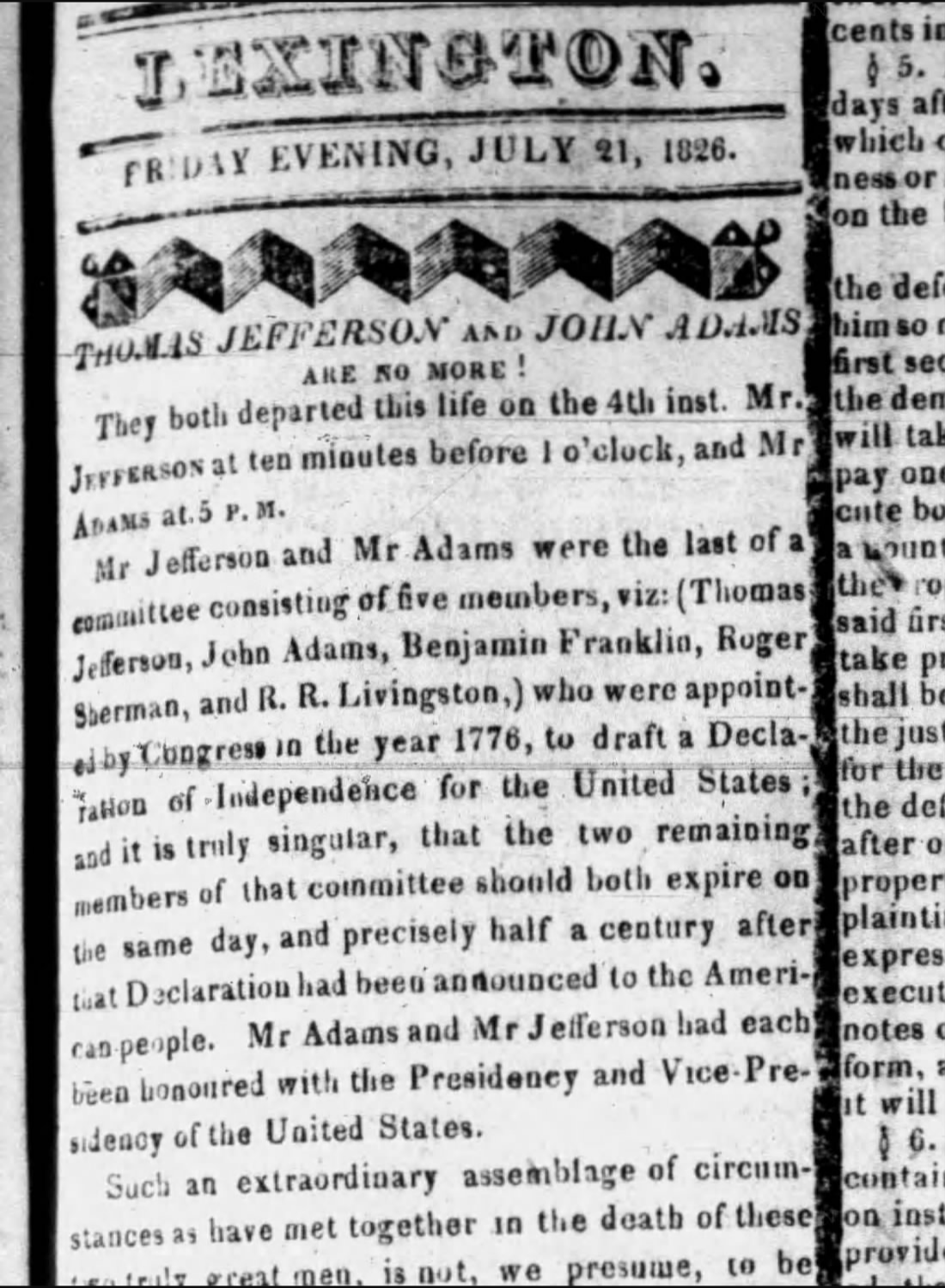
Lexington Toasted Jefferson’s ‘Declining Days.’ He Had Been Dead for Seventeen Days.
On the 50th Fourth of July, Lexington raised a glass to the living Thomas Jefferson — and learned from the same newspaper, seventeen days later, that he and John Adams had both died that very afternoon.
-
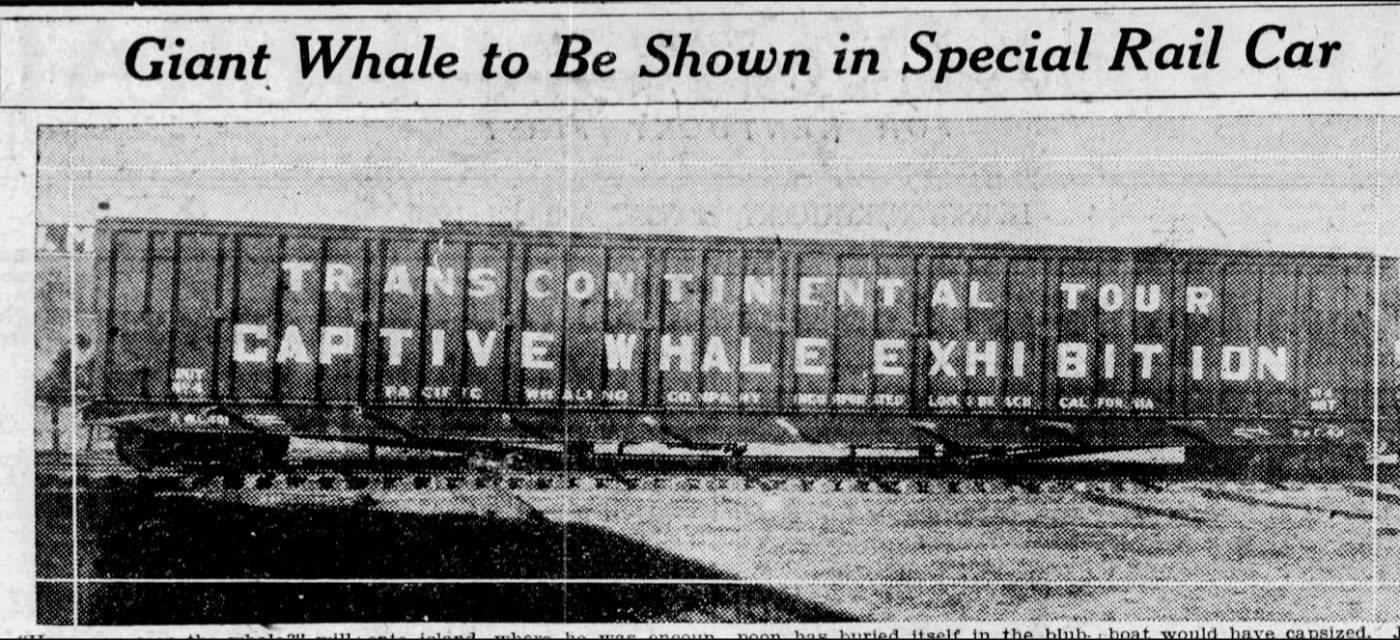
The Week Lexington Lined Up on Main Street to See a Dead Whale
In April 1930, a 66-ton embalmed finback named Goliath rolled into Lexington in a glass-walled railcar — and 3,000 people came out the first night.
-
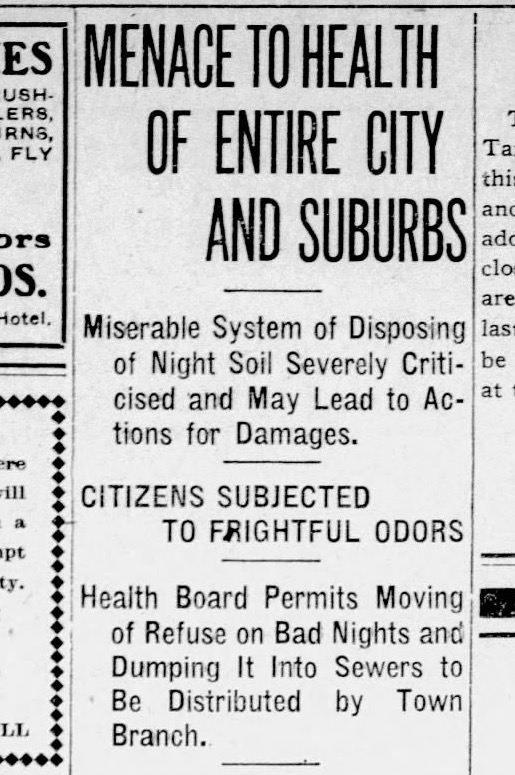
Stop Tapping the Storm Sewers: Lexington Has Been Fighting the Same Problem for 115 Years
A two-sentence notice in the spring of 1911 banned tapping Lexington’s storm sewers for sewage. The cross-connections it targeted are the same ones at the heart of the city’s $590 million EPA consent decree, entered almost to the day a century later.
-
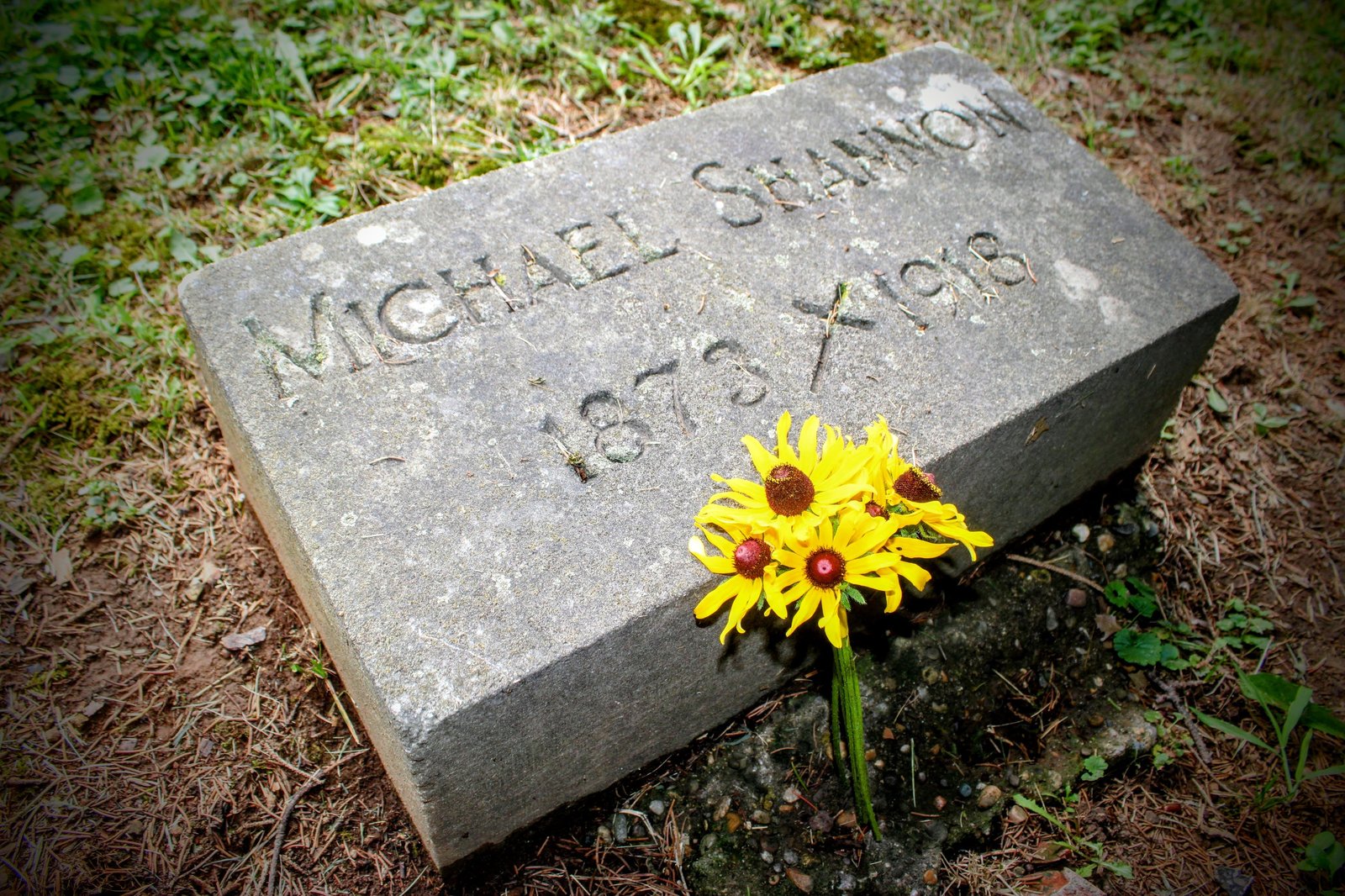
The Bard of the Turf, Revisited: Mickey Shannon’s Two-Issue Newspaper, His Trained Pig, and the Mule That Threw Him Into History
by Paul Oliva, Lexington Times Web Editor Editor’s note: In August 2023, this publication ran a remembrance of Michael Joseph “Mickey” Shannon, the Irish-born horseman who edited the original Lexington Sunday Times in 1911 — the colorful predecessor whose name we carry. Three more years of digging — through the digitized Lexington Herald and…
-
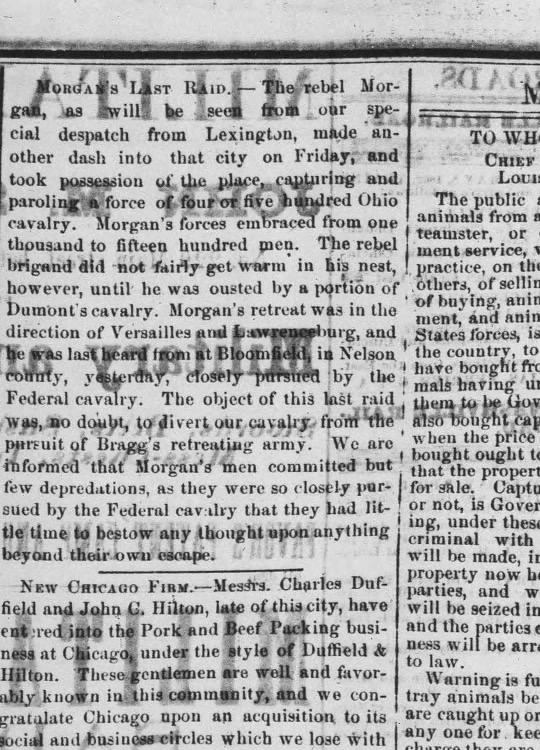
Dawn on Henry Clay’s lawn: Morgan’s 1862 raid on his own hometown
At first light on Oct. 18, 1862, John Hunt Morgan’s 1,800 horsemen hit a Union cavalry camp on the grounds of Ashland — the Henry Clay estate, a mile from the courthouse in Morgan’s own hometown. The fight lasted about as long as breakfast; the argument over his statue lasted a century. The finale…
-
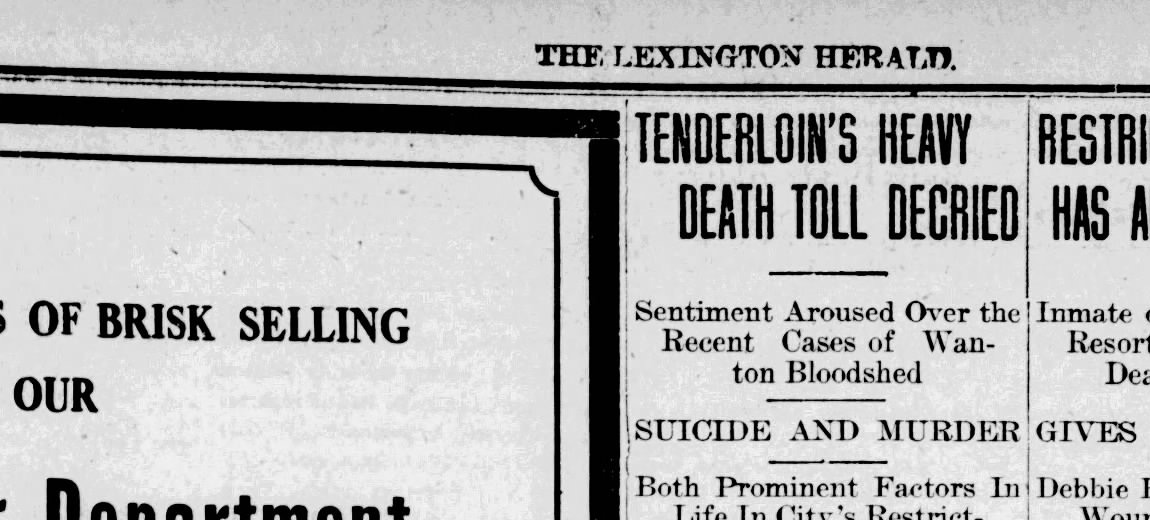
Belle Brezing: the record and the legend, sharing the same address
Lexington’s most famous madam ran the “most orderly of disorderly houses” on Megowan Street, was pardoned by a governor, bankrolled by a Philadelphia millionaire, and shuttered by the War Department in 1917 — then spent 23 reclusive years in the fading mansion. Between the wink and the scrapbook at UK lies the documented story,…
-
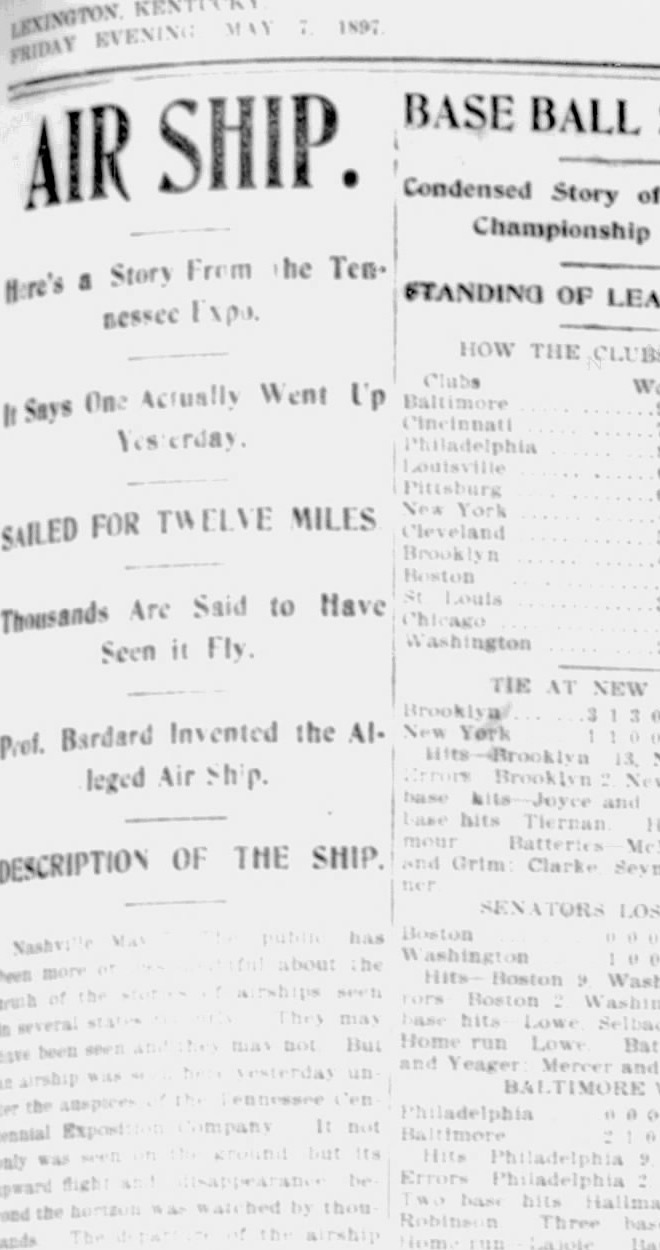
Before Kitty Hawk, Lexington looked up: the mystery airship craze of 1897
In April 1897 — six years before the Wright brothers — tens of thousands of Americans saw a cigar-shaped airship with colored lights crossing the night sky, and Kentucky papers from Paducah to Hopkinsville carried the sightings. Lexington’s Daily Leader covered the wave with Bluegrass skepticism: a Muncie hoax of balloons and lanterns, a…